


Rural Innovation Sparks New Life in Farming India
Newzdaddy Business Updates
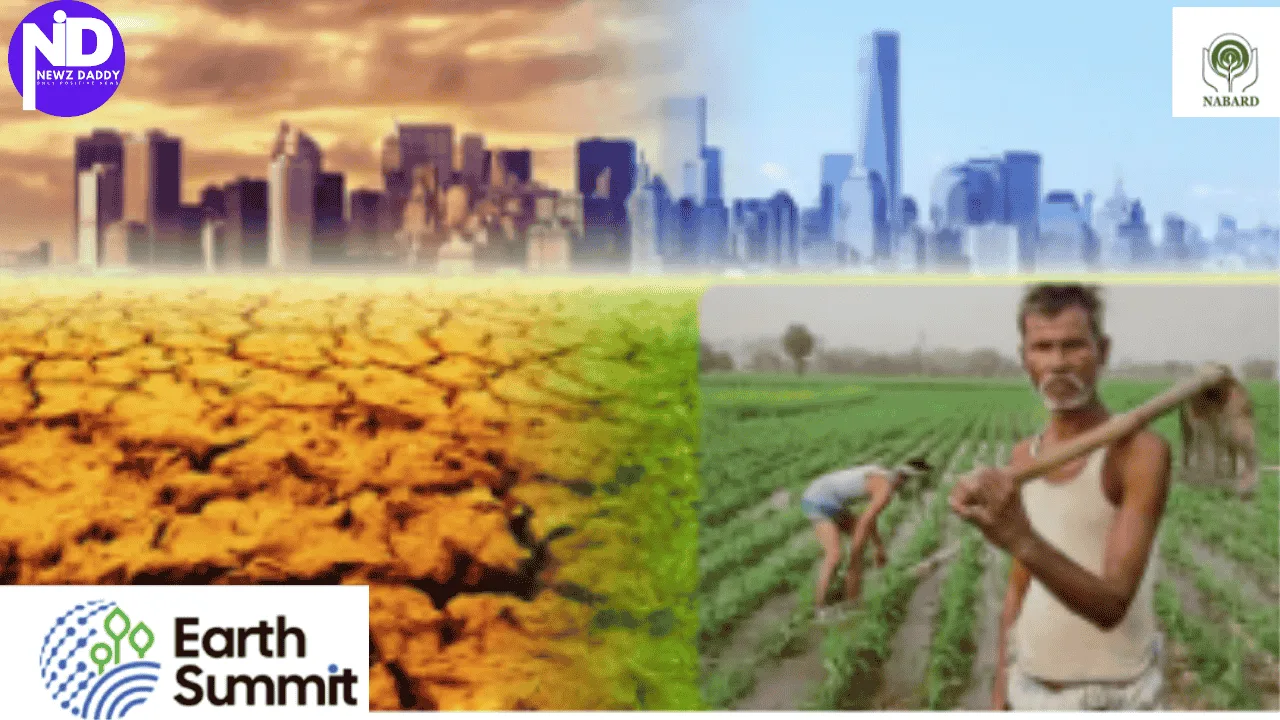
The two-day Gandhinagar edition of the Earth Summit 2025-26 — organised by National Bank for Agriculture and Rural Development (NABARD) and Internet and Mobile Association of India (IAMAI) ended at the Mahatma Mandir Convention & Exhibition Centre in Gandhinagar on December 6. The summit’s theme, “Empowering Rural Innovation for Global Change”, brought together many people: innovators, farmer-producer organisations (FPOs), agritech startups, women entrepreneurs, rural cooperative banks, community groups, policymakers and industry leaders.
At the core of many discussions was the role of cooperatives in rural growth. NABARD Chairman emphasised that cooperatives are vital for fair, sustainable growth across India, especially since India has one of the largest cooperative movements in the world. According to NABARD’s own data, India has a very large share of global cooperatives: roughly 20–30% of global cooperative societies come from India, and many millions of Indians are members. This shows that cooperatives already touch rural lives deeply, but often their full potential remains untapped.
AI, robotics, and data-driven tools that are shifting Indian farming from traditional practices toward what experts call “resilient agriculture” or “Agri 5.0.” The summit voiced that a strong digital infrastructure, or data backbone, is essential for this shift. In fact, under the Digital Agriculture Mission (DAM), India is building what is called Agri Stack, a unified digital system that collects and stores data on farmers, farmland, soil, crops, weather, irrigation, and more.
Under this mission, over 7 crore Farmer IDs have already been issued, and crop-survey data covers tens of crores of farmland plots. With accurate data, state governments and financial institutions can deliver targeted schemes, crop insurance, loans, and procurement support more efficiently, bringing transparency and ease to farmers.
At the summit, experts said that data alone is not enough. They stressed that technologies built on this data must be user-friendly, affordable, and accessible to rural communities. This is critical if small farmers and cooperatives are to benefit broadly rather than only large or well-resourced farms.
To help turn data into action, there was talk of building a unified digital platform for all stakeholders, farmers, banks, cooperatives, and government agencies. The idea is somewhat similar to what some call “Sahakar Sarathi” or “FPO-Saathi”: a single app or portal that rural institutions can use to update, access and exchange data, transforming static records into a living, real-time digital resource.
The summit also featured a large Rural Innovation Expo, with 90 booths in all, where FPOs, cooperatives, and agritech innovators displayed how digital tools, better market linkages, and modern farm solutions can drive real change in villages. There was a strong representation of tribal and women-led enterprises, underlining the summit’s commitment to inclusive rural development.
This gathering echoed the vision expressed earlier by the Union Home Minister and Minister of Cooperation, who emphasised that India’s progress is closely tied to the development of its villages. The event was supported by many national institutions, including ministries responsible for electronics and IT, environment and climate, skills and entrepreneurship, rural affairs, and others, demonstrating a unified national push to strengthen rural development through technology, innovation, and policy alignment.
Must Read:
NABARD’s Partnership Approach with Banks and Institutions Applauded
Rural Financial Institutions Transformation: Powering India’s Future