


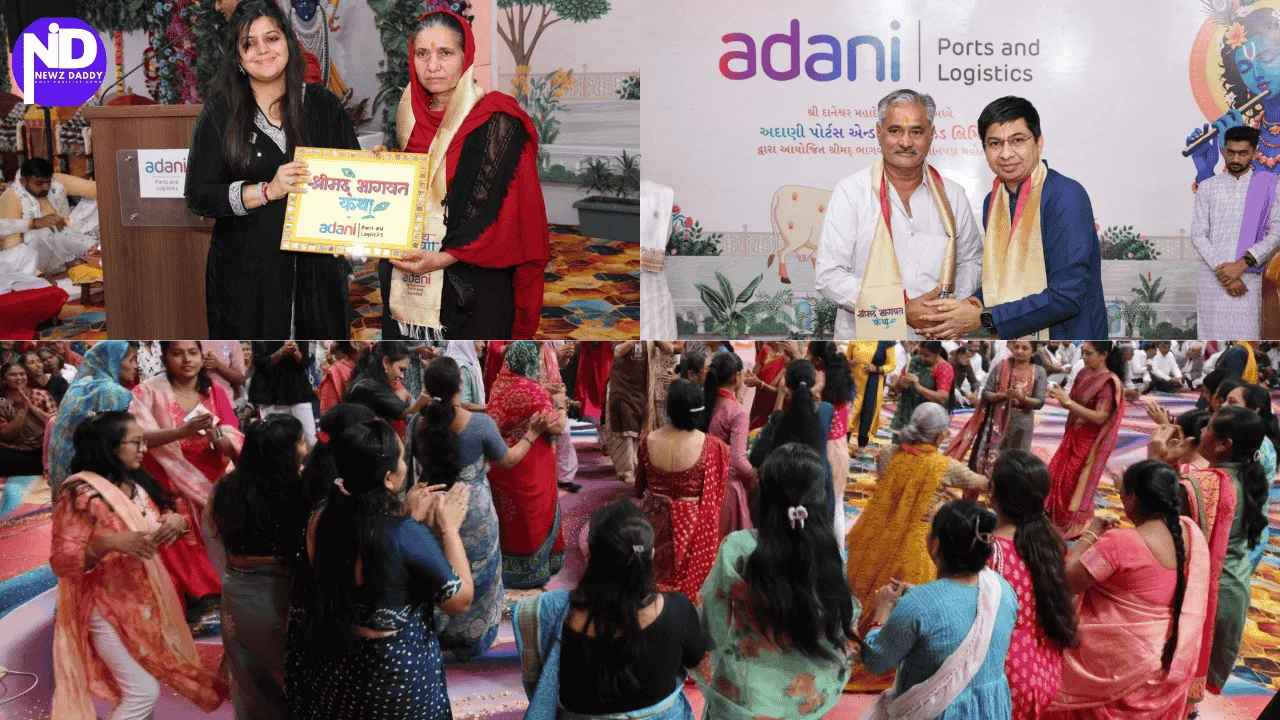
Shrimad Bhagwat Katha Adani Ports Brings Divine Joy
Newzdaddy Spiritual Updates
The Shrimad Bhagwat Katha presented by Adani Ports at Sriracha stood as a powerful example of how spiritual gatherings continue to unite people across social, political, and cultural lines. Rooted in the guiding thought of “Sarvajansukhay Sarvajanhitaya”, meaning the happiness and welfare of all, the event reflected the deeper purpose of spiritual discourse in modern society.
Shrimad Bhagwat Katha holds a special place in Hindu tradition, as it narrates the life, teachings, and divine actions of Lord Krishna. Such Kathas are known to promote values like compassion, faith, unity, and service to humanity. The third day of the Katha witnessed a deeply devotional atmosphere, filled with collective prayer, chanting, and reflection. The presence of sadhus, saints, mahants, and respected leaders from Kutch district added spiritual depth and cultural dignity to the gathering.
Religious leaders from various sampradayas and spiritual paths attending together symbolised harmony and mutual respect. Political leaders and government officials joining the event as ordinary devotees further highlighted how faith can rise above roles and positions. Their participation reinforced the idea that spiritual spaces belong to everyone, regardless of status.
The gathering of villagers from surrounding areas reflected the strong cultural roots of Bhagwat Kathas in rural India. Such events often act as community centres, where people come together not only for devotion but also for shared experiences, dialogue, and emotional healing. The overflowing venue showed the enduring relevance of spiritual storytelling in today’s fast-paced world.
Pujya Shri Kashyapbhai Joshi’s narration played a central role in shaping the experience of the devotees. Known for his clear expression and emotional depth, he brought Lord Krishna’s leelas to life. Stories of Krishna’s childhood, his playful nature, and the divine Rasleela touched the hearts of listeners, helping them connect with faith on a personal level. Oral storytelling remains a powerful medium in Indian tradition, making complex spiritual ideas easy to understand for people of all ages.
Beyond storytelling, the teachings shared during the Katha offered guidance for daily life. The message of surrendering worries at the feet of God resonated strongly with the audience. In times of stress and uncertainty, such spiritual reassurance provides comfort and emotional strength. The emphasis on trust in divine will encouraged listeners to develop patience, acceptance, and inner peace.
The discourse also highlighted social responsibility. By stressing unity, mutual love, and cooperation, the Katha reinforced the idea that spiritual growth and social welfare go hand in hand. Saints and monks were described as moral guides who help society stay rooted in values like truth, compassion, and righteousness. Historically, such figures have played an important role in shaping ethical thinking and community harmony in India.
One of the most touching moments of the day came when devotees spontaneously gathered near the podium and began playing Garba. Garba, a traditional folk dance of Gujarat, is often associated with joy, devotion, and collective celebration. Seeing it performed in a spiritual setting reflected pure bhakti and emotional connection with Lord Krishna. The scene transformed the venue into a living expression of devotion, drawing parallels with the sacred land of Vrindavan.
The packed mandap and continuous flow of devotees showed the powerful emotional pull of the event. Such gatherings offer more than religious teaching; they provide mental peace, emotional release, and a sense of belonging. The combination of satsang, bhakti, and cultural expression created a rare and uplifting experience for everyone present.
Alongside spiritual care, social responsibility was also addressed through a medical camp, where over 350 people received health support. This reflected the broader idea of service to humanity, reinforcing that spiritual events can also contribute directly to community well-being.
Overall, the Shrimad Bhagwat Katha at Sriracha stood as a reminder that faith, culture, and service can come together to create meaningful social impact. The event strengthened spiritual bonds, encouraged moral values, and offered comfort and joy to thousands of devotees.
Must Read:
Gautam Adani’s Reflections on Maha Kumbh: A Moment That Touched His Soul