


Drone Awareness Capsule Trains Forces for New Threats
Newz Daddy Defence Updates
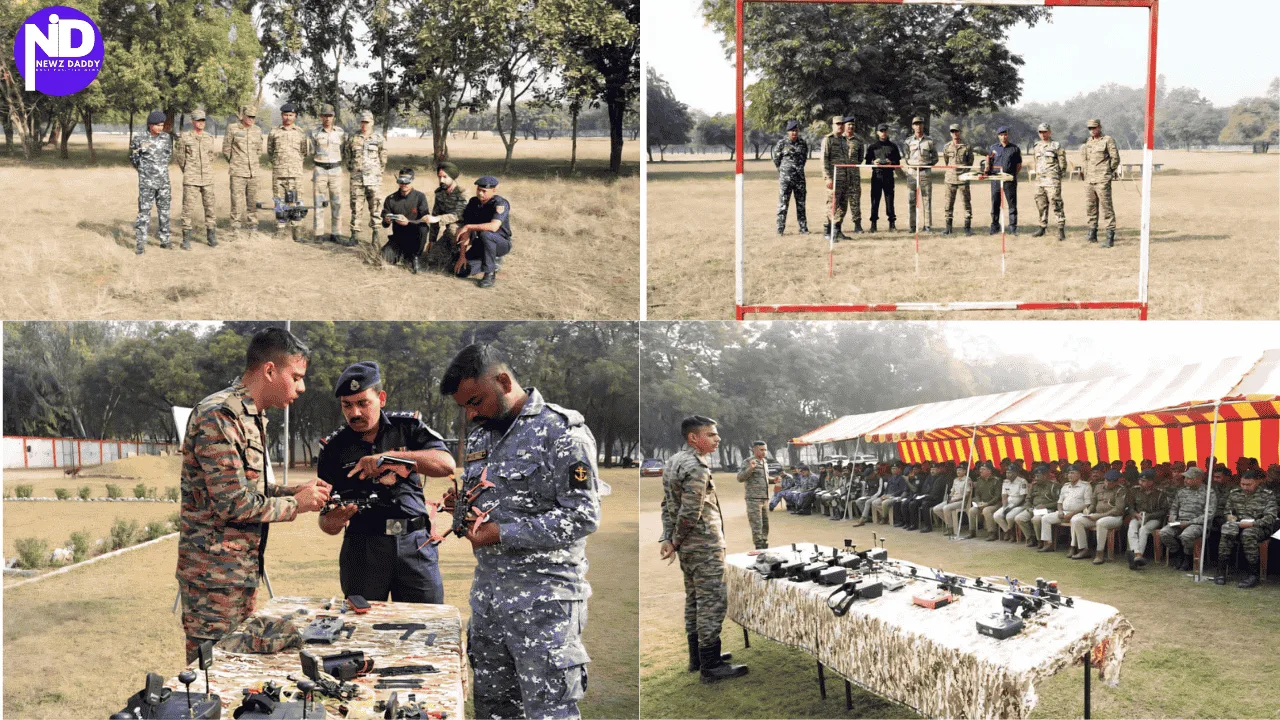
Golden Katar Division conducted a comprehensive Drone Awareness Capsule for personnel of Paramilitary Forces and State Security Agencies from 06 to 10 January, aimed at enhancing awareness and preparedness against emerging drone threats. The capsule witnessed participation of over 150 security personnel from Indian Coast Guard (ICG), Border Security Force (BSF), Central Reserve Police Force (CRPF), Gujarat Police, National Security Guard (NSG), National Disaster Response Force (NDRF) and State Disaster Response Force (SDRF).
In recent years, drones have moved from being simple hobby devices to powerful tools used in many fields. At the same time, they have also become a growing security concern. Small drones are now being used for spying, smuggling, dropping weapons, and even carrying explosives. Many such incidents have been reported across borders and sensitive locations in India. This makes it important for security forces to understand how drones work and how they can be misused. By bringing together different forces under one programme, the capsule helped create a common understanding of this fast-changing threat. The presence of disaster response teams also showed that drones are not only a security issue but also play a role in rescue and relief work.
The capsule aimed to create structured awareness on drone technology, basic handling of drones and counter-drone measures relevant to contemporary operational, internal security and disaster response environments. The programme covered fundamentals of unmanned aerial systems, identification of hostile drone activity, operational employment of drones and suitable counter-measures to neutralise potential aerial threats.
Drone technology may look complex, but understanding the basics can make a big difference on the ground. Modern drones can fly at low heights, avoid radar and operate at night using thermal cameras. Some can travel long distances with pre-set routes, making them hard to detect. Security personnel need to know how to spot unusual drone movement, recognise the sound patterns and understand flight behaviour. Training like this helps forces respond quickly instead of reacting after damage is done. Counter-drone measures are also becoming important. These include signal jammers, radio frequency detectors and physical methods to stop or capture drones. Learning when and how to use these tools safely is crucial, especially in crowded or sensitive areas.
The capsule facilitated inter-agency interaction and knowledge sharing, strengthening coordination among participating forces. Emphasis was laid on practical understanding of drone capabilities and limitations, evolving threat scenarios and the importance of joint preparedness in addressing drone-related challenges.
Coordination between agencies is often the biggest challenge during real operations. Each force has its own role, area of control and operating style. When a drone-related incident happens, confusion can waste valuable time. Programmes like this help officers understand how other agencies function and how information can be shared quickly. For example, coastal forces may face drone threats from the sea, while police may face them in cities or border areas. Disaster response teams may use drones to locate trapped people during floods or earthquakes. By learning together, forces can plan better joint responses. Practical discussions also help clear doubts and reduce fear around new technology.
The initiative reflects Golden Katar Division’s continued commitment towards capacity building, technological orientation and strengthening operational synergy among sister agencies, ensuring enhanced readiness against emerging security challenges.
Capacity building is not only about weapons or manpower. It is also about knowledge and confidence. As technology changes, security forces must keep learning to stay ahead of threats. Drone awareness is now as important as understanding radio communication or surveillance methods. Golden Katar Division’s effort shows a clear focus on future challenges rather than past threats. Such training also sends a strong message that the armed forces are adapting to modern risks. With drones becoming cheaper and easier to access, the threat is likely to grow. Regular awareness capsules like this can help ensure that personnel at all levels are alert, trained and ready. This approach strengthens national security and also improves safety during disaster response operations, where drones can save lives when used correctly.