


AAP Municipal Corporation Election in Ahmedabad Sparks Hope
AAP Municipal Corporation Election, Ahmedabad, Signals Tough BJP Challenge
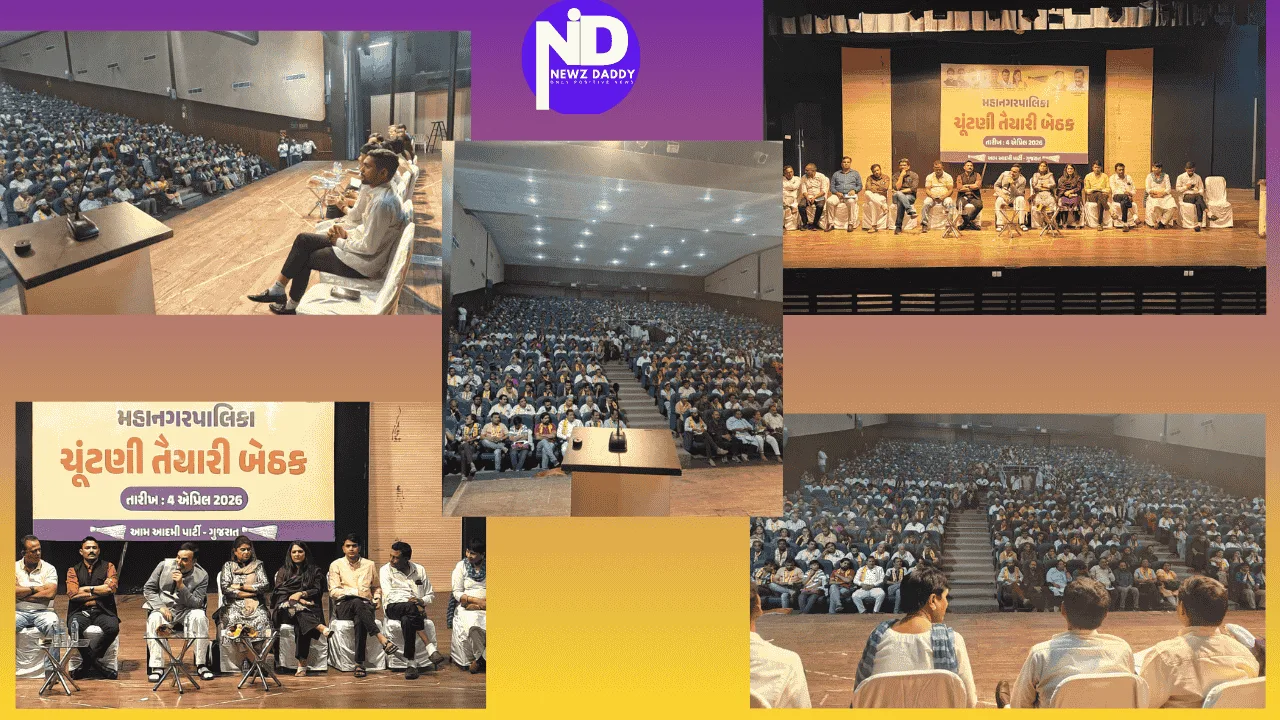
The Aam Aadmi Party (AAP) organised a “Municipal Corporation Election Preparation Meeting” in Ahmedabad, marking a key step in its campaign for the upcoming local body elections. The meeting was held under the leadership of Gopal Rai, who played a central role in guiding party workers and candidates.
Local body elections in Gujarat often see strong competition, especially in cities like Ahmedabad, where civic issues such as water supply, waste management, roads, and public health matter a lot to voters. Over the years, these elections have shaped how cities grow and how basic services reach people. AAP has been trying to expand its base in Gujarat after gaining attention in other states, such as Delhi and Punjab, where it focused on education, healthcare, and affordable electricity.
The party has been preparing for these elections for several months. Across Gujarat, it has been organising meetings, training sessions, and small gatherings to connect with voters. Such groundwork is common in Indian politics, where booth-level planning and direct interaction with citizens often decide election results. In many areas, AAP workers have been going door-to-door to understand local problems and explain their plans.
At the Ahmedabad meeting, several key leaders were present. These included Central Zone Working President Dr Jewel Vasra, SC Cell State President Jagdish Chavda, State Vice President Gauri Desai, City President Vijay Patel, State Spokesperson Himanshu Thakkar, and ASAP Central Zone President Yatrik Patel. Their presence showed that the party is trying to bring together leaders from different sections and communities.
In Indian elections, caste groups, youth participation, and local leadership play a big role. By involving leaders from SC communities and student wings, AAP is trying to build a wider support base. The student wing, for example, often helps in social media campaigns and ground mobilisation, which has become very important in recent years.
During the meeting, Gopal Rai gave clear guidance to candidates and office bearers. He spoke about planning at the ward level, staying connected with people, and focusing on real issues instead of only political slogans. In many successful campaigns across India, candidates who stay close to voters and address daily problems tend to perform better.
He also worked to boost the morale of party workers. In politics, confidence among workers is important because they are the ones who spend time in the field, speak to voters, and handle polling day activities. Strong internal unity often helps a party perform better, especially when facing an established opponent.
Gopal Rai said that AAP is fully prepared for the elections. This reflects the party’s growing ambition in Gujarat. In past elections, AAP has tried to position itself as an alternative to traditional parties by focusing on governance and public services. In cities, voters often look for better roads, cleaner neighbourhoods, and reliable civic services, and parties try to build their campaigns around these issues.
He also stated that the party will enter the election field with a firm resolve to defeat the long-standing rule of the Bharatiya Janata Party (BJP) in Ahmedabad. The BJP has been in power in the city’s municipal corporation for decades, and it has built a strong organisational network over time. Challenging such a strong setup requires careful planning, strong candidates, and consistent messaging.
In many Indian cities, voters are now more aware and expect better services. Social media has also made it easier for people to raise complaints and share opinions. Political parties are adapting to this change by improving communication and responding faster to public concerns.
The meeting in Ahmedabad also focused on creating a sense of unity within the party. Leaders stressed that all workers must work together with a common goal. In elections, internal coordination is often as important as public campaigning. When teams work in sync, it helps in managing rallies, voter outreach, and election day operations.
AAP leaders expressed confidence that they can create a “new history” in Ahmedabad. While this is a strong political statement, it also reflects the party’s intent to grow in urban Gujarat. Whether this will translate into electoral success will depend on how well the party connects with local voters in the coming weeks.
As the election dates approach, more such meetings and campaigns are expected across the city. Voters in Ahmedabad will soon see increased political activity, with parties reaching out through rallies, door-to-door visits, and digital platforms. The coming weeks will be crucial in shaping the outcome of the municipal corporation elections.