


Adani Defence to Supply AK-203 Ammunition For Five Years
Adani Defence signs Five-Year Ammunition Supply Deal For AK-203 Rifles
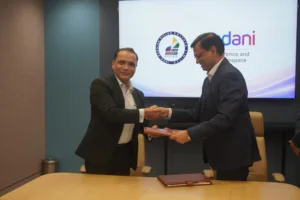
Adani Defence & Aerospace has signed a five-year agreement with Indo-Russian Rifles Private Limited (IRRPL) to supply 7.62×39 mm small-calibre ammunition for AK-203 assault rifles being made in India.
The agreement connects two parts of the AK-203 programme that are being developed in India: rifle production at IRRPL’s plant in Korwa, Amethi district, Uttar Pradesh, and ammunition production by Adani Defence & Aerospace. The deal gives the rifle programme an Indian source for the ammunition used by the weapon and sets out supply arrangements for five years.

The AK-203 is part of a long-running India-Russia defence manufacturing project. The Indian government and Russia signed an intergovernmental agreement in 2018 for the rifle to be manufactured in India through a joint venture. IRRPL was incorporated in 2019 for that purpose.
The company has Indian and Russian shareholders. India is represented by Advanced Weapons and Equipment India Limited (AWEIL) and Munitions India Limited (MIL), while Russia is represented by Rosoboronexport and Concern Kalashnikov. The shareholding is divided between the Indian side with 50.5% and the Russian side with 49.5%.
The Ministry of Defence signed a contract with IRRPL on 6 December 2021 for 6,01,427 AK-203 assault rifles. The rifles are to be produced at the Korwa facility. The government later said the facility had been established for indigenous production and that the rifles were in the manufacturing and testing stage.
The latest ammunition agreement comes as the AK-203 programme moves further towards local production. In August 2026, IRRPL announced that it had produced and test-fired its first AK-203 made entirely from Indian components and input materials. The rifle has been designated the ‘Sher’. The company said it was preparing prototypes for Indian Army trials scheduled for September 2026.
That development marks a change from the early stages of the project, when production involved a phased transfer of manufacturing technology from Russia and the use of imported components. The move towards Indian-made parts has involved AWEIL, Ordnance Systems Limited and other Indian suppliers, according to IRRPL.
The ammunition supply agreement adds another Indian-made component to the programme. The 7.62×39 mm cartridge is the ammunition used by the AK-203, linking the rifle and ammunition supply chains directly.
For Adani Defence, the agreement adds to its work in small-calibre ammunition manufacturing. The company opened its large ammunition and missile manufacturing complex in Kanpur in February 2024. The 500-acre site was planned to produce small-, medium- and large-calibre ammunition for the armed forces, paramilitary forces and police. The company said small-calibre ammunition production had already begun at the facility, with an initial planned output of 150 million rounds, estimated by the company at about one-quarter of India’s annual requirement.
Adani Defence’s current operations include ammunition, small arms, missiles, unmanned systems and other defence products. Its defence facilities are spread across Kanpur, Gwalior and Hyderabad, according to the company’s latest published information.
The location of the ammunition plant is also relevant to the wider manufacturing push in Uttar Pradesh. The Kanpur facility forms part of the Uttar Pradesh Defence Industrial Corridor, where the state and central governments have sought to attract defence manufacturing and related suppliers.
For the armed forces, the value of an Indian ammunition source is tied to supply planning. A rifle programme requires a steady supply of compatible ammunition after the weapons enter service. Local production can reduce dependence on overseas sources for that particular requirement and gives Indian manufacturers a role in supplying consumables alongside the weapon itself.
The AK-203 project itself was created with a similar objective. In a 2023 response to Parliament, the Ministry of Defence said indigenous production of the rifle was intended to support self-sufficiency in assault rifles for the Indian defence forces.
The five-year agreement therefore comes at a point when both sides of the programme are moving deeper into Indian manufacturing. IRRPL is working towards trials of its fully indigenised rifle, while Adani Defence is expanding its ammunition production base.
The immediate details released about the new agreement do not include the total number of rounds to be supplied or the financial value of the contract. Those figures would be needed to assess the full commercial size of the arrangement.
For now, the key change is clear: an India-Russia rifle programme that began with technology transfer and local assembly is adding more Indian-made inputs to its supply chain. The new ammunition agreement brings domestic cartridge production into that process, alongside the growing share of Indian-made rifle components.