


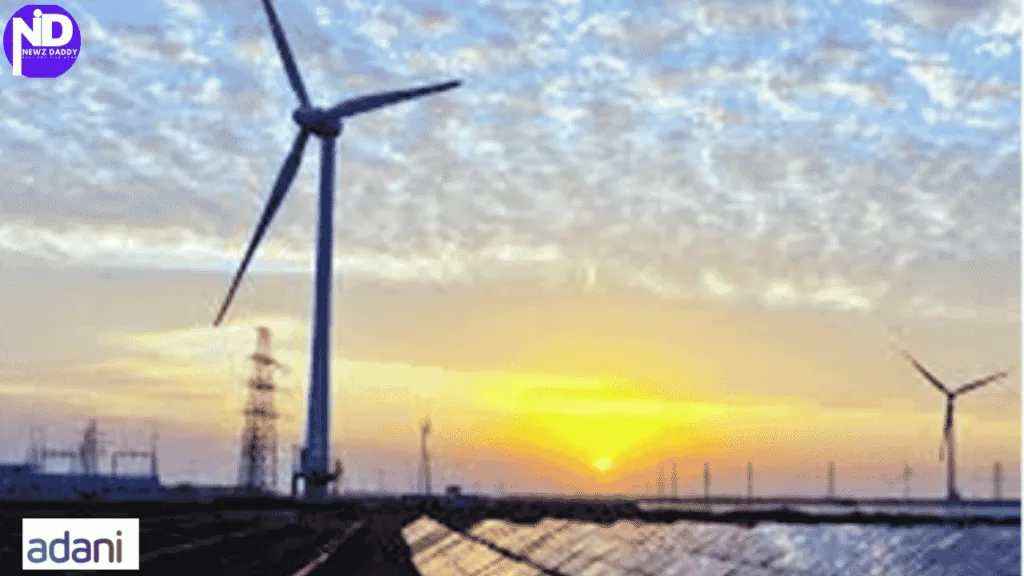
Adani Green Energy Growth Powers India’s Clean Energy Surge
Newzdaddy Business Updates
Adani Green Energy’s growth sets new benchmarks in renewable energy
Adani Green Energy Ltd, widely known as Adani Green Energy Ltd, has reported a strong rise of 37 per cent year-on-year in energy sales during the first nine months of FY26. This growth reflects a wider shift taking place across India, where renewable energy is becoming a key part of the country’s power mix. As India’s electricity demand keeps rising, clean energy companies that can add capacity quickly and run plants efficiently are gaining a clear edge.
Energy sales of more than 27,600 million units in just nine months show how fast renewable power is scaling up. To put this in context, renewable energy generation in India has grown steadily over the past decade as the country aims to reduce its dependence on coal and imported fuels. Large solar and wind projects now supply power not just to cities but also to industries and public utilities, helping to cut carbon emissions while keeping costs stable.
The 25 percent rise in revenue and 24 percent growth in EBITDA underline how renewable projects benefit from long-term power purchase agreements. These agreements give predictable income and protect companies from sudden price swings in fuel markets. An EBITDA margin of over 91 percent is unusually high, even by global standards, and highlights how low operating costs can be once solar and wind plants are up and running.
Operational capacity reaching 17.2 GW is another major milestone. This 48 per cent year-on-year jump shows how quickly new projects are being built and connected to the grid. India has set ambitious clean energy targets for 2030, and large players are expected to carry much of this load. By adding 5.6 GW in a single calendar year, Adani Green Energy alone contributed nearly 14 percent of all new solar and wind capacity added across the country, which is a significant share for one company.
A large part of this expansion has come from resource-rich regions such as Gujarat and Rajasthan, where high sunlight and strong wind conditions allow plants to run at better efficiency. Sites like Khavda in Gujarat have become global examples of how scale and planning can lower costs and speed up execution. Renewable parks in such areas are also helping to improve local infrastructure and create jobs during construction and operations.
The Khavda project, which is described as the world’s largest renewable energy installation, stands out for its sheer size and use of advanced technology. Spread across a vast area, it combines solar, wind and hybrid capacity to ensure power generation across different times of the day and seasons. The use of bifacial solar modules, which can capture sunlight from both sides, and large onshore wind turbines helps boost output without increasing land use.
Energy storage is becoming an important next step for renewable energy, and the company’s plan to deploy one of the world’s largest battery energy storage systems reflects this trend. Storage helps manage the natural ups and downs of solar and wind power and supports grid stability. Along with pumped storage projects like the one planned on the Chitravathi river in Andhra Pradesh, this shows how renewable firms are preparing for a future where clean energy runs around the clock.
Recognition as the world’s number one green utility by Energy Intelligence adds international weight to the company’s performance. Such rankings consider not only capacity and growth, but also financial strength and long-term strategy. This global recognition places the company alongside leading renewable players from Europe, the US and China.
The strong focus on operations and maintenance has also played a key role. By using real-time monitoring, data analytics and artificial intelligence, renewable plants can predict faults early and reduce downtime. Higher plant availability directly leads to more power generation and better financial results. These practices are becoming standard across the sector as companies compete on efficiency, not just size.
Environmental, social and governance performance has become a major factor for investors and regulators. Being ranked as India’s top sustainability performer in the power generation sector for the second year in a row by NSE Sustainability Ratings & Analytics shows consistent effort beyond financial numbers. The use of frameworks like the Taskforce on Nature-related Financial Disclosures reflects a growing global push for companies to measure and report their impact on nature, not just climate.
Awards related to water stewardship are also important, especially in water-scarce regions where large solar parks operate. Technologies such as waterless robotic cleaning reduce water use while improving output, addressing one of the key concerns linked to large-scale renewable projects.
Overall, the performance during 9M FY26 highlights how renewable energy in India is moving from a niche sector to the backbone of future power supply. With strong growth, global recognition and a clear focus on sustainability, Adani Green Energy’s results show how scale, technology and long-term planning can come together to support both business growth and the energy transition.