


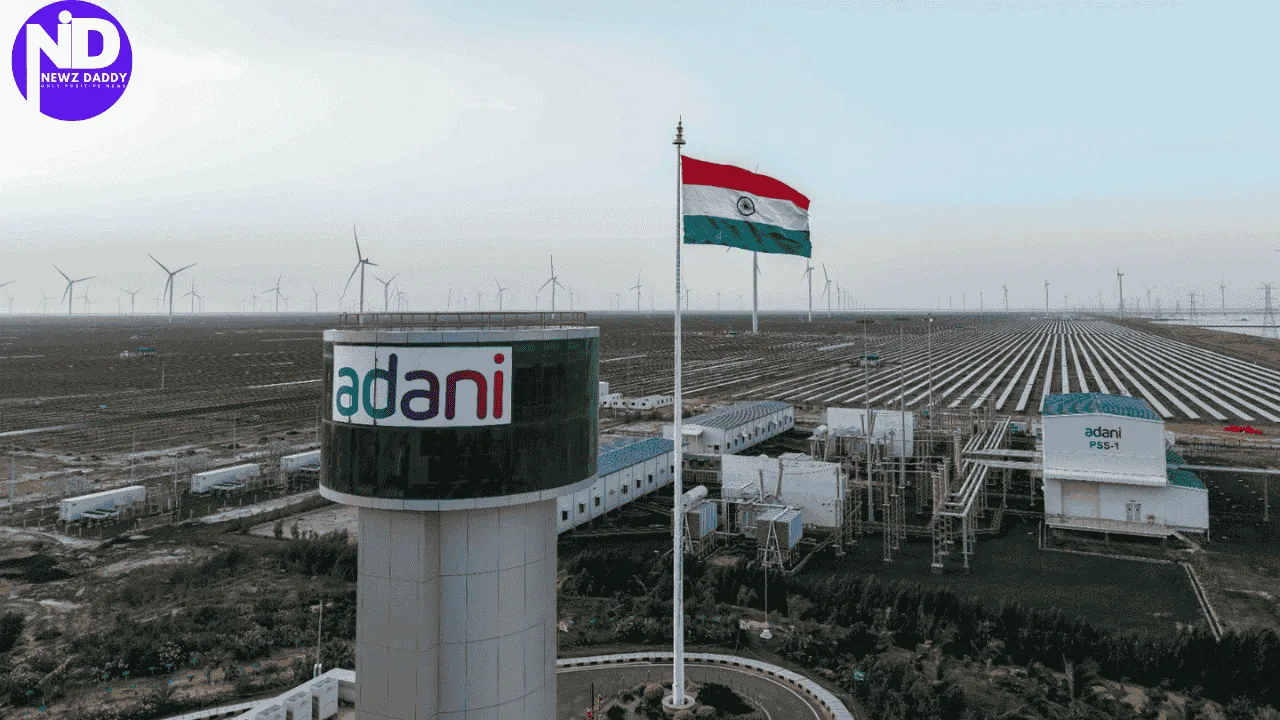
Adani Green ESG Score Hits Record High in India
Adani Green Energy Achieves Highest ESG Score of 87.3 Among Indian Companies Rated by CareEdge-ESG
Key Highlights
• The score marks a leadership benchmark in CareEdge-ESG’s latest evaluation, Adani Green Energy Limited’s (AGEL) robust ESG performance relative to industry peers.
• The rating highlights AGEL’s leadership in ESG governance, climate strategy, resource stewardship and transparency, supported by strong disclosures and board-level oversight.
• It also strengthens AGEL’s ability to access sustainable capital while reflecting the Adani Group’s broader shift towards embedding ESG across its infrastructure and energy portfolio.
Adani Green Energy Limited (AGEL) has received a CareEdge-ESG 1+ rating with a score of 87.3 from CARE ESG Ratings Limited (CareEdge-ESG), a Securities and Exchange Board of India (SEBI) registered ESG rating provider. The score places AGEL at the top among all Indian companies assessed by CareEdge-ESG.
The rating reflects AGEL’s leadership in integrating sustainability across its operations as a large utility-scale renewable energy developer. CareEdge-ESG’s evaluation is based on a comprehensive assessment of environmental, social and governance risks and opportunities, benchmarking companies across multiple indicators and industry peers. The assessment highlights strong performance across climate risk management, water stewardship, waste management, biodiversity conservation and governance practices, supported by transparent disclosures and structured oversight mechanisms. The rating underscores AGEL’s structured approach to managing environmental and social risks through well-defined policies, management systems and enterprise-wide integration of ESG considerations.
Recent industry studies and reports show that ESG ratings are becoming a key factor for global investors. Large funds now check ESG scores before putting money into companies. In India, this trend has grown fast after SEBI made Business Responsibility and Sustainability Reporting mandatory for top listed firms. Experts say companies with strong ESG scores often face lower risk and attract long-term investors. In this context, AGEL’s high score stands out as a sign of strong systems and future readiness.
AGEL has also been expanding its renewable energy capacity at a fast pace. Public data shows the company has one of the largest solar and wind portfolios in India. It has set targets to reach tens of gigawatts of clean energy capacity over the coming years. This scale matters because India is pushing hard to meet its climate goals, including 500 GW of non-fossil fuel capacity by 2030. Companies like AGEL play a major role in helping the country move towards cleaner energy.
Reports from global climate bodies highlight that renewable energy companies must also manage land use, water use and local community impact carefully. AGEL’s focus on water conservation and biodiversity aligns with these global concerns. Many solar parks in India are now using dry cleaning methods for panels to reduce water use. There is also growing attention on protecting local wildlife around project sites. These practices are slowly becoming industry standards.
Governance has also become a major focus area in ESG ratings. Analysts often look at board independence, transparency, and risk-control systems. AGEL’s strong board-level oversight and disclosures match what investors expect today. In recent years, there has been increased scrutiny of large corporate groups in India. Because of this, companies are under pressure to maintain clear and transparent governance practices.
At a broader level, the recognition reflects a shift within the Adani Group towards embedding sustainability across its infrastructure-led portfolio, including renewable energy, ports, logistics and utilities. ESG integration is increasingly shaping governance practices, risk management frameworks and long-term capital allocation across businesses.
This shift is in line with global trends. Many large business groups are now linking executive pay with ESG targets. They are also publishing detailed sustainability reports to build trust with investors and the public. In India, several companies in sectors like power, steel and cement have started investing heavily in cleaner technologies. This shows a wider movement towards responsible business practices.
The CareEdge-ESG rating also enhances AGEL’s positioning with investors and lenders, particularly in a capital environment where sustainability performance is increasingly linked to access to financing. The rating is expected to support the company’s ability to mobilise sustainable and transition-linked capital for large-scale renewable energy projects.
Financial experts say green financing is growing quickly worldwide. Instruments like green bonds and sustainability-linked loans are now widely used. Indian companies have also started raising funds through these routes. A strong ESG score can help reduce borrowing costs and open doors to global capital markets. For a capital-heavy sector like renewable energy, this can make a big difference.
Overall, the development shows how ESG is no longer just a reporting exercise. It is now closely linked to growth, funding and public trust. AGEL’s top ranking reflects both its current performance and the direction in which the company and the wider industry are moving.