


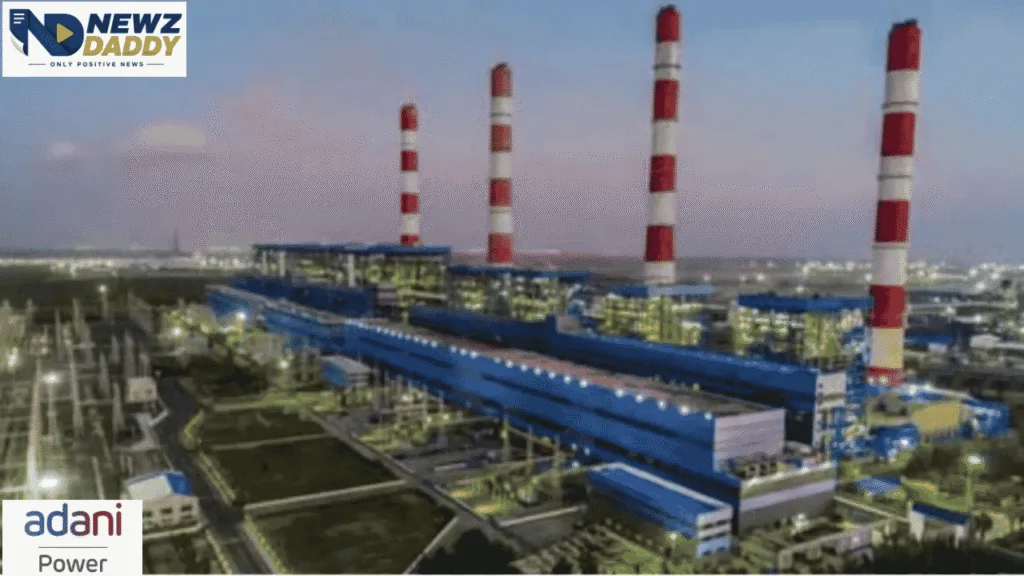
Adani Power Leads Thermal power peers with ESG Score of 66
Adani Power Raises NSE Sustainability Score to 66, Stays in ‘Aspiring’ Category
Adani Power Limited has raised its Environmental, Social and Governance (ESG) score to 66 in the latest assessment by NSE Sustainability, up from 65 in the previous assessment. The company remains in the ‘Aspiring’ category and said it continues to rank ahead of other major Indian thermal, mixed-fuel and integrated energy companies.
The assessment comes as ESG ratings have become a more closely watched measure for listed companies. In India, ESG Rating Providers operate under a framework set by the Securities and Exchange Board of India (SEBI). NSE Sustainability Ratings & Analytics Limited is a Category I ESG Rating Provider registered with SEBI and is a subsidiary of NSE Indices, part of the National Stock Exchange of India group.
NSE Sustainability launched its ESG ratings for listed companies in 2025. Its assessment system looks at company policies, practices and public disclosures across areas relevant to each sector. The agency has said its ratings use a data-based and materiality-based approach.
For Adani Power, the latest score is relevant because thermal power remains a major part of India’s electricity supply. Government data released in July showed that coal and lignite-based power capacity stood at about 230.8 GW, while such plants supplied 69.54% of the country’s electricity between April and June 2026. During non-solar peak hours, these plants produced about 75% of total generation.
That makes environmental measures at large thermal power stations an important part of the wider discussion around India’s power sector. Adani Power operates thermal generation plants and has been adding measures aimed at reducing emissions and limiting the use of resources.
The company said it uses ultra-supercritical units at some of its plants. Such units operate at higher temperatures and pressures than older coal-fired technologies and can produce more electricity from a given amount of fuel. Adani Power has also reported continuous emissions monitoring and measures aimed at improving energy efficiency.
Water use is another area covered by the company’s ESG work. Its FY26 investor material reported water intensity of 2.13 cubic metres per megawatt-hour and said all hinterland thermal power plants maintained zero liquid discharge. The company also reported 113% fly ash utilisation during FY26 and said all 13 operating locations had received single-use-plastic-free certification.
Fly ash is a major waste product from coal-fired power generation. Its use in cement, construction and other applications can reduce the amount that needs to be stored or disposed of. Adani Power’s reported utilisation rate above 100% reflects the use of previously stored ash along with ash generated during the year.
The company also pointed to its social programmes in education, healthcare and skills training. These include scholarships for students from low-income families, health camps and livelihood programmes in communities around its operations.
Earlier company disclosures provide some scale to these activities. During the third quarter of FY26, education programmes supported more than 30,000 students through learning support, exam preparation and other programmes. The initiatives included competitive-exam coaching for more than 2,700 students and other learning programmes.
Governance forms the third part of the rating. Adani Power said the proportion of independent directors on its Nomination and Remuneration Committee is above the minimum requirement. It made a similar claim about independent representation on the Audit Committee and the composition of its Risk Management Committee.
The company also said it has ESG requirements for suppliers and contractors. These standards are intended to bring environmental, social and governance checks into parts of its supply chain.
The new NSE score follows several other assessments of Adani Power. The company reported a score of 71 out of 100 in S&P Global’s Corporate Sustainability Assessment, a 4.3 out of 5 rating from FTSE Russell and an 80 out of 100 score from CareEdge ESG for FY26. CareEdge placed the company in its ‘Leadership’ category and said the score was 35% above the industry median.
The ratings do not all measure companies in the same way. SEBI’s rules recognise several ESG rating products and require rating providers to explain the reasons behind their scores. The regulator has also noted that ESG ratings can differ between providers because they may use different methods and measures.
That point matters when comparing companies. A single ESG number does not provide a complete picture of a power producer’s effect on emissions, water, workers, communities or corporate controls. The underlying measures and the method used by the rating agency also need to be considered.
For India’s thermal power industry, the issue is becoming more important as electricity demand continues to require large amounts of firm generation while solar, wind and storage capacity expand. Recent government figures show that coal-based plants still supply most of the country’s electricity, even as renewable generation continues to grow.
Adani Power’s move from 65 to 66 therefore comes against a sector where companies face pressure to maintain reliable electricity supply while reducing emissions, managing water and waste, and improving corporate controls.
The latest NSE assessment keeps Adani Power in the ‘Aspiring’ category. The company remains ahead of the other major thermal, mixed-fuel and integrated energy companies covered in its comparison, according to the company’s September 7 disclosure. The next assessments will show whether the one-point improvement develops into a larger change in its rating and category.