


Adani’s Words Spark India’s Development Path with Power
Newzdaddy Business Updates
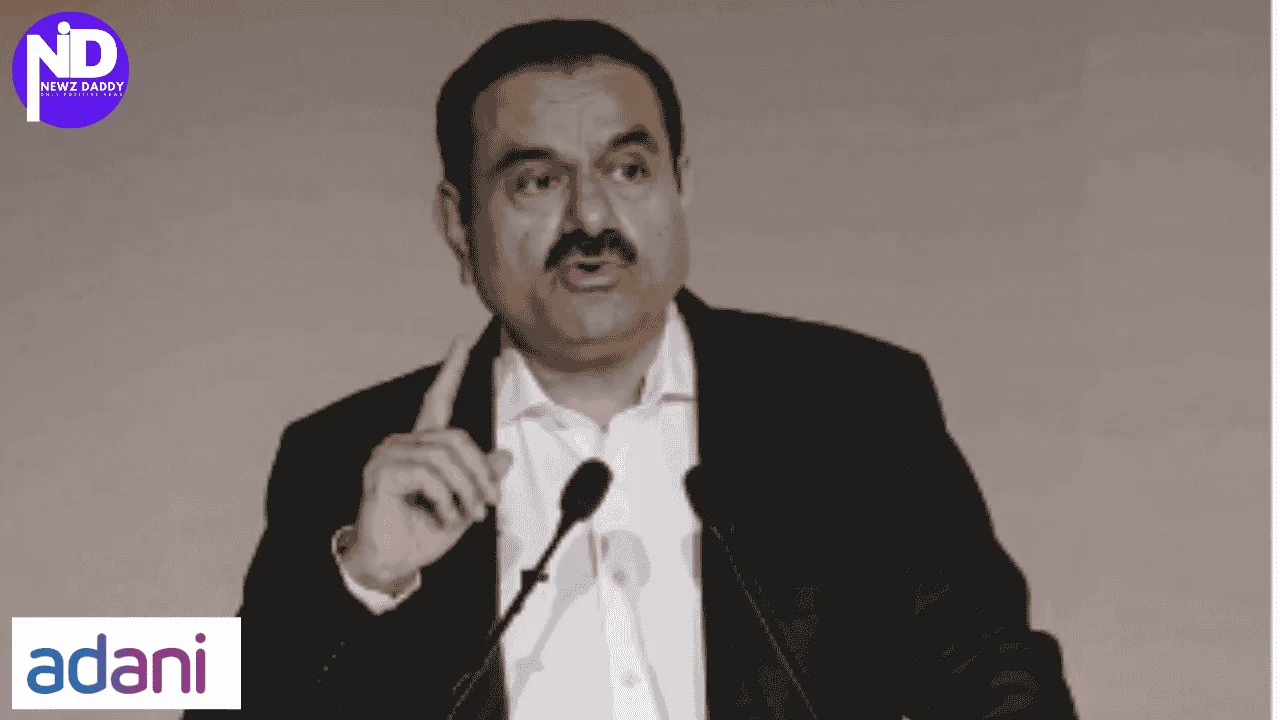
Speaking at the centenary celebrations at the Indian Institute of Technology (Indian School of Mines), Dhanbad, Adani Group Chairman Gautam Adani said that India must define its own development path at a time when global alliances are fracturing, and nations are acting in pure self-interest. He emphasised that India’s sovereignty now depends on two pillars — mastering the resources beneath our feet and mastering the energy that fuels growth.
Mr Adani cautioned against “narrative colonisation,” saying countries that historically emitted the most carbon now want to prescribe how India should develop, despite India having among the lowest per-capita emissions in the world. He said India must not allow external pressures to delegitimise its aspirations – and called this era India’s “Second Freedom Struggle” for economic and resource independence.
Gautam Adani says India must define its own development path
Gautam Adani urges India to do only what is best for India. Speaking at the centenary of IIT–ISM Dhanbad, Gautam Adani said India must do what is best for India — defining its own development path, resisting external pressures, and building sovereign capabilities in resources, energy and technology.
Adani Group Chairman Gautam Adani on Monday said India must chart its own development course in a world increasingly marked by national self-preservation and fractured global alliances. Speaking at the 100th anniversary of the Indian Institute of Technology (Indian School of Mines) in Dhanbad, Adani said sovereignty in the 21st century will depend on a nation’s control over its natural resources and energy systems.
Adani highlighted that the institute itself was born from a moment of national foresight. Over a century ago, under British rule, the Indian National Congress had recommended the establishment of an institute to build India’s critical capabilities in mining and geology. He said this vision reflected a deep civilisational understanding that a nation cannot rise without mastering the strength of its own soil.
Mining has been a central part of India’s growth for decades. India holds key mineral reserves like coal, iron ore, bauxite and rare earth elements used in electronics. The country is among the top producers of coal and has been working on improving safety, technology and exploration in the mining sector. IIT (ISM) Dhanbad has played a strong role here. The institute is known for producing leading mining engineers and geoscientists who serve India’s public and private sectors. For more than 100 years, it has helped develop mines, improve safety standards and shape national mineral policy.
“Master the resources below our feet, and master the energy that fuels our rise,” he said, calling these the twin foundations of India’s economic independence. Mr Adani warned of what he described as “narrative colonisation,” arguing that the very countries responsible for historic emissions are now attempting to influence how developing nations pursue growth. India, he said, must resist external pressures that seek to define its development priorities and do only what is best for India.
In climate talks, India has often highlighted its low per-capita carbon emissions. India’s emissions per person are less than half the global average and far below major industrialised nations. India has also moved ahead of schedule in its clean energy goals. The country reached over 50 per cent non-fossil installed capacity before its 2030 target, making it one of the fastest-growing renewable energy markets in the world. Global energy reports often state that India is expected to lead the world in combined solar and wind energy growth by 2030.
“If we do not control our own narrative,” he said, “our aspirations will be delegitimised and our right to improve our standard of living portrayed as a global offence.” Citing global data, Mr Adani said India remains one of the world’s lowest per-capita emitters even as it has achieved more than 50% non-fossil installed capacity ahead of schedule. He said attempts to downgrade India’s sustainability performance without accounting for per-capita metrics or historical responsibility reflect biases embedded in global ESG frameworks.
Mr Adani also referred to the Group’s Carmichael mine in Australia, describing it as a project built to strengthen India’s energy security despite facing “one of the most contested environmental and political battles of the century.” The Carmichael project faced years of legal challenges and protests, yet it now delivers coal that supports India’s power needs. At the same time, the Adani Group has built one of the world’s largest renewable portfolios. The 30 GW Khavda renewable energy park in Gujarat is already partly operational and is set to become the largest such project in the world.
He announced two initiatives for IIT (ISM) Dhanbad: a yearly programme offering 50 paid internships with pre-placement opportunities, and the Adani 3S Mining Excellence Centre in partnership with TEXMiN, featuring metaverse labs, drone fleets, seismic sensing systems and precision mining technologies. Such facilities will help students learn modern skills used in smart mining, digital twins, and real-time safety monitoring.
Calling this period India’s “Second Freedom Struggle” this time for economic and resource sovereignty, Mr Adani said mining, minerals and earth sciences would define India’s future capabilities. “People may call mining the old economy,” he said. “But without it, there is no new economy.” The clean energy sector needs minerals like copper, lithium and cobalt. Every solar plant, wind turbine and battery depends on them. For India to lead the green transition, it must also secure its mineral supply chains.
He urged students to “dream fearlessly, act relentlessly,” embrace innovation and help build a confident, self-reliant India by becoming “custodians of the core” who build India’s sovereign capabilities.