


Air Chief Marshal AP Singh Retires After 42 Years of Service
AP Singh Retires After 42 Years, Leaving the IAF Focused on Readiness And Modernisation
Air Chief Marshal AP Singh, Chief of the Air Staff of the Indian Air Force (IAF), retired on 31 October 2026 after completing 42 years of military service. His departure marks the end of a career that included fighter flying, aircraft testing, senior command roles and leadership of the air force during Operation Sindoor.
AP Singh, who holds the Param Vishisht Seva Medal (PVSM) and Ati Vishisht Seva Medal (AVSM), served as the 28th Chief of the Air Staff. He took charge of the post on 30 September 2024, succeeding Air Chief Marshal Vivek Ram Chaudhari.
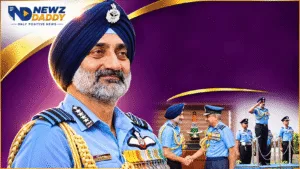

His retirement comes at a time when the Indian Air Force faces several major tasks, including maintaining its combat strength, bringing new aircraft into service and preparing for changes in modern warfare.
AP Singh’s career began in December 1984, when he was commissioned into the fighter stream of the Indian Air Force. He later became a Qualified Flying Instructor and an Experimental Test Pilot, roles that require strong flying skills and a deep understanding of aircraft performance and safety.
Over the years, he logged more than 5,000 hours of flying on different fixed-wing and rotary-wing aircraft. His experience covered fighter operations, flight testing, training and senior military assignments.
AP Singh was an alumnus of the National Defence Academy, the Defence Services Staff College and the National Defence College. These institutions prepare military officers for leadership, planning and senior command responsibilities.
His career included command of a MiG-27 squadron and a frontline fighter air base. He also led the MiG-29 Upgrade Project Management Team in Moscow, where he worked on efforts to improve the aircraft’s capabilities.
Another important part of his career was his work on the Light Combat Aircraft Tejas. As Project Director (Flight Test) at the National Flight Test Centre, AP Singh was involved in testing the aircraft.
Flight testing plays a major role in the development of a fighter aircraft. Test pilots examine how an aircraft performs under different conditions and help identify problems before it enters wider service.
AP Singh later held senior positions at Air Headquarters and served as Air Officer Commanding-in-Chief of Central Air Command. Before becoming Chief of the Air Staff, he was Vice Chief of the Air Staff.
His time as the head of the Indian Air Force was marked by a strong focus on operational readiness. This became especially important during Operation Sindoor, when the force was involved in military action following the Pahalgam terror attack in April 2025.
The operation brought renewed attention to the role of air power in India’s defence planning. It also placed focus on the ability of the armed forces to carry out operations with speed, accuracy and coordination.
For the Indian Air Force, operational readiness depends on several factors. These include trained pilots, available aircraft, reliable equipment, effective command systems and the ability to work with other branches of the armed forces.
Modernisation has remained another major concern during AP Singh’s tenure. The force has been working to strengthen its capabilities through new aircraft, upgrades to existing fleets and the use of newer technologies.
The push for greater self-reliance in defence production has also gained importance. India has been working to increase the role of domestic companies in making aircraft, engines, weapons and other military equipment.
The Tejas programme is one example of this effort. The aircraft was developed in India and is intended to support the country’s long-term fighter aircraft needs.
However, the Indian Air Force continues to face the challenge of maintaining enough fighter aircraft to meet its operational requirements. Delays in aircraft production and delivery have added to the pressure on the force.
Singh’s experience as a test pilot and his involvement in aircraft development placed him in a position to understand these concerns. During his leadership, the need for faster aircraft induction, stronger combat readiness and better use of technology remained important issues.
Alongside these operational tasks, Singh placed attention on the people serving in the force. The Indian Air Force said he regularly interacted with officers, airmen and cadets at different levels.
His approach stressed professionalism, accountability, initiative and pride in service. Such values are important in a military organisation where personnel work under strict rules and often face difficult conditions.
The retirement announcement also recognised the role of his wife, Mrs Sarita Singh, and extended best wishes to the couple for the years ahead.
The change in leadership took place on the same day as Singh’s retirement. Air Chief Marshal Ashutosh Dixit assumed charge as the 29th Chief of the Air Staff on 31 October 2026.
Dixit, who served as Vice Chief of the Air Staff, brings experience in fighter operations, flight testing, capability development and joint military planning.
The leadership change comes as the Indian Air Force continues to work on aircraft modernisation, technology upgrades and the need to maintain a strong combat force.
For Singh, the retirement closes a career that began in the cockpit of a fighter aircraft and ended at the highest level of the Indian Air Force.
His 42 years of service covered major changes in military aviation, from aircraft upgrades and flight testing to the growing use of modern technology in combat operations.
The Indian Air Force’s farewell message recognised his leadership, operational focus and connection with personnel across the organisation. His career also reflects the long path taken by officers who move from flying duties to command and national-level defence planning.