

Arthritis Gujarat Conclave: Experts Unite for Urgent Action
Newz Daddy Health Care Updates
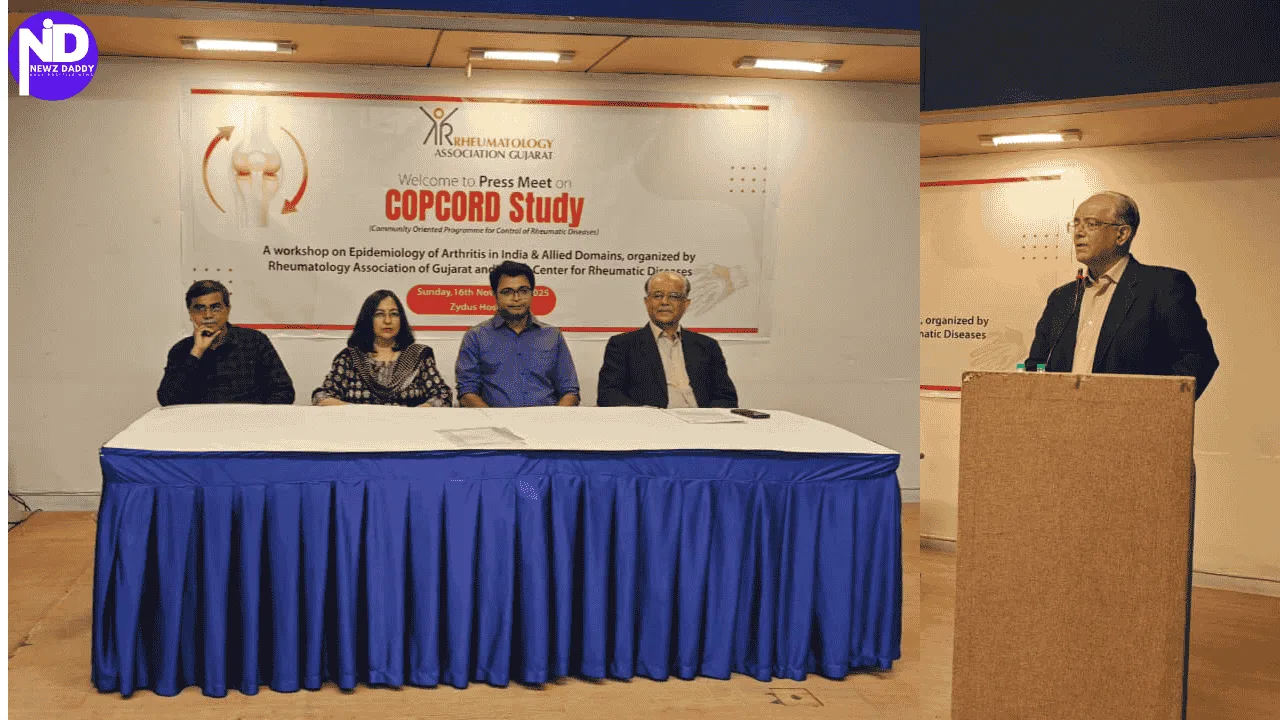
India’s leading rheumatologists have gathered in Ahmedabad for a major two-day academic conclave on 15–16 November 2025, organised by the Rheumatology Association Gujarat (RAG). This meeting brings together expert clinicians, researchers, and students to learn, share and collaborate deeply on arthritis and autoimmune rheumatic diseases.
At the heart of the gathering are two of India’s top rheumatology figures: Dr Arvind Chopra, Director of the Centre for Rheumatic Diseases in Pune and holder of the Ayush Distinguished Scientist Chair; and Dr Durga Prasanna Misra, Professor of Clinical Immunology & Rheumatology and Editor-in-Chief of the Indian Journal of Rheumatology. Their presence underscores the weight of this event.
According to Dr Reena Sharma, President of RAG, rheumatic and musculoskeletal disorders are among the most common, yet under-reported illnesses in India. She notes that over 195 million Indians (about 19.5 crore) live with arthritis-related pain. This figure highlights the urgent need for greater awareness, teamwork between modern medicine and traditional systems like Ayurveda, and stronger clinical ties.
Research under the WHO’s COPCORD (Community Oriented Programme for Control of Rheumatic Diseases) model, led by Dr Chopra and colleagues, supports these concerns. A large national survey covered more than 55,000 people, many in rural areas, and found that nearly 65% of arthritis sufferers are women. This aligns with prior data that shows joint pain is especially common among women.
Rheumatoid arthritis (RA), a serious autoimmune form of arthritis, affects about 0.5–0.8% of the Indian population, according to earlier COPCORD surveys. In raw numbers, that means 4–5 million people, with tens of lakhs of women, including many of reproductive age, especially affected.
Another large swathe of Indians, more than 54 million, live with osteoarthritis, often affecting knees and spine. Meanwhile, an estimated 17 million experience musculoskeletal pain linked to work stress, lifestyle or injury.
Dr Chopra points out that risk factors for rheumatic disease in India include being female, older age, obesity, manual labour, tobacco use, and lower socio-economic status. He and his team have run COPCORD surveys in India since 1996, making them part of the country’s key effort to track and understand musculoskeletal disease.
At the conference, participants will explore several critical themes: epidemiology (how common diseases are), clinical care, public health views, and integrative approaches combining modern medicine with Ayurveda. This aligns with the growing trend of combining evidence-based medicine with traditional systems.
A highlight of the conference will be the launch of a new COPCORD survey in rural Gujarat, targeting around 7,000 people. This study will look not just at arthritis, but at all kinds of rheumatic disease. The organisers expect to collect and publish data over the next 6–8 months.
On the first day, the scientific sessions include “Epidemiology and Management of Chikungunya Fever and Post-Chikungunya Arthritis,” “Clues to Clinch the Diagnosis of Vasculitis in Medical OPDs,” and “Common Clinical Dilemmas in Patients with Pre-existing Autoimmune Rheumatic Disease.” These are very practical topics, directly linked to what doctors see every day.
The second day features a talk by Dr Chopra on the “Burden of Arthritis: A COPCORD Data Perspective.” There will also be a session on “Arthritis: An Ayurvedic Perspective,” showing how Ayurvedic medicine can contribute to understanding and managing arthritis. Research supports this: Ayurvedic medicine uses herbal formulations and lifestyle changes to address conditions like rheumatoid arthritis by reducing toxins (known as ama) and restoring balance.
The conference also emphasises quality of life: there will be interactive sessions on function and quality of life, and a hands-on workshop where attendees learn to assess quality of life in rheumatic disease. This is important because arthritis does not just affect joints; it affects how people live.
Another major piece is a Scientific Writing Workshop for young clinicians and researchers. It includes sessions called “Beyond the p-value: Weaving Statistics into a Compelling Narrative,” “Anatomy of a Manuscript: A Deep Dive into the IMRaD Framework,” and “Thinking Like a Reviewer: A Live Manuscript Autopsy.” These will help participants learn how to turn their research into strong medical papers.
According to Dr Reena Sharma, the goal is to build a platform where scientists and doctors from rheumatology, internal medicine, public health, and Ayurveda can work together. She believes that combining scientific rigour with compassionate care will lead to better prevention, control, and treatment of arthritis and related disorders.
Other key people organising the event include Dr Sapan Pandya (Vice-President of the Indian Rheumatology Association and senior rheumatologist in Ahmedabad), Dr Deepak Saxena (Director of IIPH Ahmedabad), and Dr Kiran Kale (Ayurveda physician, Assistant Director, CCRAS, Ahmedabad).
This isn’t the first integrative meeting of its kind: similar conferences were held in New Delhi, Pune, Gorakhpur, and Varanasi in August and October 2025. After Ahmedabad, further events are planned in Calicut, Bangalore, Chennai, Hyderabad, Kolkata, and Guwahati, showing how national the push for arthritis awareness and integrative rheumatology is becoming.
Overall, the two-day conclave in Ahmedabad represents a significant step forward. It brings together top experts, young researchers and diverse medical systems to understand better the burden, treatment, and societal impact of arthritis in India. The hope is that strong research, better clinical care and a shared platform will improve outcomes for millions who struggle with these conditions.
Must Read:
World Diabetes Day Ahmedabad: City Unites in Blue for Health