


Artificial Limbs: Kovind Meets Beneficiaries in Lucknow Today
432 People Receive Free Artificial Limbs at Lucknow Camp Attended by Ram Nath Kovind
Former President hears beneficiaries’ experiences as Uttar Pradesh minister announces land or a building for disability services
At a free medical camp in Lucknow on November 1, 432 people with disabilities got the chance to walk with newly fitted artificial limbs or callipers. A team of 40 specialists fitted 549 devices, while former President of India Ram Nath Kovind met beneficiaries and heard about their experiences.

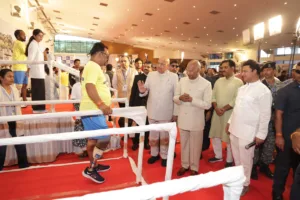
Narayan Seva Sansthan, based in Udaipur, held the event at Dayal Gateway Hotel in Gomti Nagar. The event also brought an announcement from Uttar Pradesh Social Welfare Minister Asim Arun, who said the state government would provide the organisation with a plot of land or a building to help it serve people with disabilities in the state.
Ram Nath Kovind, who inaugurated the camp by lighting a ceremonial lamp, said: “After interacting with the beneficiaries and listening to their experiences, there is little left for me to say, because the work of Narayan Seva Sansthan speaks for itself.”
He spoke about the effect that physical disability can have on families, saying that when a child loses the ability to smile due to a disability, the whole family shares the pain. He wished the beneficiaries a bright future as they worked towards greater independence.
Before the formal programme, Kovind met beneficiaries and listened to their personal accounts. He also spoke with doctors to understand how artificial limbs were fitted.
The camp followed a selection and measurement exercise held on September 13. More than 550 people registered at that camp, from which 432 beneficiaries were selected to receive artificial limbs and callipers.
The devices were fitted according to the needs of each person. The team helped beneficiaries practise walking and used mirror bars and physiotherapy to support balance and movement. They also received advice on how to use and care for their artificial limbs.
Free meals were arranged for those attending the camp.
For people who have lost a limb, receiving an artificial limb can help with everyday tasks such as walking, standing and moving around. However, fitting the device is only one part of the process. The person must also learn how to use it safely and adjust to its movement.
That is why walking practice and physiotherapy formed part of the Lucknow camp. A parade by beneficiaries walking with their newly fitted devices became one of the main events of the day, as family members watched them take their first steps with the new support.
The fitting of 549 devices among 432 people also shows that some beneficiaries required more than one artificial limb or calliper.
Artificial limbs and callipers serve different purposes. An artificial limb replaces a missing part of the body, while a calliper is an external support used to help people with weak or affected limbs stand, walk or maintain their position. Both can help people carry out daily activities, depending on their medical needs.
Arun, who presided over the programme, said the state government would provide land or a building to Narayan Seva Sansthan for its work with people with disabilities in Uttar Pradesh.
The announcement could help the organisation extend its services to more people who need medical care and assistive devices. Details of the proposed site, its size and the timeline for making it available were not announced at the event.
Prashant Agarwal, president of Narayan Seva Sansthan, said the organisation aimed to help people with disabilities live with dignity and independence. Its work includes medical treatment, rehabilitation and the provision of artificial limbs.
The organisation was established in 1985. According to figures provided by the institution, it has supplied free artificial limbs to more than 40,809 people with disabilities and provided free medical services to over 456,000 beneficiaries.
The figures cover its work over several decades. They also point to the scale of demand for medical support among people who may face difficulty paying for treatment or assistive devices.
India has a wide range of disability support needs, from medical care and rehabilitation to access to education, jobs and public services. The Rights of Persons with Disabilities Act, 2016, recognises the rights of persons with disabilities and sets out measures to support their participation in society.
Access to assistive devices can help people take part in daily life, but the results also depend on proper fitting, training, follow-up care and access to facilities. For people living far from hospitals or specialist centres, reaching such services can be difficult.
The Lucknow camp brought several of these services together at one venue, with specialist staff handling the fittings and guiding beneficiaries through walking practice.
Vandana Agarwal, director of Narayan Seva Sansthan, delivered the welcome address. Patron Satya Bhushan Jain proposed the vote of thanks. Trustee Devendra Chaubisa attended the programme, along with other dignitaries, social workers and volunteers.
The beneficiaries’ walk at the end of the camp offered a visible account of what the devices could help them do. Their next steps will depend on how well the artificial limbs and callipers fit into their daily lives, and whether they can continue to receive the care and support needed to use them.