

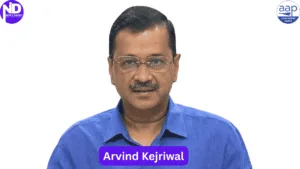

Arvind Kejriwal is one of the most prominent and controversial leaders in modern Indian politics. He rose from a background in civil service and activism to become the face of the Aam Aadmi Party, a party that changed the tone of political campaigning in Delhi and beyond.
Born on 16 August 1968, Kejriwal studied mechanical engineering at IIT Kharagpur and later joined the Indian Revenue Service. Before entering mainstream politics, he worked on governance and citizen-rights issues through his NGO Parivartan, where he focused on public distribution, electricity, income tax problems, and corruption-related grievances. His early work helped build his image as an anti-corruption activist rather than a traditional politician.
Kejriwal became nationally known during the India Against Corruption movement in 2011, which demanded a strong Lokpal law. That campaign became the foundation for the Aam Aadmi Party, which he founded in 2012 with a promise of cleaner politics and more accountable governance. In 2013, AAP made a striking debut in the Delhi Assembly elections, and Kejriwal defeated Sheila Dikshit in New Delhi to become chief minister.
His first term as chief minister lasted only 49 days because he resigned after failing to pass the Jan Lokpal Bill. Even so, he quickly returned to power when AAP won a huge mandate in the 2015 Delhi elections, taking 67 of 70 seats. He was re-elected again in 2020, confirming his popularity in Delhi and his ability to win repeated public support.
As chief minister, Kejriwal’s government became known for its focus on public services. His administration emphasised schools, healthcare, electricity, and water supply, and it introduced widely discussed measures such as Mohalla Clinics, subsidised electricity, and free water up to a fixed monthly limit for households. Supporters credit him with improving everyday governance for ordinary people, especially in the areas of education and basic utilities. Critics, however, argue that his politics can be confrontational and that his governance style often creates conflict with the central government.
Kejriwal’s political journey also moved beyond Delhi. He ran against Narendra Modi in Varanasi in 2014, though unsuccessfully, and later worked to expand AAP’s influence in states such as Punjab, Gujarat, and Goa. That expansion showed that AAP wanted to become a national force, not only a Delhi-based party.
Overall, Arvind Kejriwal represents a new kind of Indian politician: an activist-turned-administrator who built his career around anti-corruption, civic reform, and direct public appeal. His rise, setbacks, and returns have made him a major figure in the story of 21st-century Indian politics.