


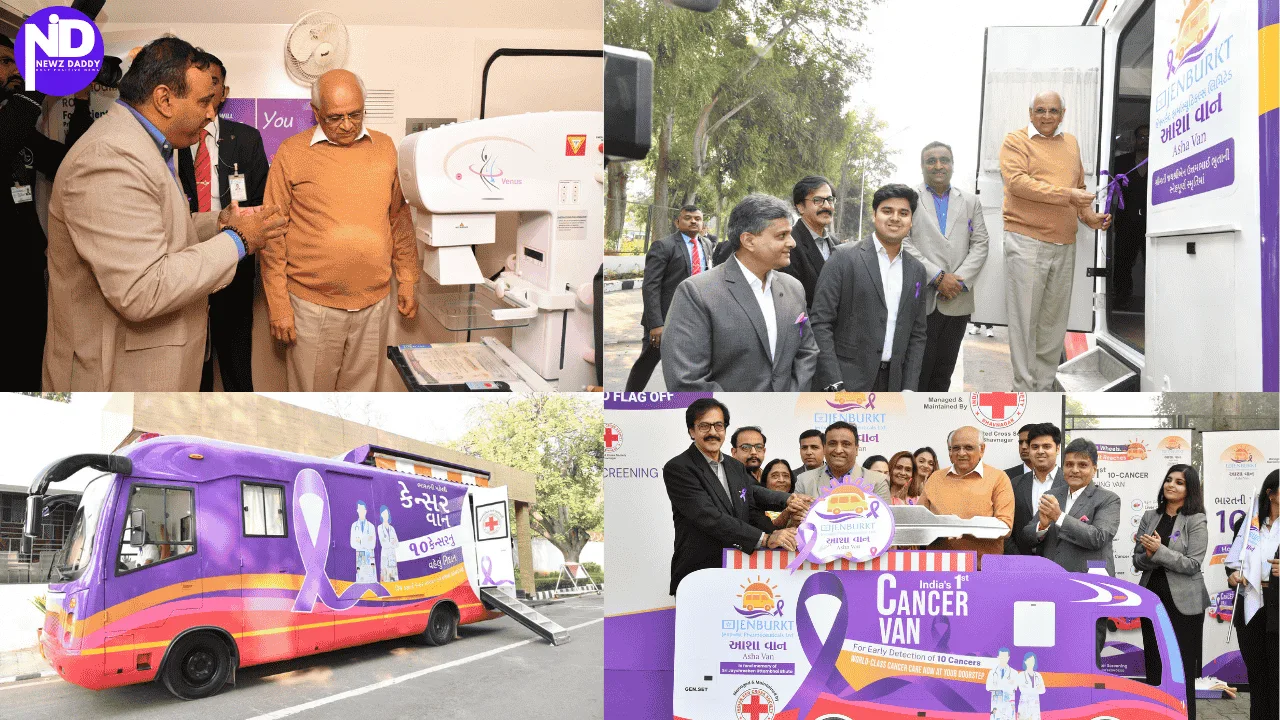
ASHA Van Cancer Screening Changes Cancer Care in Gujarat
ASHA Van cancer screening delivers early diagnosis to Gujarat’s villages
Gandhinagar, India, January 8, 2026, marked an important day for public health in Gujarat when Jenburkt Pharmaceuticals Limited launched India’s first mobile cancer screening van that can screen for 10 different types of cancer. The initiative was inaugurated by the Honourable Chief Minister of Gujarat, Shri Bhupendra Patel, and the van has been named the Jenburkt ASHA Van. It has been donated by Jenburkt Pharmaceuticals and will be managed by the Indian Red Cross Society, Bhavnagar District. This effort brings together the government, private healthcare and a trusted humanitarian organisation with one shared goal: early cancer detection for people who usually have limited access to such services.
Cancer remains one of the leading causes of death in India, and many cases are detected late, especially in rural and semi-urban areas. Studies and public health data over the years have shown that late diagnosis is often linked to poor access to screening facilities, lack of awareness and the high cost of tests. By placing advanced diagnostic services on wheels, the ASHA Van directly addresses these barriers. Instead of people travelling long distances to large hospitals, the hospital now comes to their doorstep.
The ASHA Van is designed to screen for breast, cervical, oral, blood, prostate, testicular, pancreatic, liver, colorectal and lung cancers. These cancers include some of the most common and deadly forms seen in India. Oral cancer, for example, has a high incidence in western India due to tobacco and areca nut use. Breast and cervical cancers remain among the top causes of cancer-related deaths in women, largely because they are detected at later stages. Screening for these conditions at an early stage can greatly improve survival rates and reduce treatment costs.
What makes this van unique is the technology it carries. It uses world-class equipment, including a full mammography unit for breast cancer screening and thermogrid technology, which is known for being non-invasive and comfortable for patients. Integrated IT systems allow patient data to be recorded, reviewed and shared securely with specialists. This kind of digital support helps in faster reporting, follow-ups and referrals, which are often weak points in rural healthcare systems.
The van has also been designed with dignity and comfort in mind. Many people avoid screening due to fear, embarrassment or discomfort, especially women and elderly patients. On-site screening, immediate counselling and access to specialist consultations help reduce anxiety and confusion. Tele-counselling facilities allow patients to speak to experts without delay, ensuring that early detection leads to proper care and not just a diagnosis. This turns screening into a complete care pathway rather than a one-time test.
During the inauguration, the Honourable Chief Minister of Gujarat, Mr Bhupendra Patel, highlighted the high number of oral cancer cases in the Saurashtra region. His remarks reflect long-standing public health concerns in the area. He also pointed out that if such mobile units are deployed across multiple districts, they could bring major benefits by enabling early detection and timely treatment. His support signals strong government backing for preventive healthcare models.
Mr Ashish U Bhuta, Chairman and Managing Director of Jenburkt Pharmaceuticals, spoke about the inequality in access to cancer screening. His statement that cancer does not discriminate by geography, but access does, reflects a widely recognised truth in Indian healthcare. Urban centres often have advanced facilities, while rural areas struggle. By offering the same quality diagnostics trusted by leading cancer institutes, the ASHA Van aims to reduce this gap. Early diagnosis not only saves lives but also protects families from financial hardship caused by advanced cancer treatment.
Dr Milan Dave, Chairman of the Indian Red Cross Society, Bhavnagar, described the initiative as a source of hope and dignity for underserved communities. Mobile screening programmes in other parts of the world have shown that such models can significantly increase screening rates and reduce mortality over time. His observation that hundreds of lives could be saved each year underlines the long-term impact this van could have at the district level.
Mr Sumit Thakkar, Vice Chairperson of the Indian Red Cross Society, Bhavnagar District Branch, noted that the partnership with Jenburkt has created a healthcare resource that was previously unavailable in the region. The Red Cross has deep community reach and trust, which is crucial for encouraging people to come forward for screening, especially in areas where fear and myths around cancer still exist.
Jenburkt Pharmaceuticals Limited, headquartered in Mumbai, has over four decades of presence in Gujarat. The company is known for quality-driven innovation, ethical practices and patient-focused healthcare solutions. This initiative reflects a growing trend where pharmaceutical companies are extending their role beyond medicines to preventive care and community health.
The services offered by the ASHA Van will be free or available at nominal rates across Bhavnagar district, supported by community-based screening programmes. This affordability is key, as cost remains one of the biggest reasons people delay or avoid cancer screening. By making early detection accessible, the ASHA Van sets a strong example of how public-private partnerships can play a vital role in saving lives and strengthening India’s healthcare system.
Must Read:
Electro-Homoeopathy Gets Spotlight at Powerful GUJEHCON 2026