


Bharat Ranbhoomi Darshan Expedition Flags Off with Pride
Newz Daddy Defence Updates
Bharat Ranbhoomi Darshan Expedition connects borders, battles and brave hearts
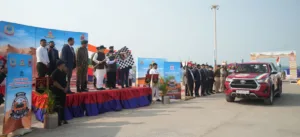
In a solemn tribute to the valour, sacrifice and enduring spirit of Gunners, the Regiment of Artillery, in collaboration with the Gunners of the Indian Navy and the Border Security Force (BSF), Honourable Governor of Telangana Shri Jishnu Dev Varma flagged off the Bharat Ranbhoomi Darshan Expedition from the historic city of Dwarka, Gujarat, on 03 February 2026.


The flag-off ceremony was marked by the presence of senior military officers, veterans, civil administration representatives, NCC Cadets, school children and citizens of Dwarka. Their enthusiastic performance underscored the strong bond between the Armed Forces and the people they protect. Patriotic fervour filled the atmosphere as the expedition team embarked on this historic journey, carrying with them the legacy of courage and sacrifice.

Veterans attending such events play a vital role in passing on lived experiences of war and service to the younger generation. Many of them have served in difficult terrains, from deserts and mountains to coastal regions, and their presence brings history to life. NCC Cadets and school children represent the future of the nation. Interaction with serving soldiers and veterans often inspires discipline, respect and a sense of duty among young minds. Public participation also reflects the Indian tradition of honouring soldiers not just as defenders, but as members of society.
The expedition team will traverse over 3,400 kilometres along India’s western frontier, covering significant border regions of Gujarat and Rajasthan, before culminating at the National War Memorial, New Delhi. The expedition aims to revisit historic battlefields, pay homage at war memorials, interact with border villagers and veterans, and reaffirm the nation’s gratitude towards its brave soldiers.
India’s western frontier has witnessed several key military events, especially during the wars of 1965 and 1971. Areas in Gujarat and Rajasthan include desert sectors where soldiers operated in extreme heat, sandstorms and limited resources. Border villages in these regions often support the Armed Forces during times of tension by providing local knowledge, logistics and moral support. Visiting the National War Memorial at the end of the journey carries deep meaning, as the memorial honours soldiers who laid down their lives after Independence and stands as a national space for remembrance and reflection.
Dwarka, one of India’s most ancient and spiritually significant cities, stands as a symbol of resilience, faith and national heritage. Flagging off the expedition from Dwarka reflects the deep civilisational roots and unwavering national spirit that have guided India through centuries of challenges. The coastal city also holds strategic importance, reinforcing the Navy’s role in safeguarding India’s maritime frontiers.
Dwarka is closely linked to Indian civilisation and is mentioned in ancient texts as the kingdom of Lord Krishna. Over centuries, it has faced natural challenges such as sea erosion while continuing to remain a centre of faith. Its coastal location gives it strategic relevance in modern times as well. India’s western coastline has long been important for trade, security and defence. The Indian Navy plays a crucial role in protecting sea lanes, ports and coastal communities from threats, making Dwarka a fitting starting point for a national military expedition.
Throughout the expedition, the teams will pay homage at war memorials, interact with serving personnel and veterans, and engage with local communities, especially the youth, to inspire patriotism and awareness of India’s military heritage.
Such interactions help bridge the gap between civilians and the Armed Forces. Many young people living far from borders have limited exposure to military life. Meeting soldiers and learning about their daily challenges builds respect and understanding. War memorials across the country serve as silent teachers, reminding citizens of the cost of freedom and the importance of peace. These engagements also strengthen the morale of serving troops and reassure border communities that the nation stands with them.
The Bharat Ranbhoomi Darshan Expedition stands as a powerful reminder of the Armed Forces’ unwavering commitment to the nation. It celebrates jointmanship among the Army, Navy and BSF, honours the supreme sacrifices of India’s war heroes, and seeks to instil a deep sense of national pride among citizens.
Jointmanship has become increasingly important in modern defence strategy, where coordination between different forces ensures faster response and stronger security. The BSF, as India’s first line of defence along international borders, works closely with the Army and Navy during peacetime and conflict. Recognising this cooperation through such expeditions helps citizens understand how national security is maintained on multiple fronts.
As the expedition moves forward from Dwarka, it carries a message of unity, remembrance and resolve. A tribute to the past, a salute to the present, and an inspiration for the future.