


Commonwealth Games: Records, History, Traditions And India’s Performance
Commonwealth Games Glasgow 2026: A Complete Look At The Games Traditions, King’s Baton Relay And Opening Ceremony
By Shri Pradeep Trivedi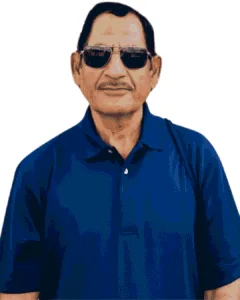

Freelance Writer | Author | Sports Analyst | Lecturer | Sports Journalist
English translation adapted from the original Gujarati article without changes to the content or experiences described by the author.
Part 1: Introduction
The city of Glasgow, famous as the “City of Style”, is hosting the 23rd Commonwealth Games. Glasgow is Scotland’s largest and coolest city. It is well known for both its industry and its culture. The city has also been recognised as a UNESCO City of Music.
The 23rd Commonwealth Games will take place in Glasgow from 23 July to 2 August, lasting 11 days.
The people of Glasgow, who are known as “Weegies”, are among the friendliest and funniest people in the world. Glasgow is also called the “Curry Capital of the UK” and is known as the city where Chicken Tikka Masala was created. The city’s national dish is Haggis. The Commonwealth Games are the biggest sporting event for the member countries of the Commonwealth of Nations.
This year, around 3,000 athletes from 74 countries will compete in 215 events across 10 sports.
The Origin
The idea of holding this type of sporting event was first suggested by John Astley Cooper in 1891. To support this idea, committees were formed in Australia, New Zealand and South Africa.
John Astley Cooper’s idea also inspired Pierre de Coubertin of France to start the Olympic Games.
The first attempt to put this idea into action was made in 1911 during the celebrations for the coronation of King George V in London. Teams from Australia, Canada, South Africa and the United Kingdom took part in the event. Canada won the championship and received a Silver Cup from Lord Lonsdale.
The Commonwealth of Nations includes most of the former territories of the British Empire.
The Different Names
Today, we know this sporting event as the Commonwealth Games. However, this name was first used only in 1978, at the 11th Games held in Edmonton. Before that, the event had different names.
The first official Games were held in 1930 under the name British Empire Games. This name continued until 1950. In 1954, at the 5th Games in Vancouver, the event was renamed the British Empire and Commonwealth Games. This name remained in use until 1974. Then, at the 11th Games held in Edmonton in 1978, the event officially became known as the Commonwealth Games. It has kept this name ever since. The name Commonwealth Games keeps the historic link with Britain while showing its modern identity.
The Games are also known as the Friendly Games.
The First Games
The first Commonwealth Games were held in Hamilton, Canada, from 16 to 23 August 1930. A total of 400 athletes from 11 countries competed in 59 events across 7 sports. England finished first by winning 25 gold medals and 60 medals in total. Host nation Canada finished second with 20 gold medals.
India’s Entry
India first took part in the Commonwealth Games after Independence at the 5th Games, held in Vancouver, Canada, in 1954. Only four Indian athletes competed, and they took part in athletics. However, as British India, India had already competed in the 2nd Games, held in London in 1934. At those Games, Rashid Anwar won a bronze medal in wrestling. India also competed in cycling in 1938, but did not win any medals.
India did not take part in the 1950 Games. India won its first Commonwealth Games gold medals in 1958, at the 6th Games held in Cardiff, Wales. Milkha Singh won gold in the 440-yard race, while Leela Ram won gold in the heavyweight wrestling event. India also won a silver medal through Laxmikant Pandey in the welterweight wrestling category. India finished with three medals and entered the top ten of the medal table for the first time by finishing eighth.
It was at these Games that Milkha Singh earned the famous title “The Flying Sikh.”
India’s Overall Performance
India has won a total of 564 medals at the Commonwealth Games. These include 203 gold, 190 silver, and 171 bronze medals. India is fourth in the all time medal table.
India’s best performance came at the 19th Commonwealth Games, held in New Delhi in 2010. The country won 101 medals, including 38 gold, 27 silver, and 36 bronze medals. India finished second in the medal table, behind Australia, which won 74 gold medals.
One of the biggest moments at the 2010 Games came in the women’s discus throw. Indian athletes won all three medals in the event. Krishna Poonia won the gold medal, Harwant Kaur won silver, and Seema Antil won bronze.
India also won gold medals through many top athletes. In shooting, Abhinav Bindra, Gagan Narang, Heena Sidhu, and Anu Raj won gold. In wrestling, Geeta Phogat, Yogeshwar Dutt, Sushil Kumar, and Alka Tomar won gold medals. In archery, Deepika Kumari, Dola Banerjee, and Bombayla Devi won gold. In boxing, Manoj Kumar won gold. In badminton, Saina Nehwal, Jwala Gutta, and Ashwini Ponnappa also won gold medals.
India won a silver medal in hockey.
Shooting was India’s most successful sport at the 2010 Games, with 30 medals.
At the 21st Commonwealth Games, held on the Gold Coast in 2018, India won 66 medals. These included 26 gold, 20 silver, and 20 bronze medals. India finished third in the medal table.
At these Games, Neeraj Chopra won gold in the javelin throw. Manu Bhaker won gold in shooting. Saina Nehwal won gold in badminton. Mary Kom won gold in boxing. Mirabai Chanu and Vinesh Phogat won gold in weightlifting. Harmeet Desai from Gujarat won gold as part of India’s table tennis team event.
India finished fourth in the medal table in 2002, 2006, and 2022.
Overall, India is ranked second in Commonwealth Games history in shooting, wrestling, weightlifting, table tennis, archery, field hockey, and tennis.
India is ranked third in badminton, powerlifting, and cricket.
The Hosting
The Commonwealth Games have been hosted in 20 cities across nine countries. Australia has hosted the Games the most, with five editions held in its cities. Auckland and Edinburgh have each hosted the Games twice.


Glasgow has now become the third city to host the Commonwealth Games twice. Glasgow became the host city as a replacement. The 2026 Commonwealth Games were originally awarded to Victoria, Australia. However, Victoria withdrew because of concerns over the rising costs of hosting the event. As part of the agreement, the Victorian Government will provide more than £2 million to the organisers in Glasgow. After hosting the Games in 2014, this will be the fourth Commonwealth Games held in Scotland. The 2026 Commonwealth Games are the first to be held after the death of Queen Elizabeth II and the accession of King Charles III as Head of the Commonwealth.
They are also the first Commonwealth Games to be held since Donald Rukare became President of the Commonwealth Games Federation.
Sports To Be Played
Because of the short time available to organise the event, only 10 sports will be included in the 2026 Commonwealth Games. This is the smallest number of sports since 1994.
The sports are:
- Athletics and Para Athletics
- Artistic Gymnastics
- Basketball and Wheelchair Basketball
- Bowls and Para Bowls
- Boxing
- Cycling and Para Track Cycling
- Judo
- Netball
- Swimming and Para Swimming
- Weightlifting and Para Powerlifting
Sports such as field hockey, badminton, table tennis, wrestling, shooting, and squash have not been included, and these are the sports in which India usually wins many medals.
The Mascot
The official mascot of the 23rd Commonwealth Games, Glasgow 2026, is Finnie.
Finnie is based on Scotland’s national animal, the unicorn. Instead of a traditional horn, Finnie has a traffic cone. The mascot was designed with ideas from 76 children from 24 schools across Glasgow.
Finnie was officially unveiled on 23 July 2025 at the top of the Finnieston Crane by Scotland’s First Minister, John Swinney, together with the mascot creators.
The Ambassadors
On 21 July 2025, Eilish McColgan, Scotland’s Commonwealth champion in the 10,000 metres, was announced as the first official ambassador for the 23rd Commonwealth Games.
Later, weightlifter Emily Campbell, gymnast Jake Jarman, swimmer Duncan Scott, and wheelchair basketball player Robyn Love were also announced as ambassadors.
The King’s Baton Relay
The King’s Baton Relay was launched 500 days before the Games, on 10 March 2025, by King Charles III. The King handed the Baton to the first baton bearer, Sir Chris Hoy. The Baton Relay is very important because the Baton travels through many countries and cities over 500 days before reaching the Opening Ceremony on 23 July 2026. The Baton carries a message from the Head of the Commonwealth.
The Baton Relay traditionally begins at Buckingham Palace in London as part of the Commonwealth Day celebrations.
The message inside the Baton is read by the King, or by his representative, during the Opening Ceremony.
The Opening Ceremony
For the first time in Commonwealth Games history, the Opening Ceremony of the 23rd Commonwealth Games will be held inside a fully indoor arena at the OVO Hydro in Glasgow. The ceremony has been designed by the Glasgow 2026 Organising Company under the leadership of Louise Mahon, Head of Ceremonies.
More than 600 volunteers, together with Scottish performers, will take part in the ceremony.
After the King’s Baton Relay reaches its final destination, the Parade of Nations will begin. Athletes from around 74 countries will march into the arena.
The Royal Family
The Commonwealth Games can also be called the “Royal Games” because the Head of the Commonwealth is the British King or Queen. The Royal Family has always played an important role in the Games.
Every Commonwealth Games is opened by the King, the Queen, or another member of the Royal Family.
The Baton Relay is always known as the Queen’s Baton Relay or the King’s Baton Relay. It carries a message from the King or Queen, which is read during the Opening Ceremony after the Baton completes its journey.
Members of the Royal Family, including the King, Queen, or Governor-General, often present medals to the athletes. Queen Elizabeth II is known as the “Mother of the Commonwealth Games.” She ruled from 1952 to 2022, a period of 70 years, and officially opened the Commonwealth Games 16 times.
At the 1954 Commonwealth Games in Vancouver, the 27-year-old Queen Elizabeth II sent the Opening Ceremony message, which was broadcast live on television.
At the 2014 Commonwealth Games in Glasgow, the 88-year-old Queen Elizabeth II attended the stadium in person and read the Baton message.
She read her final Commonwealth Games message at the 2022 Birmingham Games. Four months later, she passed away.
From 1970 to 2018, Prince Philip, Duke of Edinburgh, served as President of the Commonwealth Games Federation.
He regularly attended the Games and presented medals to athletes.
The Memorable Royal Moments
At the 1970 Commonwealth Games in Edinburgh, Queen Elizabeth II invited athletes to a tea party at the Palace of Holyroodhouse, her official residence in Scotland, on 22 July 1970.
The event became famous as the Royal Tea Party, also known as the Garden Party.
At the 1986 Commonwealth Games in Edinburgh, around 32 countries from Africa, Asia, and the Caribbean boycotted the Games.
Even so, the Queen opened the Games and said,
“The Games must go on.”
It is often said that the DNA of the Commonwealth Games is royal.
People also say that the Queen is the spirit of the Games, while the Princes and Princesses are its public face.
The Historic and Memorable Moments
At the 1954 Commonwealth Games in Vancouver, the famous “Miracle Mile” took place. For the first time, Roger Bannister and John Landy both completed the one mile race in less than four minutes.
At the 1962 Commonwealth Games in Perth, the Games were broadcast live on television for the first time.
At the 1998 Commonwealth Games in Kuala Lumpur, cricket was included for the first time. South Africa won the gold medal.
India took part under the captaincy of Ajay Jadeja.
At the 2002 Commonwealth Games in Manchester, Para sports were included in the medal table for the first time and were given equal status.
At the 2010 Commonwealth Games in New Delhi, the world praised India’s Opening Ceremony and the Commonwealth Games Village.
India won 101 medals, becoming the first time the country had won more than 100 medals at a Commonwealth Games.
At the 1994 Commonwealth Games in Victoria, a lighting catwalk collapsed during the Opening Ceremony.
Two people were injured, but the ceremony continued.
At the 2006 Commonwealth Games in Melbourne, several athletes from Cameroon went missing.
Eight athletes disappeared before the Games ended after seeking political asylum, and they never returned to their country. At the 2014 Commonwealth Games in Glasgow, a memorable moment took place after the women’s high jump event. England’s Isobel Pooley, aged 22, won the silver medal with a jump of 1.92 metres. After winning her medal, she warmly embraced and kissed her girlfriend. This became one of the first major LGBTQ moments in Commonwealth Games history. At the 2022 Commonwealth Games in Birmingham, women’s Twenty20 cricket was included for the first time. India, led by Harmanpreet Kaur, won the silver medal, while Australia won the gold medal.
The Interesting Records
- Australia has won the highest number of gold medals, with 1,001 gold medals. It is the only country to have won more than 1,000 gold medals at the Commonwealth Games.
- Australia also holds the record for the highest number of total medals, with 2,596 medals (1,001 gold, 832 silver, and 763 bronze). It is the only country to have won more than 2,500 medals in Commonwealth Games history.
- The record for the most gold medals at a single Commonwealth Games is six. This record is shared by:
- Graham Smith of Canada in 1978 (Swimming)
- Susie O’Neill of Australia in 1998 (Swimming)
- Ian Thorpe of Australia in 2002 (Swimming)
- Emma McKeon of Australia in 2022 (Swimming)
- The youngest gold medallist in Commonwealth Games history is Alexandre Despatie of Canada. He won the 10 metre platform diving event at the age of 13 years and 74 days during the 1998 Kuala Lumpur Commonwealth Games.
- India’s youngest Commonwealth Games gold medallist is Ved Prakash. He won the light flyweight wrestling gold medal at the 1970 Edinburgh Commonwealth Games when he was only 14 years old.
- The record for the most career gold medals belongs to Emma McKeon of Australia. She has won 14 gold medals from a total of 20 Commonwealth Games medals. She competed in three Commonwealth Games, winning:
- Four gold medals in 2014
- Four gold medals in 2018
- Six gold medals in 2022
- India’s most successful Commonwealth Games medallist is shooter Jaspal Rana. During his Commonwealth Games career from 1994 to 2006, he won 15 medals, including:
- 9 gold
- 4 silver
- 2 bronze
- Indian shooter Samaresh Jung created history at the 2006 Melbourne Commonwealth Games by winning seven medals at a single Games. His medals included:
- 5 gold
- 1 silver
- 1 bronze
Conclusion
The Commonwealth Games have always been a very exciting sporting event. The 24th Commonwealth Games, which will also mark the 100th anniversary of the Games, will be held in India, and Ahmedabad will host the event in 2030.
Let us begin preparing to welcome this historic sporting festival.
Acknowledgement:
Newz Daddy extends sincere thanks to Shri Pradeep Trivedi, author, sports analyst and journalist, for sharing his detailed article on the Commonwealth Games. We also appreciate the photographs and personal experiences that have enriched this article.