


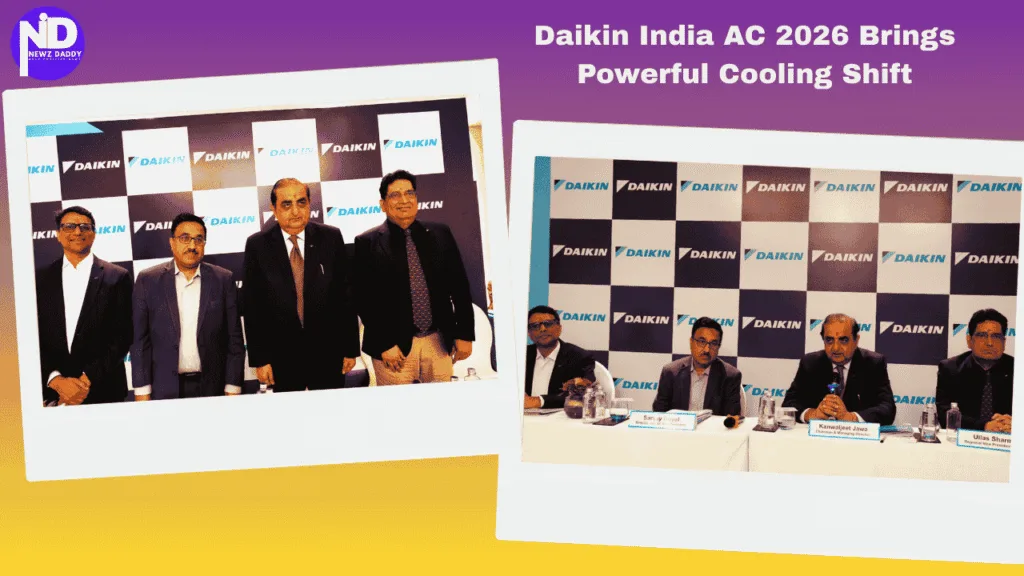
Daikin India AC 2026 Brings Powerful Cooling Shift
Daikin India AC 2026 Reshapes Comfort with Future-Ready Technology
Daikin Airconditioning India Pvt. Ltd., a fully owned subsidiary of Daikin Industries Ltd., showcased its 2026 lineup. At a time when India is experiencing a steep increase in demand for air conditioners due to longer and hotter summers, the news represents a strong push towards smarter and more energy-efficient cooling solutions.
The cooling market in India has been expanding rapidly. According to reports, the nation’s need for air conditioners is rising year by year as more homes relocate to cities and temperatures rise. As a result, energy efficiency becomes essential rather than merely a feature. Daikin is obviously addressing consumer demand as well as environmental concerns by concentrating on more efficient products.
The Bureau of Energy Efficiency’s upgraded standards are adhered to by the new line of room air conditioners. The BEE 2026 Star Rating standards are more stringent than previous regulations. They are intended to help homeowners cut their electricity costs by consuming less power. Since air conditioners are one of the main sources of energy consumption in Indian homes, even minor increases in efficiency can have a significant impact on a large scale.
Here, Daikin’s emphasis on excellent ISEER ratings is crucial. The ISEER rating evaluates an air conditioner’s performance over the course of the cooling season. Better power savings are associated with a higher grade. With electricity costs rising in many parts of India, buyers are now paying more attention to these ratings before making a purchase.
Additionally, the business has emphasised its patented technology, such as the Streamer Discharge system. This function is intended to degrade dangerous airborne particles like germs and allergies. The COVID-19 pandemic has raised awareness of indoor air quality. Because of this, air filtration functions are increasingly considered a major selling benefit, particularly in urban areas where pollution levels can be severe.
The swing compressor, which is renowned for lowering friction and enhancing longevity, is another important component. To put it simply, this prolongs the life of the air conditioner and makes it operate more smoothly. Indian consumers are quite concerned about durability, particularly in areas where air conditioners are used for extended periods of time during the hottest summer months.
The use of IoT-based smart controls demonstrates the growing prevalence of connected houses. Through smartphone apps, users can now set timetables, monitor energy consumption, and operate their air conditioners. This pattern is a part of the larger development of smart home technology in India, where gadgets are becoming more connected and managed via the internet.
For Indian settings, Daikin’s boast of dependable cooling even at temperatures as high as 54°C is particularly pertinent. Extreme heatwaves are common in northern and central Indian cities. In such high temperatures, many conventional air conditioners find it difficult to operate effectively. Businesses like Daikin are attempting to differentiate themselves in a saturated industry by creating goods especially for these conditions.
The VRV Alpha series brings AI-driven cooling to the business market. A system called VRV, or Variable Refrigerant Volume, modifies the refrigerant flow according to the cooling requirements of various areas. It is therefore more effective than conventional central air conditioning systems. VRV systems are already widely used in large houses, workplaces, and shopping centres.
This is further enhanced by the incorporation of artificial intelligence. AI can automatically modify settings to save energy while preserving comfort by analysing usage trends. As companies strive to lower operational expenses and achieve sustainability objectives, this type of clever optimisation is becoming increasingly crucial.
Cooling systems are a major part of the global effort to reduce carbon emissions. In the upcoming decades, a significant portion of energy consumption is anticipated to come from air conditioning alone. Businesses that make investments in more intelligent and environmentally friendly technologies now will probably dominate the market later on.
A broader trend of localisation is also shown in Daikin’s expansion with three factories in India. Manufacturing domestically supports the government’s drive for domestic manufacturing, lowers prices, and enhances supply chains. Additionally, it enables businesses to create goods that are more appropriate for the climate and consumption habits of India.
Pressure from the global supply chain and growing raw material costs are the reasons behind the announced price rise of 7 to 12% starting in April 2026. Daikin is not the only company that does this. Due to rising metal prices, increased transportation expenses, and currency changes, many appliance manufacturers have had comparable difficulties in recent years. Strong product characteristics and brand trust frequently help businesses maintain their market position, even though price increases may have an impact on short-term demand.
Overall, there is a definite direction in Daikin’s 2026 lineup. Energy conservation, intelligent technology, and dependable performance under harsh circumstances are the main priorities. The need for sustainable and effective cooling solutions will only increase as India grows and becomes more urbanised. The future of this rapidly changing sector is likely to be shaped by businesses that can strike a balance between innovation and affordability.