


Defence Acquisitions Worth Rs 1.10 Lakh Crore Cleared by DAC
Defence forces get fresh Rs 1.10 lakh crore acquisition push
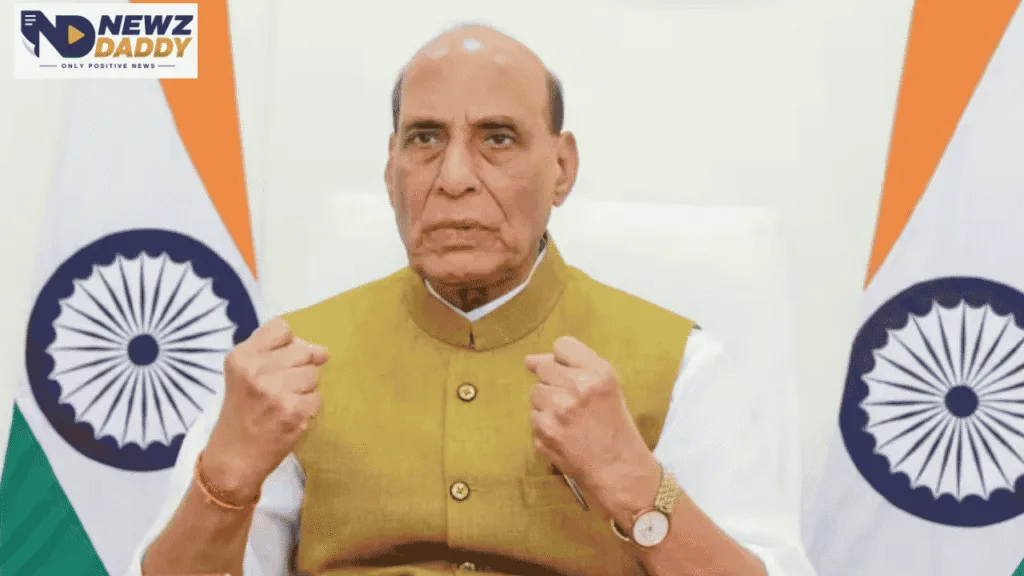
The Defence Acquisition Council (DAC), chaired by Defence Minister Rajnath Singh, has approved proposals worth about Rs 1.10 lakh crore for the Indian Army, Indian Navy and Indian Air Force. The approvals were given on September 7, 2026, as the government continues to put more money into military modernisation and domestic defence production.
The decisions cover a wide range of equipment, including CBRN reconnaissance vehicles, high mobility vehicles, advanced light helicopters, mine-laying systems, radars, marine gas turbines and electronic warfare equipment.
The DAC gave what is known as Acceptance of Necessity (AoN), which is an in-principle administrative approval for an acquisition proposal. It is an important stage in the procurement process, but it does not mean that contracts for all the equipment have been signed. The DAC was created in 2001 to oversee defence procurement and approve major acquisition requirements.
The latest approvals come at a time when India’s defence spending is rising. The Union Budget for 2026-27 allocated Rs 7.85 lakh crore to the Ministry of Defence. More than Rs 2.19 lakh crore was set aside under the capital head, including Rs 1.85 lakh crore for capital acquisition. The government has also reserved Rs 1.39 lakh crore, or about 75% of the capital acquisition budget, for purchases from domestic defence industries.
For the Indian Army, the DAC approved the purchase of Chemical, Biological, Radiological and Nuclear, or CBRN, Recce Vehicles. These vehicles are intended to detect, identify, monitor and mark areas affected by dangerous chemical, biological, radiological or nuclear agents.
The Army will also acquire High Mobility Vehicles. Such vehicles are used to move troops, equipment and supplies in difficult terrain, where ordinary transport vehicles may face limits.
Another approved item is the Self-Propelled Mechanical Mine Layer. Its purpose is to allow troops to lay minefields quickly, including in areas where terrain makes such work difficult.
Advanced Light Helicopters, or ALHs, are also part of the approvals. The helicopters are intended for complex missions across different types of terrain and operational conditions for the Indian Army and the Indian Air Force.
The list also includes Trawl Tanks and the Sarvatra Bridge System. These systems are linked to the movement of fighting formations across obstacles such as water crossings and difficult ground.
Sarvatra has been developed by the Defence Research and Development Organisation (DRDO). The system is designed to cross wet and dry obstacles of up to 75 metres, using bridge sections in 15-metre steps. DRDO says the system can be prepared within 100 minutes. It has also been designed for use during natural disasters such as floods and earthquakes.
The system has a history of Indian industry involvement as well. DRDO records show that Larsen & Toubro worked on the bridge structure and launching mechanism, while Bharat Earth Movers Limited supplied customised Tatra vehicles for the system.
For the Indian Navy, the DAC approved Arudhra Radars and the design and development, followed by procurement, of Marine Gas Turbines.
Arudhra is a medium-power radar developed by DRDO. The system was among the indigenous technologies displayed by DRDO during the 2025 Republic Day parade.
The new radar procurement is intended to replace older Air Route Surveillance Radars at various Naval Air Stations.
The Marine Gas Turbine programme has a different importance. Gas turbines are used as propulsion systems on warships. The government says the proposed design and development work will help reduce dependence on foreign suppliers for this part of naval propulsion.
The move fits into a wider effort to increase the share of Indian-made defence equipment. In July 2025, the DAC approved 10 capital acquisition proposals worth about Rs 1.05 lakh crore under the Buy (Indian-IDDM) category, covering equipment such as electronic warfare systems, surface-to-air missiles and naval mine countermeasure vessels.
The Indian Air Force will also receive equipment aimed at improving the capabilities of its fighter aircraft, transport aircraft and helicopters.
The DAC approved a Ground-Based Multi-Purpose Jammer, or GBMPJ. The system is intended to interfere with hostile radar systems, giving Indian forces another electronic warfare capability.
Electronic warfare has become an increasingly important part of modern military operations because radar, communications and other electronic systems play a major role in detecting and tracking forces. India’s defence research programme already includes several radar and electronic warfare systems developed by DRDO.
The Air Force will also install the Defence Forces Secure Access Card, or DEFSAC, system. It is designed to replace paper-based identity cards, passes and permits with smart cards using radio-frequency identification technology.
One of the clearest features of the September 7 approvals is the strong domestic procurement component. The Ministry of Defence said about 98% of the total AoNs approved in this round will be procured from Indian industry.
That figure comes as the government is increasing the share of defence spending directed towards Indian manufacturers. In the 2026-27 Budget, 75% of the capital acquisition budget was earmarked for domestic industry. The previous year’s allocation also kept 75% of the modernisation budget for domestic sources.
The policy shift has also been accompanied by growth in India’s defence production. Government figures show that defence production reached Rs 1.54 lakh crore in 2024-25, while defence exports reached Rs 23,622 crore.
The scale of recent DAC decisions shows how quickly procurement plans are growing. In March 2026, the council cleared proposals worth about Rs 2.38 lakh crore. The Ministry of Defence said that during financial year 2025-26, the DAC had given AoN to 55 proposals worth Rs 6.73 lakh crore, while capital procurement contracts worth Rs 2.28 lakh crore had been signed by that point.
The September approvals therefore add another large set of projects to India’s military procurement pipeline. The next stages will involve detailed procurement procedures, trials where required, vendor selection and contracts before the approved equipment can enter service.
For the armed forces, the proposals cover basic battlefield mobility as well as radar, electronic warfare, aviation and naval propulsion. For Indian defence companies, the 98% domestic share could mean more work in manufacturing, system integration and related supply chains as these proposals move from approval towards actual orders.