


Digital Learning and Frugal AI Discussed at BAOU Lecture
Open and Digital Learning Must Reach Every Learner, Says Education Expert at Ahmedabad University Lecture
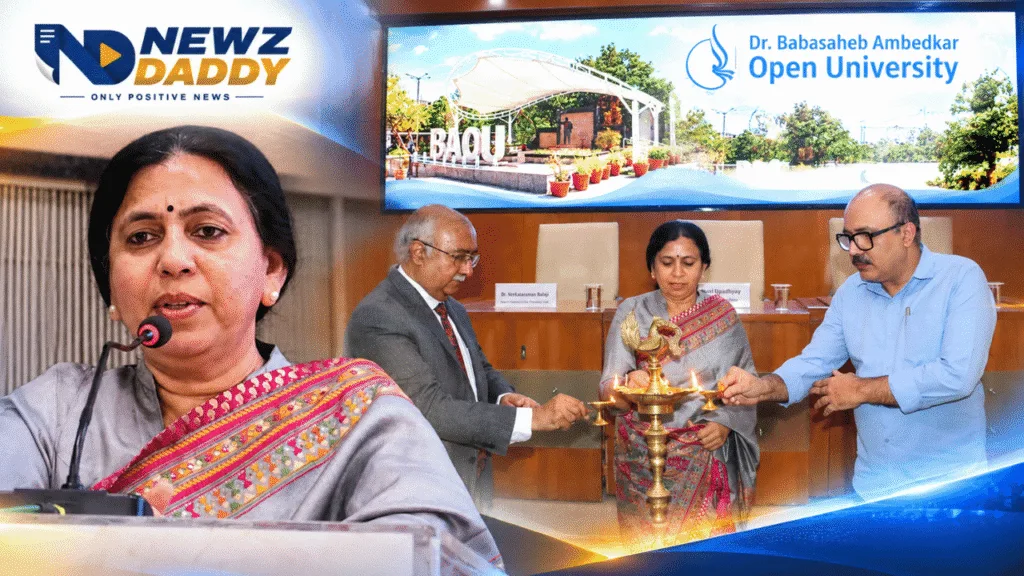
Education must remain open to people of all ages, even as artificial intelligence (AI) and digital technology change the way people learn and work. This was the message from Dr Venkataraman Balaji, Special Adviser to the President of the Commonwealth of Learning, during a special lecture at Dr Babasaheb Ambedkar Open University in Ahmedabad.
The lecture, titled ‘Reimagining Open and Digital Learning: Technology, Innovation and Inclusion for the Next Generation’, focused on the need to make education more accessible, flexible and useful to learners from different backgrounds.
Dr Balaji spoke about lifelong learning, new job skills, the use of AI in education and the need to reach people who have limited access to digital tools.
The event was attended by the university’s Vice-Chancellor, Prof (Dr) Ami Upadhyay, and Academic Director Dr Maheshprasad Trivedi.
The discussion comes at a time when universities are facing new demands from students, workers and employers. People may need to learn new skills several times during their working lives. At the same time, many learners still face problems such as poor internet access, a lack of digital devices and the cost of education.
The Commonwealth of Learning, an international organisation based in Canada, works with countries to improve access to education through open, distance and technology-based learning.
Dr Balaji has worked with the organisation since 2010. He has been involved in projects that use technology to reach learners in rural and remote areas. These include online courses and the Aptus device, which supports learning in areas without internet access.
During the lecture, Dr Balaji said young people must prepare for changes in the world of work. He pointed to climate change and global instability as issues that will affect future jobs and skills.
He said green and blue skills would become important for young people. Green skills relate to work that supports the environment, such as clean energy and waste management. Blue skills are linked to water, marine resources and related work.
His message was that education must continue throughout a person’s life. People should have chances to return to learning, improve their skills and prepare for new work needs.
For many workers, this could mean learning a new skill while keeping their current job. For young people, it could mean gaining skills that match the needs of employers.
One of the main topics was Frugal AI, which focuses on the use of AI tools that are affordable and can work with limited resources.
Dr Balaji said education planners should not assume that every learner has access to the internet or modern digital devices. This is a concern for students in remote areas and communities with limited digital facilities.
The Commonwealth of Learning has been working on AI systems that can run on local computers and servers. Such systems can reduce the need for constant internet access and help institutions manage costs.
The approach also raises questions about data privacy and control. When universities use outside AI services, student information may be processed on systems beyond their direct control. Local systems can give institutions greater control over their data, though they still need proper security and trained staff.
The lecture also addressed the growing use of AI in student learning and assessment.
Dr Balaji said universities must review traditional methods of testing as AI tools become more common. Teachers need ways to check whether students understand a subject, can think clearly and can apply what they have learnt.
He stressed that teachers must remain central to education. Technology should support their work, while teachers continue to guide students and check learning.
This concern is shared by education bodies such as UNESCO, which has called for the use of AI in education to protect learners’ rights and keep teachers involved. Its work also points to risks linked to privacy, unequal access and the possible effect of AI on learning.
Another topic was micro-credentials, which allow learners to gain proof of specific skills through shorter courses.
The Commonwealth of Learning is working on a framework for micro-credentials across its member countries. These short courses can help people gain skills for employment, further study or career changes. They may also count towards larger qualifications, depending on the rules of the education provider.
For learners who cannot commit to a full degree, this offers another way to continue their education.
At the lecture, Vice-Chancellor Prof. (Dr) Ami Upadhyay said open universities must remain inclusive. She noted that rankings, accreditation and quality standards are becoming more important in India’s higher education system.
Traditional universities are also expanding online and distance learning. She said open universities must strengthen their own role and continue to improve the quality of education.
She also noted that open and distance learning was once mainly linked to distance education. Digital learning and online education have now created new ways to reach students.
A question-and-answer session followed the lecture. Students, teachers and other attendees asked questions about education and technology. Dr Balaji answered them and discussed the issues with the audience.
Directors of university departments, teachers and students attended the programme. Dr Reema Upadhyay and Dr Aditya Joshi helped manage the event.
The lecture placed a clear focus on a question facing education today: how can new technology help more people learn without leaving behind those who have fewer resources?
The answer, as discussed at the Ahmedabad event, lies in keeping education open, making learning flexible and ensuring that teachers and learners remain at the centre of the process.
Must Read:
Sanskrit Room Opens at BAOU Campus in Ahmedabad Drive
Viksit Gujarat 2047 Seminar Held at Ambedkar Open University