


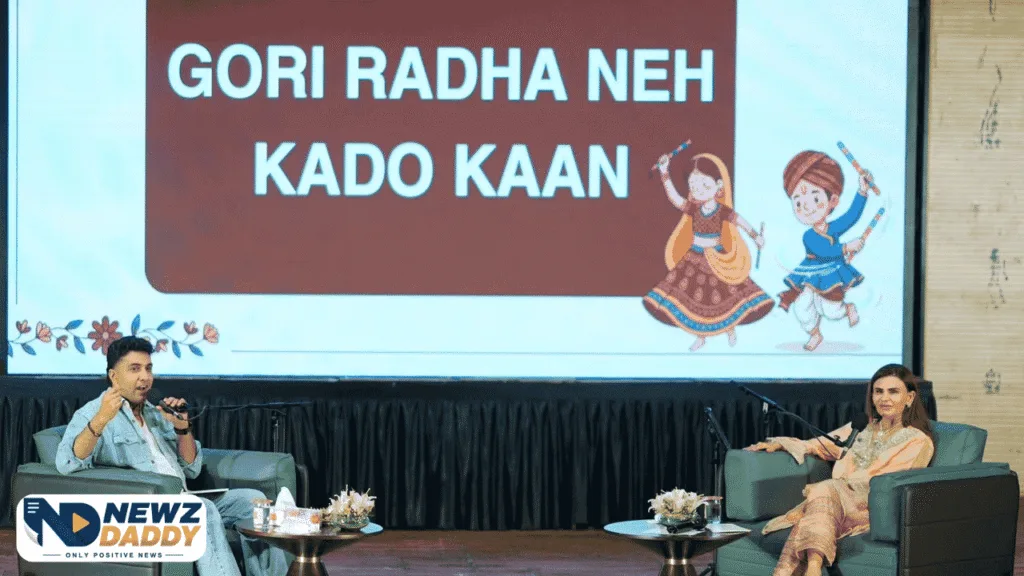
Dr Parth Oza Speaks on Garba, Healing and Life at GLS Event
Music, Medicine and Faith Meet in Conversation as Dr Parth Oza Speaks to GLS University Students
Music can entertain, heal and preserve culture. That was one of the central themes when singer, doctor and music therapist Dr Parth Oza spoke at GLS University during the latest edition of “Decoded with Chandni Kapadia“, a conversation series hosted by Dr Chandni Kapadia, Executive Director of the university.
The session explored Dr Oza’s work across medicine, music, acting, production and music therapy, while giving students a closer look at the experiences that have shaped his career. The discussion focused on creativity, discipline, spirituality and the importance of staying connected to one’s values despite professional success.
Dr Oza explained that his career has developed through several different fields rather than a single profession. Trained as a medical doctor, he later built a public career as a singer and performer while also working in music therapy. He said every role had helped him understand himself better and added that growing up in a family with a strong musical background encouraged him to follow music while building his own identity.
Music has long been part of Gujarat’s cultural life, particularly during Navratri, when Garba attracts millions of participants across the state. Ahmedabad’s Navratri celebrations are among the largest in the country, drawing performers, musicians and visitors from India and abroad. Over the years, many Gujarati singers have helped take traditional Garba music to national and international audiences through concerts, recordings and digital platforms.
During the conversation, Dr Oza spoke at length about Garba and its deeper meaning. While the dance form has become a major cultural and entertainment event, he said its devotional roots should continue to be respected.
He described the tradition in these words: “Garba is the purest form of devotional energy exchange. For me, when I perform Garba on stage, it becomes a form of meditation.”
To illustrate that connection, he performed several of his well-known Garba songs during the session. The performances created an atmosphere that reflected both the festive and spiritual aspects of the tradition.
Dr Oza also reflected on the success of “Jogni Jogmaya,” one of his most recognised songs. The track has gained wide popularity on digital platforms and has become a regular feature during Navratri celebrations in many places. He said an artist finds satisfaction when a song moves beyond the recording studio and becomes part of people’s celebrations and personal memories.
The discussion later turned to theatre and performance. Dr Oza spoke about portraying Shri Krishna in the musical production “Rajadhiraaj.” He said playing the role helped him develop a stronger understanding of spirituality, devotion and the relationship between artistic expression and everyday life.
He also shared his experience of working on “Kartal,” a project he described as being especially meaningful to him. Rather than focusing only on individual achievement, he said creative work succeeds when people work together and contribute their skills towards a common goal.
Another important subject during the programme was music therapy, an area that combines musical practice with healthcare. Music therapy is recognised in many countries as a supportive treatment that can improve emotional well-being, reduce anxiety and help patients manage stress alongside conventional medical care. Researchers continue to study its role in areas including rehabilitation, dementia care, mental health and palliative medicine.
Drawing from his experience with the Medical Music Therapy Department at Apollo Hospital, Chennai, Dr Oza explained how music can help people reconnect with themselves emotionally. He encouraged the audience to spend time listening to music with intention rather than treating it only as background entertainment.
His comments reflected the growing interest in music therapy within hospitals and healthcare institutions. Although it is not considered a replacement for medical treatment, many healthcare professionals now use it as part of wider patient support programmes to improve quality of life and emotional health.
The conversation also moved beyond careers and achievements to discuss personal values. Speaking about character and self-respect, Dr Oza told students:
“Everyone has their own abilities, but if you continue becoming a good human being, no competition and nothing else can bring you down. You will remain strong in your own mind and your own self-esteem because you know that you are a good human being.”
When asked to describe his own journey in a single sentence, Dr Oza replied, “Still a long way to go.” The brief answer reflected his belief that learning does not stop with success.
He also shared advice that continues to guide him personally: “Always display your best game and don’t worry about failure.”
The discussion concluded with questions from students, covering subjects ranging from music and performance to personal growth and professional choices. The interaction allowed students to hear directly from someone whose career has crossed different fields while remaining rooted in Gujarati culture.
The Decoded with Chandni Kapadia series has become one of GLS University’s platforms for bringing public figures, artists, professionals and leaders into conversation with students. Such programmes are increasingly being adopted by higher education institutions to expose students to experiences that extend beyond classroom learning.
For students attending the event, Dr Parth Oza’s story offered examples of how one career can combine science, performing arts and public service. His experiences showed that professional success can develop across different disciplines while remaining connected to cultural traditions, personal values and a willingness to keep learning.
Must Read:
GLS University Decoded with Dr Chandni Kapadia Inspires Students