


EDII Garba Night Brings 68 Delegates from 17 Countries Together
EDII’s Jhankaar ’26 Brings 68 International Delegates Together for a Garba Night in Gujarat
Participants from 17 countries join faculty, students and alumni at the Entrepreneurship Development Institute of India’s Navratri event in Gandhinagar.
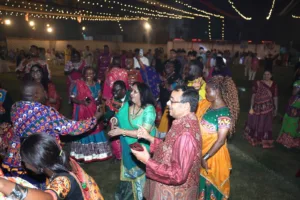
The Entrepreneurship Development Institute of India (EDII) held Jhankaar ’26, a Garba night, on 16 October 2026, bringing together 68 international delegates from 17 countries with students, faculty members, alumni and State Government dignitaries. The event gave participants attending training programmes under the Indian Technical and Economic Cooperation (ITEC) scheme an opportunity to experience Gujarat’s traditional music, dance and festive customs.

The international delegates attended two training programmes at EDII from 14 to 27 October 2026. Organised under the Ministry of External Affairs, Government of India, the programmes cover New Enterprise Creation and Skill Upgradation, and Informal Sector, Enterprise and Local Economic Development.
During Jhankaar ’26, international participants wore traditional Gujarati clothing, including kediyas and chaniya cholis, and joined the Garba dance. Music and group dancing formed the main part of the evening, as people from different countries took part in the Navratri festivities alongside members of the institute.
The gathering brought together people who had travelled to India for professional training and those who study, teach or work at the institute. It also gave visiting delegates a chance to experience a local cultural event while staying in Gujarat.
Garba has a long association with Navratri, the Hindu festival dedicated to the worship of the goddess and the feminine energy known as Shakti. People gather in circles to sing, clap and dance, often moving around an image of the goddess Amba or a traditional earthen pot with a lamp.
The dance is practised in towns and villages across Gujarat. Families, community groups, musicians, dancers and craftspeople all play a part in keeping the tradition alive. Traditional clothing, folk songs and percussion music remain important features of Navratri gatherings.
Garba received international recognition in 2023 when UNESCO added it to its Representative List of the Intangible Cultural Heritage of Humanity. The listing recognised the dance as a living tradition passed from one generation to the next through participation, teaching and observation.
For the delegates attending Jhankaar ’26, taking part in Garba offered a chance to experience this tradition in its home state. Watching the dance can introduce visitors to its movements and music, while joining the circle allows them to take part in a social practice that brings people together regardless of their background.
The presence of participants in kediyas and chaniya cholis also gave the evening a traditional Gujarati character. These garments are commonly worn during Garba events, with the styles, colours and designs varying across communities and regions.
Established in 1983, the Entrepreneurship Development Institute of India is based at Bhat in Gandhinagar district, Gujarat. The institute was set up with support from major financial institutions, including IDBI Bank, ICICI, IFCI and the State Bank of India, with backing from the Gujarat Government.
EDII works in entrepreneurship education, research, business training and support for small enterprises. Its programmes cover the creation of new businesses, the development of existing enterprises and training for people who help others start or manage businesses.
The subjects covered by the two ITEC courses running from 14 to 27 October 2026 relate to business creation, skills and local economic development. These areas are relevant to people working with small businesses, self-employment and local enterprise programmes.
New Enterprise Creation and Skill Upgradation examines the development of enterprise-related skills, while Informal Sector, Enterprise and Local Economic Development focuses on the links between businesses and local economies. The programme titles indicate the subjects covered, although the available event information does not provide details of individual lessons or the delegates’ home countries.
The Indian Technical and Economic Cooperation programme was established by the Ministry of External Affairs in 1964. It forms part of India’s development partnership with other countries and provides training for government officials and working professionals through institutions in India.
The programme covers around 160 partner countries, according to the ministry. Its courses have included subjects such as management, agriculture, banking, information technology, public administration and rural development.
The 68 delegates attending the two EDII programmes are part of this wider international training effort. Their visit brings professionals from 17 countries to an Indian institution to study enterprise development and related subjects.
Cultural activities can give visiting participants direct contact with the society in which they are studying. At Jhankaar ’26, the group setting allowed international delegates to dance alongside Indian students, alumni and faculty members. Such encounters provide a setting for informal contact outside the classroom, although the event announcement does not report any formal outcomes from the evening.
For EDII, the Garba night took place alongside its training work. For the visiting delegates, it offered an opportunity to see how Navratri is observed in Gujarat and to take part in a tradition that has gained recognition beyond India.
The training programmes were scheduled to continue until 27 October 2026. The available information does not state whether further cultural events were planned before the delegates completed their courses.
Must Read: