


Entrepreneurship Lighting India’s Startup Path
Entrepreneurship Education – Unlocking Powerful Innovation For Young Founders
- Entrepreneurship is becoming a key force in India’s economic growth, helping create jobs, reduce poverty and strengthen the country’s GDP.
- Entrepreneurship education plays an important role in startup success, as training, mentorship and real-world exposure help founders build sustainable businesses.
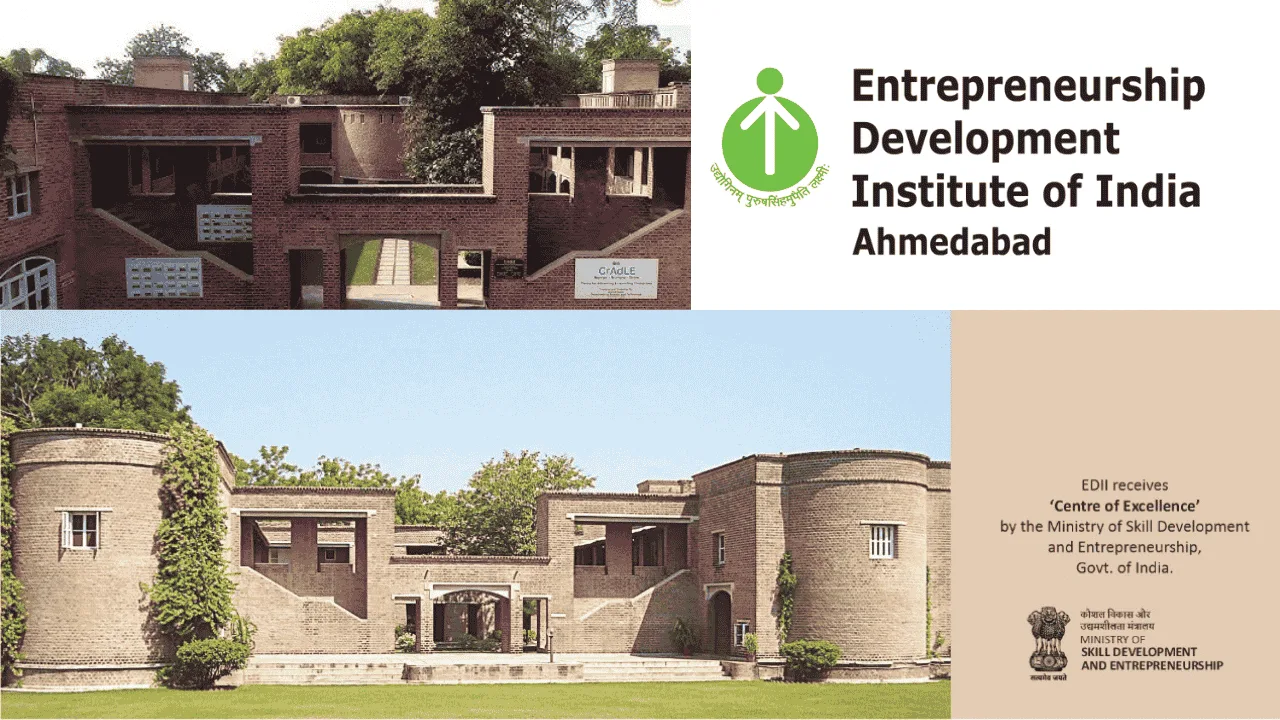
- Entrepreneurship Development Institute of India (EDII), Ahmedabad, has over 40 years of experience in entrepreneurship education, innovation and startup development.
- EDII’s postgraduate programmes focus on building entrepreneurs, including first-generation founders, family business successors and technology innovators.
- The institute’s incubator, Centre for Advancing and Launching Enterprises, supports startups with mentoring, technical guidance and funding opportunities.
- EDII combines academic learning with incubation and mentorship, helping create entrepreneurs who contribute to India’s long-term economic growth.
Entrepreneurship has become an important pillar of India’s economic growth. Across the country, young people are increasingly choosing to build businesses instead of only seeking jobs. Experts say that entrepreneurship helps create employment, reduce poverty and strengthen the national economy. India today has one of the largest startup ecosystems in the world, supported by digital infrastructure, strong consumer markets and supportive policies. Government initiatives and institutional support have helped many young founders launch new ventures across technology, manufacturing, healthcare and services.

Research studies and economic reports show that startups and small businesses play a major role in driving innovation and job creation. These ventures often bring new solutions to everyday problems and help local communities grow economically. In India, entrepreneurship is increasingly seen as a development strategy because it brings together human talent, investment, technology and skills to create enterprises that generate employment and economic value. Academic research on startup ecosystems has also noted that entrepreneurial ventures help improve technological progress, increase competition in markets and contribute to long-term economic transformation.
However, experts often point out that passion alone does not build a successful business. Founders need knowledge of markets, finance, operations and strategy. Entrepreneurship education helps students learn these important skills before they start a venture. Universities around the world have recognised that training, mentorship and practical learning improve entrepreneurial confidence among students. Studies show that when students learn in an environment that supports innovation and problem-solving, they are more likely to develop entrepreneurial intentions and pursue new business opportunities.
In India, several institutions are working to strengthen entrepreneurship education. One such institution is the Entrepreneurship Development Institute of India (EDII), Ahmedabad, which has been playing a major role in promoting entrepreneurship education, research and training for decades. The institute was established in 1983 as a national organisation dedicated to developing entrepreneurship in the country. Over the years, it has trained thousands of students, entrepreneurs and professionals through specialised programmes and research initiatives.
The philosophy behind entrepreneurship education at such institutions is simple. Instead of preparing students only for corporate jobs, programmes aim to build founders, innovators and community leaders. Many young people who join these courses wish to start their own companies, expand family businesses or develop social enterprises that solve community problems. Universities are increasingly adopting this model because real economic growth often comes from entrepreneurs who create new markets and products.
Specialised programmes that focus on enterprise creation teach students how to convert ideas into viable businesses. Students learn how to study market demand, design business models and prepare project reports. These programmes also help them understand customer behaviour, supply chains and funding options. In many modern entrepreneurship courses, students are encouraged to test their ideas through pilot projects while still studying. This approach allows them to gain practical experience before entering the market.
Another important area of learning today is technology entrepreneurship. Around the world, many successful startups have been built on technology-driven innovation. India too is seeing rapid growth in sectors such as software, artificial intelligence, food technology and healthcare technology. Gujarat, for example, has emerged as an important startup hub with thousands of recognised startups across sectors such as software services, food technology and health technology. This growth reflects how technology-based entrepreneurship is shaping the modern business landscape.
Entrepreneurship programmes also recognise the importance of family businesses in India. Many Indian enterprises are run by families and are passed from one generation to another. Education in family business management helps young successors learn how to expand businesses, introduce innovation and create long-term growth strategies. Such knowledge ensures that traditional enterprises continue to thrive while adapting to changing market conditions.
One of the most important elements in modern entrepreneurship education is incubation support. Business incubators help entrepreneurs turn ideas into real businesses. They provide mentorship, networking opportunities, workspace and guidance on intellectual property and funding. At EDII, the Centre for Advancing and Launching Enterprises (CrAdLE) works as a technology business incubator supporting startups in sectors such as manufacturing, healthcare, renewable energy and food processing.
Incubators like CrAdLE are becoming key pillars of India’s startup ecosystem. They help early-stage entrepreneurs overcome the common challenges of funding, product development and market entry. Many incubators also organise workshops, training sessions and mentorship programmes to help founders develop strong business plans and sustainable growth strategies.
Across India, several innovation hubs and incubation centres are being created to support student entrepreneurs. For example, initiatives such as innovation hubs in Gujarat have helped hundreds of startups develop their products and connect with investors. These programmes also encourage students and researchers to convert their ideas into commercial ventures, which strengthens the country’s innovation ecosystem.
The growing importance of entrepreneurship education is also visible in national innovation programmes. Initiatives such as the Atal Innovation Mission encourage innovation and problem-solving among students and institutions across the country. These programmes aim to create a strong culture of creativity and enterprise from an early stage in education.
Another important aspect of entrepreneurship education is helping young founders understand funding and policy support. Many students have strong ideas but limited financial resources. Through guidance and mentoring, they learn about government schemes, grants and investor networks that can help them build their ventures. Knowledge about financial management and funding opportunities often makes a major difference in the survival and growth of startups.
Entrepreneurial thinking is not limited only to business founders. In modern organisations, companies increasingly value employees who can innovate and solve problems creatively. Professionals who think like entrepreneurs often help companies discover new markets, improve products and drive growth. Because of this, entrepreneurship education is also becoming important for working professionals who want to develop leadership and innovation skills.
Online management programmes that focus on corporate entrepreneurship are therefore gaining popularity. These courses allow mid-career professionals to study innovation and entrepreneurship while continuing their jobs. Such programmes help professionals understand how entrepreneurial thinking can be applied within organisations to create new products, services and business models.
As India’s economy continues to evolve, entrepreneurship education will play an even larger role in shaping the country’s future business leaders. Institutions that combine academic learning with incubation, mentorship and real market exposure are expected to produce the next generation of entrepreneurs. By encouraging innovation, practical learning and responsible business practices, these institutions are helping build entrepreneurs who not only create successful ventures but also contribute to social development and economic growth across the country.