


GLS Startup Nexus Ahmedabad Sets Strong Growth Trend
GLS Startup Nexus Ahmedabad builds exciting and high-potential ventures
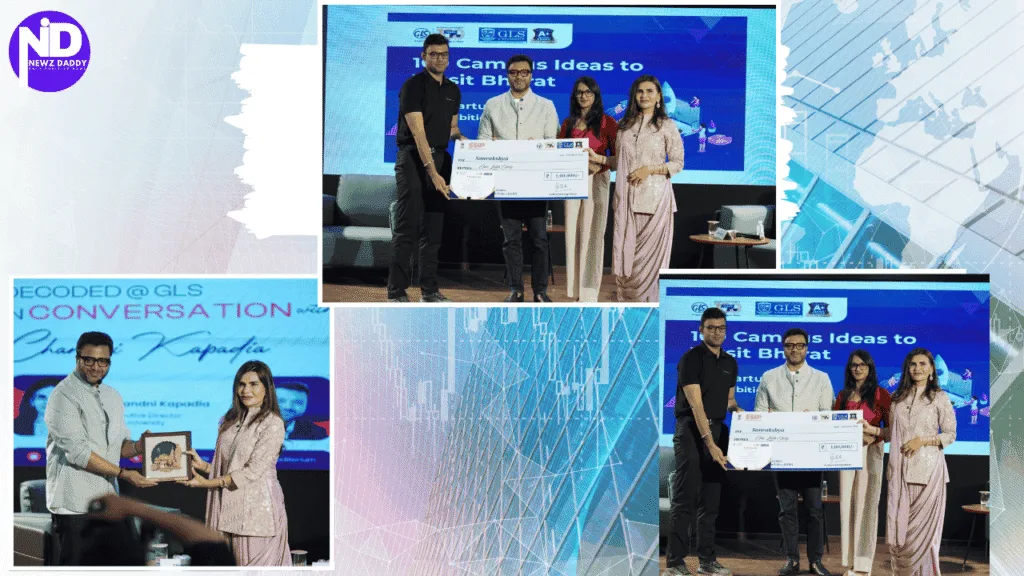
GLS University celebrated a memorable day in its centennial year on Friday with a dynamic showcase of innovation and ideas through the GLS Startup Nexus. The event, titled ‘100 Campus Ideas for Viksit Bharat’, marked the second major centenary programme of the year. It followed February’s launch, where the university pledged to host one key event every month. The initiative reflects a growing trend across Indian universities, where institutions are moving beyond traditional academics and actively building platforms for innovation. Education experts often say that such campus-led innovation events help students gain real-world exposure early, which is critical in today’s fast-changing job market. Much of the credit for this direction has been given to university president Sudhir Nanavati, whose leadership is seen as forward-looking and aligned with national development goals.
Later in the day, Executive Director Dr Chandni Kapadia held an engaging conversation with entrepreneur Chiranjiv Patel, who leads PC Snehal Group and Prospero Horizon. The discussion, part of the ‘Decoded @ GLS’ talk series, focused on leadership, startup journeys, scaling businesses, and the role of universities. Conversations like these are becoming increasingly common in academic spaces. Industry leaders sharing personal experiences help students understand the realities behind building companies. Many startup founders in India have highlighted that mentorship and early exposure to business thinking during college years often shape their success later.
The startup exhibition itself brought together students, faculty members, industry experts, and mentors. Around 60 student-led startups and ideas were displayed, covering areas such as technology, social impact, and service-based ventures. This mix reflects a wider shift in India’s startup ecosystem. According to industry reports, young founders are no longer focusing only on profit-driven models but are also building solutions for social problems like education access, healthcare, and sustainability. Events like Startup Nexus give these ideas a stage and help connect them with the right support systems.
The exhibition was powered by the university’s incubation support and backed by the Department of Science and Technology and the Government of Gujarat. It also aligns with the Student Startup and Innovation Policy (SSIP). Across India, government-backed policies like SSIP are playing a key role in strengthening student entrepreneurship. They provide funding, mentorship, and infrastructure, which reduces the risk for young founders. Experts often note that such policies are crucial in building a strong startup culture at the grassroots level.
For the current SSIP cycle, GLS University received over 100 student startup applications. These went through a detailed three-stage process of screening, mentoring, and evaluation. This structured approach mirrors how professional investors and incubators assess startups. It ensures that students not only come up with ideas but also learn how to refine them, test their viability, and present them effectively. Such processes teach important skills like problem-solving, pitching, and resilience.
As a result of this cycle, four student startups received funding of ₹2.5 lakh each, while one startup was granted ₹1 lakh. In addition, 15 startups were recognised for their strong ideas and growth potential. Early-stage funding like this is often seen as a major confidence boost for young founders. Many successful Indian startups today began with small grants or seed funding during their college days. Recognition also plays a big role, as it helps students gain visibility and motivation to continue working on their ideas.
So far, more than 100 startups have been mentored under this initiative. This highlights GLS University’s continued focus on building an innovation-driven environment. Across the country, universities are increasingly setting up incubation centres and startup cells. These spaces act as support hubs where students can experiment, fail, learn, and grow without fear. Experts believe that such ecosystems are essential for creating job creators instead of just job seekers.
The university leadership also acknowledged the importance of guidance from mentors, faculty support, and institutional backing. In many successful startup stories, mentorship is often described as a turning point. Having experienced professionals guide students helps them avoid common mistakes and make better decisions.
“Every student idea presented at Startup Nexus, whether funded today or not, represents the seed of a future-ready India,” said Dr Chandni Kapadia. Her statement reflects a larger national vision, where innovation and entrepreneurship are seen as key drivers of growth. By combining academic learning with practical exposure, universities like GLS are helping shape a generation that is ready to build, innovate, and contribute to the idea of a ‘Viksit Bharat’.