


GLS University Hosts Magali McDuffie on Creative Careers
At GLS University, Dr Magali McDuffie puts listening at the centre of creative careers
A career in film, animation, gaming or visual effects may require strong technical skills, but Dr Magali McDuffie told students at GLS University that those skills alone do not make a strong creator.
The filmmaker, researcher and educator spoke about the changing creative industries during a session of “Decoded with Chandni Kapadia”, a conversation series hosted by Dr Chandni Kapadia, Executive Director of GLS University. The discussion covered filmmaking, animation, gaming, VFX, immersive storytelling and the growing use of artificial intelligence in creative work.

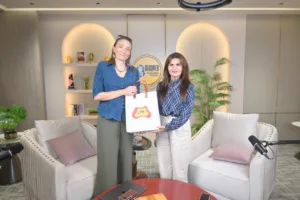
McDuffie used her own career to explain why creative students need to look beyond software and production techniques. Her work has included documentary filmmaking, teaching, academic research and long-term projects with Aboriginal communities in Australia. She holds a PhD in Indigenous Studies from the Australian National University and a master’s degree in Film and Television from Bond University.
For students trying to enter creative industries, one message stood out: learning does not stop when formal education ends.
McDuffie has spent years working with Aboriginal communities, particularly Nyikina women in Western Australia’s Kimberley region. Her work with the community began in 2007 and later became part of her doctoral research. More than 30 short films and documentaries have come from her collaborations with Aboriginal communities, with screenings at international festivals, conferences and on Australian television.
That experience shaped her view of storytelling.
During the GLS University discussion, she spoke about the need for creators to listen carefully before telling someone else’s story. She said:
“If we put ourselves in a position of humility, where we say, ‘We don’t know everything,’ we can receive a lot of knowledge. Deep listening means understanding that we are not always the experts and being open to learning from others. When we take the time to listen, we can learn, develop new ideas and concepts, and then work together to create something meaningful. You have to let go of thinking, ‘This is my film’ and instead think, ‘This is our film.’ It is through listening, learning and collaboration that the creative process becomes much more powerful.”
Her approach is also reflected in her academic work. McDuffie’s research describes filmmaking with Aboriginal communities as a participatory process in which people involved in the research have a say in how the work develops. Her doctoral research focused on Nyikina women’s voices, cultural activities and efforts towards economic and community self-determination.
For students, the lesson has a practical side. Creative industries often change faster than university courses can be updated. New software, production methods and AI tools can alter the work required from filmmakers, designers, animators and game developers.
McDuffie therefore placed importance on real projects, industry feedback and working with other people. Students need opportunities to make work, receive criticism and improve it. A finished qualification may open a door, but continued practice can determine how well a person develops after entering the industry.
The discussion also examined artificial intelligence, which is already changing parts of the creative process. AI tools can assist with tasks such as generating ideas, producing early visual material and working with digital content. But the session questioned the idea that technology can replace the human role in deciding what a story should say and why it should be told.
For creative students, this distinction matters. A new tool can produce an image or help develop material quickly. The creator still has to decide whether the result is useful, accurate and suitable for the audience. Story choices, judgement, communication and an understanding of people remain important parts of the job.
McDuffie’s own career shows how varied the path into creative work can be. After moving from France to Australia, she studied Film and Television at Bond University. She later worked as a filmmaker and educator, taught media courses at the University of Canberra, worked with Aboriginal media organisations and completed her PhD at the Australian National University in 2019. She has also held academic and management positions with SAE Creative Media Institute and worked in Indonesia.
Her professional record includes work with communities in the Kimberley and Pilbara regions of Australia. Screen Australia describes her as an independent documentary filmmaker whose work has focused on listening and giving greater space to voices that are often missing from mainstream media.
The conversation at GLS University also fits into the wider purpose of Decoded with Chandni Kapadia. The series has featured people from fields including sport, business, law, entertainment, education, entrepreneurship, arts and culture. Previous guests listed by the GLS Alumni Association include cricketer Suryakumar Yadav, entrepreneur Aman Gupta, industrialist Pankaj Patel, actor Paresh Pahuja, filmmaker and actor Karan Tacker, lawyer Ujjwal Nikam and designer duo Shantnu and Nikhil.
Dr Chandni Kapadia is the Executive Director of GLS University, according to the university’s official office-bearers page.
For the students who attended the September 7 session, the conversation offered a wider view of what a creative career can involve. Technical training remains useful, but McDuffie’s experience suggests that students also need to know how to work with people, accept criticism, ask questions and learn from those whose experiences differ from their own.
In an industry where the tools may change quickly, those habits can stay useful for much longer.
Must Read:
Anil Bhardwaj Speaks on India’s Space Journey at GLS University