


Gramin Bharat Mahotsav Celebrates India’s Living GI Heritage
Newz Daddy Educational Updates
Gramin Bharat Mahotsav empowers GI artisans through markets and awareness
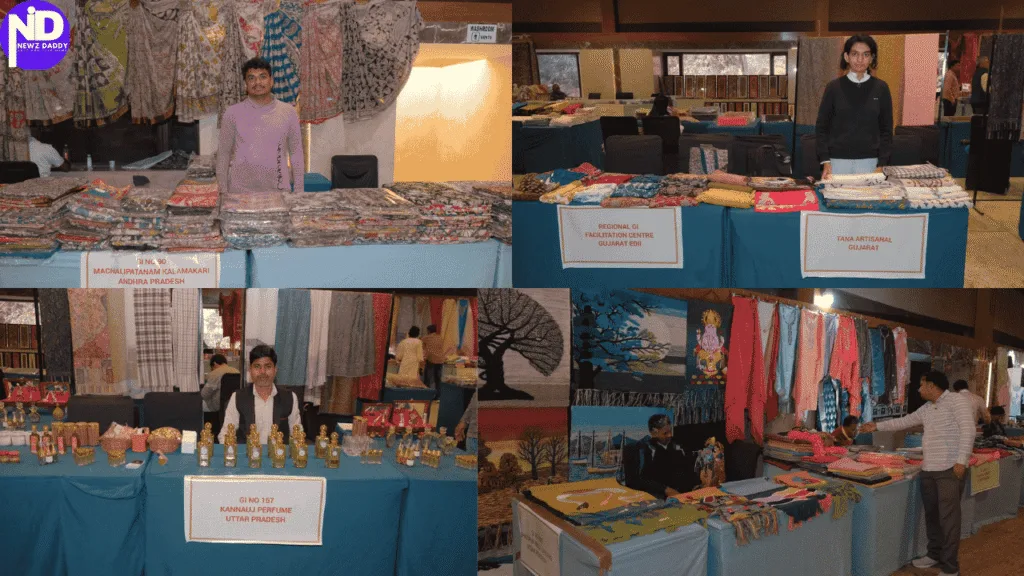
The Entrepreneurship Development Institute of India (EDII), Ahmedabad, in association with the Business Women Committee of Gujarat Chamber of Commerce & Industry (GCCI), is organising a four-day Geographical Indication (GI) exhibition with the support of the National Bank for Agriculture and Rural Development (NABARD). The exhibition, titled Gramin Bharat Mahotsav – રંગ Soota, is being held from January 16 to 19, 2026, at Rajpath Club in Ahmedabad. Its main aim is to build public awareness about GI protection, improve market access for GI-tagged products and support sustainable livelihoods for artisans and rural producers from across the country.
GIs play an important role in protecting products that are deeply linked to a specific place and its traditional skills. In India, GI tags help prevent misuse and copying of traditional crafts and food products, while also giving legal recognition to the communities that have preserved these skills for generations. For many rural artisans, a GI tag can increase product value, build trust among buyers and open doors to national and international markets.
The exhibition was inaugurated in the presence of Chief Guest Mr B. K. Singhal, Chief General Manager of NABARD Gujarat Regional Office, and Dr Sunil Shukla, Director General of EDII. Their presence highlights the strong institutional backing behind the event and reflects a shared focus on rural development, entrepreneurship and heritage-based livelihoods.
Spread across 56 stalls, the exhibition brings together artisans and producer groups from 11 Indian states. Visitors can see and purchase a wide range of GI-tagged products, including Patan Patola, Kutch Rogan Craft, Mata ni Pachhedi, Sankheda Furniture, Banaras Brocades, Lucknow Chikan, Madhubani Paintings, Pochampally Ikkat, Kota Doria, Jaipur Blue Pottery and Kashmir Saffron. Each of these products represents years of tradition, hand skill and cultural identity. For example, Patan Patola weaving involves complex double ikat techniques passed down within families, while Rogan art from Kutch uses natural colours and hand-drawn designs that can take weeks to complete.
Along with showcasing crafts, the exhibition also encourages direct interaction between artisans, buyers and business partners. Such B2B interactions are important because many artisans struggle to understand market demand, pricing and branding. Events like this allow them to learn what customers look for, explore bulk orders and connect with retailers, exporters and designers. This exposure often helps artisans improve product design, packaging and quality without losing the essence of tradition.
India currently has 724 registered GI products, covering handicrafts, textiles, agricultural goods and food items. Gujarat alone has 27 GI-tagged products, showing the state’s rich craft and cultural base. However, many GI holders still face challenges such as limited awareness, weak marketing networks and lack of access to finance. Institutions like EDII and NABARD work to bridge this gap by offering training, policy support and market connections.
Mr Singhal noted that GIs have the power to turn traditional skills into long-term income sources. NABARD, along with EDII through its regional GI centre, focuses on improving market positioning and helping artisans and rural entrepreneurs reach wider audiences. NABARD has long supported rural industries through funding, skill programmes and self-help groups, making it a key player in strengthening village-based economies.
Dr Shukla highlighted that linking heritage-based products with markets supports the national vision of Vocal for Local and Atmanirbhar Bharat. This approach encourages people to value locally made products and supports self-reliance by strengthening domestic production systems. EDII has consistently worked towards bringing skilled artisans into the mainstream economy, helping them grow both socially and financially through entrepreneurship training and business support.
Beyond sales and networking, the Mahotsav also draws attention to the larger role of GIs in preserving traditional knowledge and cultural identity. When a craft survives, it keeps stories, rituals and local history alive. It also gives younger generations a reason to continue family traditions instead of moving away from crafts due to poor income prospects.
Gramin Bharat Mahotsav – રંગ Soota stands as a reminder that India’s rural and craft heritage is not just about the past. With the right support, awareness and market access, it can shape a stronger and more inclusive economic future for artisans and producers across the country.