


Gujarat Frozen Food Exports Gain Faster Mundra Access
Mundra Rail Corridor Gives Gujarat Frozen Food Exports a Huge Lift
India’s frozen food export sector has received a major logistics push with the launch of a dedicated reefer rail corridor connecting ICD Virochannagar in Gujarat with Mundra Port. The service has been launched by Adani Logistics Limited (ALL), the logistics arm of Adani Ports and Special Economic Zone Ltd (APSEZ), for HyFun Foods exports. The move is expected to improve cold chain movement for frozen and temperature-sensitive cargo and strengthen India’s growing processed food export network.

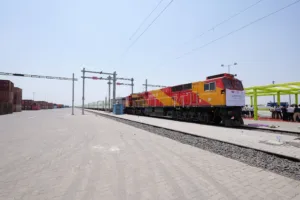
The first dedicated reefer container train was flagged off from ICD Virochannagar in Gujarat to Mundra Port in Kutch. The corridor has been developed through a partnership between HyFun Foods, Adani Logistics and Evergreen Marine Corporation. Industry experts have often pointed out that India loses a large amount of perishable food every year due to weak cold chain systems and delays in transportation. Reports from food industry bodies and logistics associations have repeatedly stressed the need for better refrigerated rail services to support exporters dealing in frozen vegetables, ready-to-eat products and processed food.
The new rail corridor will move frozen products over nearly 320 kilometres before the cargo is shipped to international markets in Southeast Asia and East Asia. These markets include Malaysia, Singapore, South Korea, Japan, Taiwan and Indonesia. Trade analysts have noted that Asian demand for processed potato products and frozen snacks has increased steadily in recent years due to changing eating habits, urban lifestyles and the fast-food industry’s rapid expansion.
The exports from HyFun Foods are expected to supply major global food chains such as KFC, Burger King, Pizza Hut, Subway, 7-Eleven, IKEA and Taco Bell. International restaurant brands are now placing a stronger focus on stable supply chains after facing disruptions during the COVID-19 pandemic and the global shipping crisis. Food industry reports suggest that buyers are increasingly choosing suppliers who can guarantee timely delivery and strict temperature control during transportation.
The development also strengthens the importance of ICD Virochannagar as a logistics hub in western India. The depot is located close to industrial areas such as Sanand, Viramgam and Kadi, which have seen rapid industrial growth during the past decade. Gujarat has continued to attract investment in food processing, warehousing and export manufacturing due to its strong road, rail and port connectivity. Economists and logistics experts often describe Gujarat as one of India’s strongest export-driven states because of its integrated transport infrastructure.
The new corridor is also expected to support Gujarat’s agro-processing sector. Farmers and food processors often face challenges in moving products quickly to ports while keeping them fresh. Refrigerated rail services can reduce spoilage and improve product quality during transportation. According to several agriculture and food logistics studies, cold chain systems can help increase farmers’ earnings by reducing wastage and opening access to overseas markets.
Rail-based cold chain transport is increasingly becoming important for India’s export competitiveness. Compared to road transport, refrigerated rail movement can lower transportation costs, improve fuel efficiency and reduce cargo damage. Environmental experts have also highlighted that rail transport generally creates lower carbon emissions than long-distance trucking. This shift from road to rail supports India’s wider efforts to improve sustainable logistics and reduce pollution from freight movement.
The Virochannagar-Mundra corridor is being viewed as a scalable model for India’s frozen and processed food sector. Supply chain specialists believe that similar rail corridors could help improve farm-to-port connectivity in other agricultural states as well. India’s processed food exports have grown steadily in recent years, supported by rising global demand and government policies encouraging food manufacturing and exports.
Adani Logistics has continued to expand its multimodal logistics infrastructure across India. The company has invested in inland container depots, rail connectivity, warehousing and integrated supply chain solutions. Industry observers believe that logistics companies are now playing a larger role in helping Indian exporters compete in global markets where speed and reliability have become critical factors.
ICD Virochannagar has gained attention because of its strategic location and connectivity advantages. The facility offers export-import connectivity to Mundra and Pipavav ports and links domestic cargo routes to locations such as Dankuni, Kolkata, Haldia, Jirania and Baihata. Logistics experts often say that inland depots like Virochannagar reduce pressure on ports by allowing cargo handling and customs support closer to manufacturing centres.
The depot currently has an annual handling capacity of 92,400 TEUs and is also developing a Grade-A logistics and industrial park spread across nearly 0.66 million square feet. Its connection to the Dedicated Freight Corridor allows double-stack rail operations, which can improve cargo movement speed and operational efficiency. Freight corridor projects are expected to play a major role in transforming India’s cargo transport network over the coming years by cutting delays and improving turnaround times.
As India works to strengthen supply chains and improve trade competitiveness, projects such as the dedicated reefer corridor from Virochannagar to Mundra Port are becoming increasingly important. The initiative reflects the growing demand for reliable cold chain infrastructure and shows how integrated rail-to-port logistics can support India’s expanding agricultural and processed food exports.