

Gujarat local elections buzz: AAP targets BJP and Congress
Gujarat Local Elections Witness Emotional Appeal to Voters in Gujarat
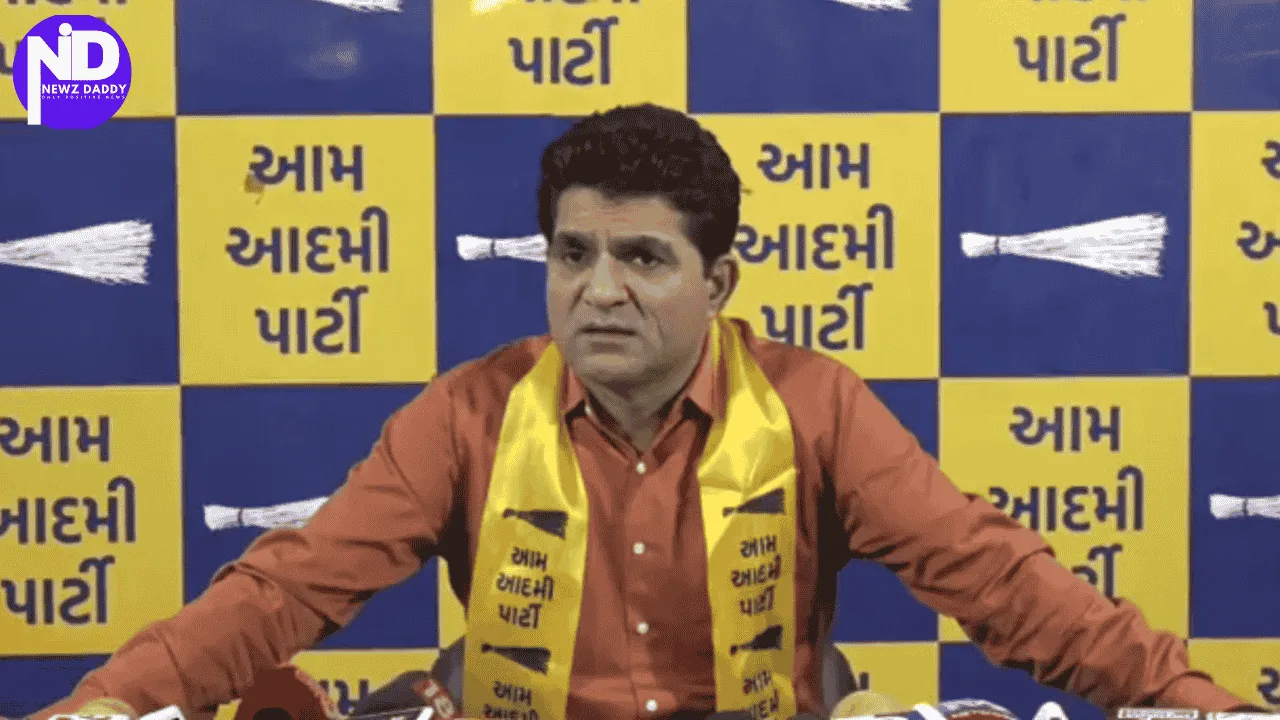
In Ahmedabad, the political heat around local self-government elections is rising. During a press conference, Isudan Gadhvi, State President of Aam Aadmi Party, made a series of strong remarks against both the Bharatiya Janata Party and the Indian National Congress. His statements come at a time when local elections in Gujarat are often seen as a key test of ground support before bigger state or national contests.
He claimed that BJP leaders are facing resistance from voters during campaigning. This kind of reaction has been seen in several elections across India in recent years, where anti-incumbency plays a role. Voters sometimes express anger over local issues such as water supply, roads, and sanitation. In Gujarat’s urban bodies, especially in cities like Surat, civic issues have often shaped voter mood more than national-level debates.
Gadhvi also said that AAP has become a strong option for people. This reflects a wider trend where AAP has tried to grow outside Delhi and Punjab by focusing on basic services like schools, hospitals, and electricity. In past elections, AAP has gained attention by promising lower bills and better public services, which have attracted urban voters looking for change.
Speaking about Surat, he said the party has worked actively while in opposition. In recent years, Surat has seen civic challenges such as flooding during heavy rains and concerns over infrastructure in fast-growing areas. Opposition parties often use such issues to build their image as problem-solvers. Gadhvi’s claim that people are reaching out to AAP shows the party’s attempt to connect directly with voters through ground campaigns and local meetings.
He announced that Manoj Sorathiya will be the main face for the Surat elections. Political parties often project a local leader to create a clear choice for voters. This helps voters relate to a person rather than just a party. In many Indian cities, strong local faces have played a key role in winning municipal elections.
Gadhvi accused the BJP of using police and state machinery to pressure AAP workers. Such allegations are not new in Indian politics. Opposition parties across states have often raised concerns about the misuse of power during elections. While these claims are serious, they usually become a matter of investigation and debate in the media and courts. Election observers and the Election Commission of India are responsible for ensuring free and fair polls.
He also spoke about threats to candidates and the possible cancellation of nominations. In local elections, nomination filing is a crucial step. There have been past cases in different states where candidates faced challenges during this process. This is why election rules include clear guidelines and timelines to maintain fairness.
Gadhvi said that AAP will not step back despite pressure. Political workers at the grassroots often face tough conditions, especially in closely fought elections. Many reports and field studies show that local-level politics in India can be intense, with strong competition between parties.
He appealed to voters to make their own decision and support the party that works for them. Voter awareness has grown in recent years, with more people focusing on performance rather than just party loyalty. Campaigns now include door-to-door outreach, social media messaging, and local issue-based discussions.
He further alleged a silent understanding between the BJP and the Congress. Claims of hidden alliances are often made during elections, especially when one party feels that its rivals are not equally targeted. However, such claims are usually difficult to prove and remain part of political debate.
On the issue of not contesting the Umreth by-election, Gadhvi said the party is focusing fully on local body polls. Political parties often choose where to invest their energy and resources. Local elections require strong booth-level work and direct voter contact, which can demand full attention.
He also referred to an incident in Vadodara involving a candidate named Kantaben. Cases where candidates withdraw suddenly do raise questions, and in the past, such incidents have led to discussions about political pressure. However, without clear proof, such matters remain uncertain.
Gadhvi’s remarks about pressure on ordinary workers reflect a common concern in grassroots politics. Many party workers come from modest backgrounds and rely on community support. Reports from various states show that local elections can be emotionally and socially demanding for such workers.
Towards the end, he spoke about a comment made by Mallikarjun Kharge. Political statements during campaigns often become controversial, especially when they touch on identity or regional pride. In Gujarat, leaders like Mahatma Gandhi and Sardar Vallabhbhai Patel are deeply respected. Any reference to them can quickly become a public issue.
Gadhvi highlighted the contribution of Gujaratis to the nation, pointing to history and culture. Gujarat has long been known for its role in trade, industry, and the freedom movement. It is also a state that has welcomed people from across India for work and business.
As the elections approach, his appeal to voters is clear. He urged people to protect democracy and vote wisely. Local self-government elections may seem small, but they directly affect daily life. From waste collection to water supply, these bodies shape how cities function. This is why voter turnout and choice in such elections matter greatly.
With strong words, sharp claims, and clear positioning, the political battle in Gujarat’s local elections is becoming more intense. All eyes will now be on how voters respond on polling day.