


Gujarat’s Smart Meter Rollout is Testing Public Trust
- From jaw-dropping bills to halted installations and high court notices, Gujarat highlights the frailties of rolling out smart power meters without robust legal, technological and constitutional safeguards.
R MANICKAVASAGAM
India’s smart meter initiative promises a modern, loss-reduced, transparent power sector. Yet, in Gujarat, the rollout has struck a raw nerve. When consumers feel blindsided by sudden bills, forced installations, opaque data transfers and weak recourse, the backlash is understandable. The state’s recent actions, a nominal mandate for prepaid and smart meters, temporary halts in rollout, and High Court notices illustrate both the tension and opportunity in doing this well.
Gujarat’s push and its discontents
- Mandate declared. Gujarat’s government has announced that smart/prepaid power meters will be installed mandatorily across the state. Officials emphasised the goal of modernisation and loss reduction.
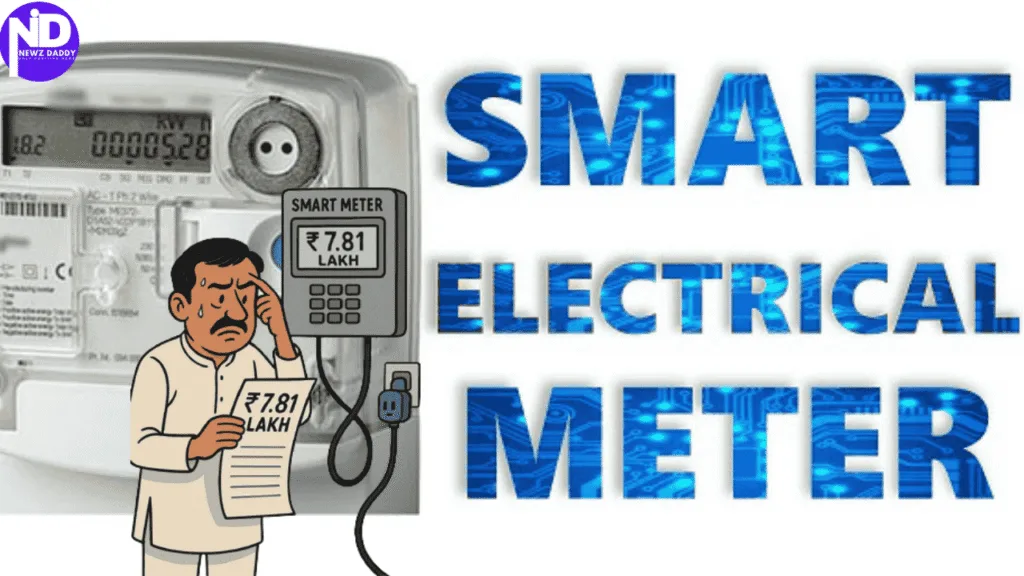
- Billing shock and errors. Residents in cities like Vadodara and Ahmedabad report unexpectedly large bills after installation. For example, one consumer in Vadodara’s Sama area received a bill of ₹ 7.81 lakh, later acknowledged by authorities as erroneous. Others complain that prepaid meters deduct balances too fast or show negative balances, even with modest usage.
- Rollout paused. Following public outcry, Madhya Gujarat Vij Company Limited (MGVCL) temporarily halted residential installations of smart meters to address concerns.
- Check meter / dual meter proposals. To build confidence, Gujarat has announced placement of conventional or “check” meters alongside smart meters in some locations to enable consumer verification. Government offices are being used as demonstration sites.
- High Court involvement. Petitions have been filed in the Gujarat High Court challenging the smart meter policy. Notably, the court has issued notices to state agencies and utilities (e.g. MGVCL) asking them to reply to claims of inflated bills, forced installations, lack of data access, and other grievances.
Legal & Constitutional Landscape (national + Gujarat)
While there is no reported Supreme Court case yet directly deciding on whether mandatory smart meter installations are lawful, several Supreme Court precedents and legal principles are highly relevant:
- Right to privacy Puttaswamy (2017).
The Supreme Court in Justice K.S. Puttaswamy v. Union of India, 2017, held that privacy is a fundamental right under Article 21. That means any government or regulated entity collecting personal or behavioural data must do so in a manner that is lawful, necessary, proportionate, with clear purpose limitation, minimal data retention, and adequate safeguards. Smart meters collect detailed energy usage information; how they collect, store and share that data must meet those constitutional tests. - Electricity Act / Metering law precedents.
The Electricity Act, 2003, and related regulations require that billing must be based on accurate meters, that consumers have a right to challenge incorrect bills, and that estimates of consumption, when made, must be based on regulations/rules. Supreme Court rulings on electricity theft/meter tampering cases often emphasise proof, accuracy of inspection, and that the burden of proof in many cases lies with the distribution company or collector. While these cases are not about “smart meters” per se, the same legal logic of meter accuracy, verification, and procedural fairness would apply. - High Court cases are already shaping jurisprudence.
For instance, the Karnataka High Court temporarily stayed mandatory smart meter installation in one case (Jayalakshmi v. State of Karnataka) because Karnataka Electricity Regulatory Commission (KERC) regulations provide that smart meters are optional except for temporary connections. The HC raised concerns over the high cost of meters in Karnataka vs. other states.
In Gujarat, the High Court has issued notices, which is an early but important legal step. While no final judgment has yet struck down the mandate in Gujarat, legal proceedings are underway.
Why this matters: constitutional and regulatory stakes
- Consent and proportionality. Mandating a technology that affects every household, with costs and possible technical/operational errors, raises questions: to what extent can a consumer refuse? What rights of redress do they have? Under privacy jurisprudence, mass deployment without adequate safeguards risks violation of rights even if the goal is legitimate.
- Transparency and correctness. If bills spike, if data is inaccessible, or if accuracy is in doubt, consumer trust erodes. Any billing system (smart or not) must provide checkpoints, check meters, independent verification, and accessible complaint mechanisms.
- Legal risk and litigation. Gujarat’s High Court giving notices means utilities/ state governments might have to defend policies, demonstrate reasonableness, show that cost/recharge issues are handled fairly, that data/privacy compliance is in place.
- Policy vs governance. A well-intentioned rollout can go wrong without clear regulatory frameworks (regulatory commission orders), consumer education, compliance monitoring, and judicial oversight.
Recommendations: what needs to be done
To avoid constitutional violations, public backlash, and legal loss, policy makers (in Gujarat and nationally) should ensure:
- Clarity on when smart/prepaid meters are mandatory vs optional. Existing meters working fine should not be forcibly replaced without justification. Consumers should have opt-out options (or exemptions) where cost or technical access is a burden.
- Transparent, regulated pricing. The cost of installation, maintenance, and meter procurement must be regulated and fair. Disparities between states (some charging thousands, others hundreds) are a red flag.
- Data protection safeguards. Conform with Puttaswamy norms: purpose limitation, consent, anonymisation, limited retention, transparent sharing policies, and independent audits.
- Independent verification / check meters. Parallel or comparative meters, or other means to allow consumers to verify smart meter readings and contest bills.
- Robust grievance/dispute forums. Set timetables for responding to disputes, penalties for inaccurate billing, and legal access (consumer courts, regulatory commissions, high courts) at reasonable cost and time.
- Pilot / phased implementation with public consultation. Use demonstration zones, pilot projects, and government buildings to build confidence. Communicate clearly about billing, usage, apps, etc.
Conclusion
Smart meters are not intrinsically problematic they have the potential to reduce losses, make billing more accurate, and help consumers monitor usage. But until there is a clear constitutional and legal foundation, transparent cost structures, privacy and data safeguards, and meaningful consumer choice, mandating them is likely to cause anxiety, resistance and legal challenge.
Gujarat’s experience of billing shocks, court notices, and public anger is an early case study of what happens when technology policy outpaces governance. Until the Supreme Court issues a definitive ruling on smart meters, policymakers must act as though they will be held to the highest constitutional standards. Doing so is the only way to ensure that “smart power” truly means power for the people, not power over them.
Also Read: