


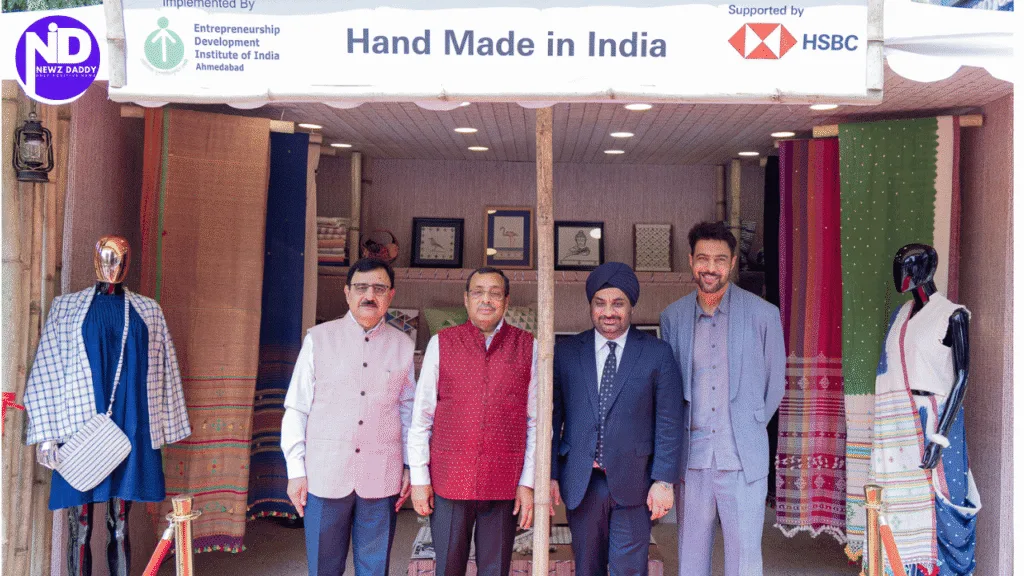
Hand Made in India Programme Benefits 1,500 Gujarat Weavers
HSBC India and EDII Mark Milestone in Gujarat Handloom Initiative as 1,500 Weavers Benefit
HSBC India and the Entrepreneurship Development Institute of India (EDII), Ahmedabad, have marked a major milestone in their joint handloom development programme, Hand Made in India, which aims to strengthen traditional weaving communities while improving livelihoods and market opportunities for artisans.
The programme has reached around 1,500 weavers and craftsmen in Gujarat’s Surendranagar and Bhuj handloom clusters. Organisers say the initiative focuses on helping artisans build sustainable businesses while preserving traditional weaving practices that have been part of India’s textile heritage for generations.
The milestone event was attended by celebrity chef Ranveer Brar, HSBC India senior executive Sandeep Batra, and EDII Director General Dr Sunil Shukla. Senior representatives from both organisations were also present.
The event coincided with the opening of HSBC India’s new branch in Surat, a city that has become one of India’s most important centres for textiles, manufacturing, diamonds and wealth creation.
India’s handloom sector remains one of the country’s largest sources of rural employment after agriculture. According to government estimates, millions of weavers and allied workers depend on the sector for income. Handloom products are also an important part of India’s cultural identity, with each region known for distinctive weaving styles, fabrics and techniques.
Gujarat holds a special place within this landscape. The state is home to several renowned weaving traditions, including Tangaliya weaving in Surendranagar and the rich textile crafts of Kutch, where artisans continue to produce handwoven fabrics using techniques passed down through generations.
Despite this heritage, many weaving communities face serious economic challenges. Limited access to markets, changing consumer preferences, competition from machine-made products, and rising production costs have affected traditional livelihoods. Digital commerce has created new opportunities, but many artisans still struggle to access online platforms and modern business tools.
The Hand Made in India programme was designed to address these challenges through entrepreneurship development, business training and market access support.
At the event, HSBC India highlighted the programme’s focus on helping artisans overcome barriers such as limited product diversification, restricted market access, low adoption of technology, and a weak presence on digital and social media platforms.
Rather than concentrating solely on production, the initiative also trains artisans in business management, product development and customer outreach. The objective is to help traditional craftspeople build enterprises that can generate stable income while maintaining the authenticity of their work.
Speaking at the event, Aloka Majumdar, Head of Sustainability, HSBC India, said:
“India’s handloom sector is a living legacy and a powerful driver of rural livelihoods, women’s economic empowerment and sustainable production. By building entrepreneurial skills, enabling market access, and supporting shifts to natural fibres and dyes, the partnership is helping Gujarat’s weavers and artisans grow resilient enterprises while keeping handloom traditions alive.”
Dr Sunil Shukla, Director General, Entrepreneurship Development Institute of India, Ahmedabad, said:
“This partnership brings together capability-building and market enablement for weavers and artisans. We’re equipping weavers and artisans with practical entrepreneurship capabilities, product development, digital tools, and market linkages—so they can diversify, reach new customers, and build enterprises that can scale and endure.”
Programme data released during the celebration showed several measurable outcomes.
Organisers reported that 734 new designs have been developed in handloom weaving and block printing. The programme has introduced 13 new product lines and supported the creation of 131 new enterprises.
Sustainability has emerged as another important area of work. Thirty-five weavers have shifted to natural fibres, while 222 artisans have adopted natural dyeing practices. These changes reflect a growing demand for environmentally responsible textile production both in India and overseas.
Market access has also been a major focus. Through exhibitions, retail partnerships and digital platforms, artisans have been connected to new customers and sales channels. Such linkages are often critical for small producers who traditionally rely on local markets and intermediaries.
The emphasis on natural fibres and dyes comes at a time when sustainable fashion is gaining attention worldwide. Consumers and brands are increasingly looking for products with lower environmental impact, creating opportunities for traditional handloom clusters that already rely on low-energy production methods.
The Gujarat programme forms part of a greater national effort under the HSBC India and EDII partnership. Across India, the Hand Made in India initiative has supported around 4,500 weavers in seven handloom clusters spread across five states. The programme combines entrepreneurship training, design innovation, market development and sustainability practices.
Previous phases of the partnership have included support for product development, participation in exhibitions, access to formal finance, e-commerce training and business mentoring for artisans. Recent industry events organised under the initiative have also brought together designers, textile experts, policymakers and artisan communities to discuss quality standards, branding and long-term growth opportunities for the sector.
The broader handloom sector continues to receive policy attention from the Government of India through programmes aimed at supporting weavers with raw materials, technology upgrades, design assistance, infrastructure and marketing support. National Handloom Day, observed every year on 7 August, has further increased public awareness of the sector’s economic and cultural importance. Government schemes have also encouraged product diversification, e-commerce participation and financial inclusion for weaving communities.
Industry experts note that the future of handloom production will depend on balancing tradition with changing market demands. Younger consumers are increasingly seeking products that combine heritage craftsmanship with contemporary design, while international buyers are showing growing interest in handmade and sustainable textiles.
For artisans in Gujarat’s weaving clusters, programmes such as Hand Made in India represent an effort to connect centuries-old skills with modern business opportunities. Supporters of the initiative believe that stronger entrepreneurship, wider market access and environmentally responsible production can help traditional weaving communities remain economically viable while preserving a valuable part of India’s cultural heritage.
As the programme reaches its latest milestone, its organisers say the next phase will continue to focus on helping artisans strengthen their businesses, expand their customer base and adapt to a rapidly changing marketplace without losing the character and identity that make India’s handloom traditions unique.