


IAACON 2026 Brings 214 Experts to Ahmedabad for Joint Surgery
Ahmedabad Conference Examines Robotics and the Changing Practice of Joint Replacement Surgery
Ahmedabad hosted a three-day meeting of orthopaedic specialists from India and overseas as the 22nd Annual Conference of the Indian Arthroplasty Association, IAACON 2026, which ended on 25 October. The event brought together 205 national faculty members, nine international experts, orthopaedic surgeons and postgraduate students to discuss changes in hip, knee and shoulder replacement surgery.
Held from 23 to 25 October, the conference examined the growing use of robotics, artificial intelligence (AI) and advanced imaging in joint replacement. Gujarat Chief Minister Bhupendra Patel inaugurated the meeting, which took place under the theme “Evolving Arthroplasty: Robotics, Kinematics & Innovation”.
The event was supported by the Indian Arthroplasty Association, Indian Orthopaedic Association, Gujarat Orthopaedic Association, Ahmedabad Orthopaedic Society and Ahmedabad Arthroplasty Association.
The discussions come at a time when joint replacement surgery is becoming more common in India. Conference experts said more than three lakh hip and knee replacement operations are performed in the country each year. Gujarat was recognised as one of the states with a high volume of these procedures.
For patients living with severe joint pain, the operation can help them walk, carry out daily tasks and return to work. The growing number of procedures also raises questions about surgical quality, patient safety, access to care and the cost of treatment.
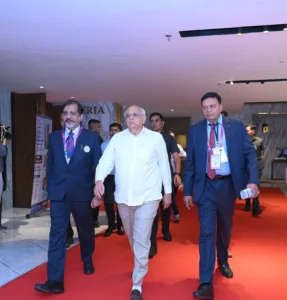

Patel spoke about the effect that restored movement can have on people’s lives. He said patients who regain mobility can become more independent, return to work and take part in community life. He also stressed the need for better surgical methods and training.
A major part of the conference focused on the use of robotic systems in joint replacement. Surgeons discussed image-based, imageless and AI-enabled 3D robotic technologies. These systems can help doctors plan an operation, prepare the bone, position an implant and check the alignment of the joint during surgery.
In a knee replacement, for example, the surgeon removes damaged parts of the joint and places an artificial implant. The position of the implant can affect how the knee moves and bears weight. Robotic systems help surgeons measure and plan these steps with greater accuracy.
However, medical research suggests that better surgical accuracy does not always lead to better long-term results. A 2026 review of randomised controlled trials found that robotic-assisted knee replacement improved some measures of implant alignment. Yet patient-reported results, such as pain and daily function, were broadly similar to those seen after conventional surgery.
Robotic procedures can also take longer. The review found that the average operating time was higher, while blood loss, hospital stay and overall adverse events were broadly comparable. Researchers said more long-term studies are needed to establish whether the technology offers lasting benefits.
These questions formed part of the wider discussions at IAACON 2026, which covered surgical planning, implant design, infection prevention, patient recovery and the management of difficult cases.
The academic programme included 35 scientific sessions and four structured debates. Surgical videos, case-based discussions and sessions for young orthopaedic surgeons gave participants opportunities to examine how different surgical choices are made.
The conference was preceded by a cadaveric workshop at B. J. Medical College on 22 October. About 70 faculty members and 180 delegates took part in practical training. The workshop covered the direct anterior approach to hip replacement, unicondylar knee replacement and reverse shoulder replacement.
The training allowed participants to study surgical methods using cadavers before applying their knowledge in clinical practice. Such workshops are used in medical education to help surgeons understand anatomy and practise techniques in a controlled setting.
Dr H. P. Bhalodia, Organising Chairman, said the conference allowed surgeons to assess new technologies and discuss clinical experience. He stressed the value of shared learning and evidence-based decisions as new tools enter orthopaedic practice.
Dr Dhiraj Marothi Jain, Organising Secretary, said the active participation of delegates and faculty helped them discuss difficult clinical situations and learn from one another.
The theme also drew attention to kinematics, the study of movement. In joint replacement, surgeons must consider how a hip, knee or shoulder moves and how an artificial joint will work with the surrounding muscles and tissues.
The choice of implant and surgical method can vary according to the patient’s condition. Age, bone quality, the extent of joint damage and other health issues may affect the treatment plan. This makes clinical judgement an important part of surgery, even when advanced technology is available.
IAACON 2026 was organised by the Indian Arthroplasty Association with support from several orthopaedic bodies in Gujarat and Ahmedabad. The meeting gave surgeons and postgraduate students a chance to discuss new methods and compare their experiences.
As joint replacement surgery grows in India, the challenge for doctors and hospitals will be to ensure that new technology is used where it helps patients. The conference closed after three days of scientific sessions, practical training and discussion on the changing role of robotics and AI in orthopaedic care.
Must Read:
IAACON 2026 to Explore Robotics in Joint Replacement Surgery