


IAF Dronathon 2026 Tests New Drone Systems at Pokhran Range
IAF Puts New Drone Systems Through Live Tests at Pokhran
The Indian Air Force has begun its first Dronathon, bringing more than 20 defence companies, start-ups, MSMEs, Defence Public Sector Undertakings and individual innovators to the Pokhran Field Firing Range in Jaisalmer for live trials of unmanned systems.

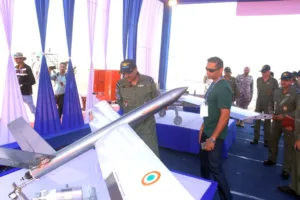
Air Marshal Ashutosh Dixit, Vice Chief of the Air Staff, opened Dronathon-2026 on September 14. The three-day event will continue until September 16 and will test unmanned aircraft and related technologies in conditions closer to those faced during military operations.
The event comes as drones have become a bigger part of military planning. During Operation Sindoor in May 2025, India said its forces faced drone and missile attacks and used an integrated Counter-Unmanned Aircraft Systems grid and air defence systems to deal with them. In July 2025, Chief of Defence Staff General Anil Chauhan said the operation had shown the operational value of indigenous UAV and counter-UAS technology.
At Pokhran, participating firms are demonstrating systems for surveillance and reconnaissance, autonomous flight, swarm operations, electronic warfare and Counter-Unmanned Aircraft Systems, or CUAS.
The IAF is also looking at how these systems perform under difficult conditions. The stated tests include reliability, effectiveness in contested environments, and the ability to respond to changing military needs and new threats.
That distinction matters. A drone can perform well in a controlled demonstration, but military use demands dependable performance when communications are disrupted, the airspace is crowded, or an opponent is actively trying to interfere with the system.
The Pokhran range gives the Air Force a large military testing area where companies can demonstrate their equipment under controlled field conditions. The same location hosted Vayu Shakti-2026 in February, when the IAF conducted a major combat exercise involving fighter aircraft, helicopters, air defence and other systems.
The IAF has described unmanned aircraft as an additional tool alongside manned aviation. Drones can give commanders more options for surveillance, persistence and operations where sending a crewed aircraft may not be suitable.
A major announcement at the opening of Dronathon was the release of the IAF UAS Roadmap by Air Marshal Ashutosh Dixit.
The roadmap is intended to give Indian industry, universities and research organisations a clearer picture of the Air Force’s future requirements for unmanned aerial systems. The aim is to help developers direct their research towards capabilities the IAF may need in the coming years.
The focus is also wider than the drone itself. The IAF has listed propulsion, sensors, payloads, communications, autonomy, electronic warfare, countermeasures and airspace management among the areas connected with its unmanned systems plans.
For Indian manufacturers, this can help define where defence technology development is heading. It also reflects a broader government push to increase domestic production of military equipment and reduce dependence on foreign suppliers for important technologies.
The opening day also featured a live demonstration of Vayu UTtaM, an indigenously developed multi-mode Unmanned Traffic Management system of the Indian Air Force.
During the demonstration, Vayu UTtaM detected and tracked both military and civilian unmanned aircraft systems. The system is designed to help manage drone activity when several unmanned aircraft are operating in the same airspace. It is also intended to help identify and deal with unauthorised or rogue drones.
This has significance beyond military operations. As drone use expands, authorities face the practical problem of knowing which aircraft are operating legally and which may pose a risk. Airspace management becomes more difficult when military drones, commercial aircraft, government operations and civilian drones are active in nearby areas.
The IAF said Vayu UTtaM could have uses in airspace safety, critical infrastructure, civil aviation and public safety. The system’s ability to detect both military and civilian UAS during the Pokhran demonstration gives an indication of the type of airspace problem it is intended to address.
India’s interest in drones and counter-drone systems has grown sharply since Operation Sindoor. Government accounts of the May 2025 conflict describe the use of drones, counter-UAS equipment, electronic warfare and layered air defence. The Ministry of Defence later said emergency procurement after the operation included spending aimed at building drone, counter-drone and strike capabilities.
The experience also raised a wider military question: how should armed forces protect bases, cities, logistics sites and other important locations when relatively small unmanned aircraft can be used in large numbers?
Dronathon addresses both sides of that problem. The IAF is testing systems that can carry out missions, while also examining technologies that can detect, track and counter hostile drones.
The first Dronathon therefore gives the Air Force a field setting to compare technologies from Indian companies and research groups. The results may help determine which systems are reliable enough for further trials, procurement or future development.
The event is scheduled to run through September 16 at Pokhran. Its wider test will be whether the technologies demonstrated there can move from a successful field trial to dependable equipment for India’s changing air and security requirements.
Must Read:
Drone Awareness Programme for Veterans Builds Tech Confidence