


IAF humanitarian mission drives powerful rescue hope
Newz Daddy Defence Updates
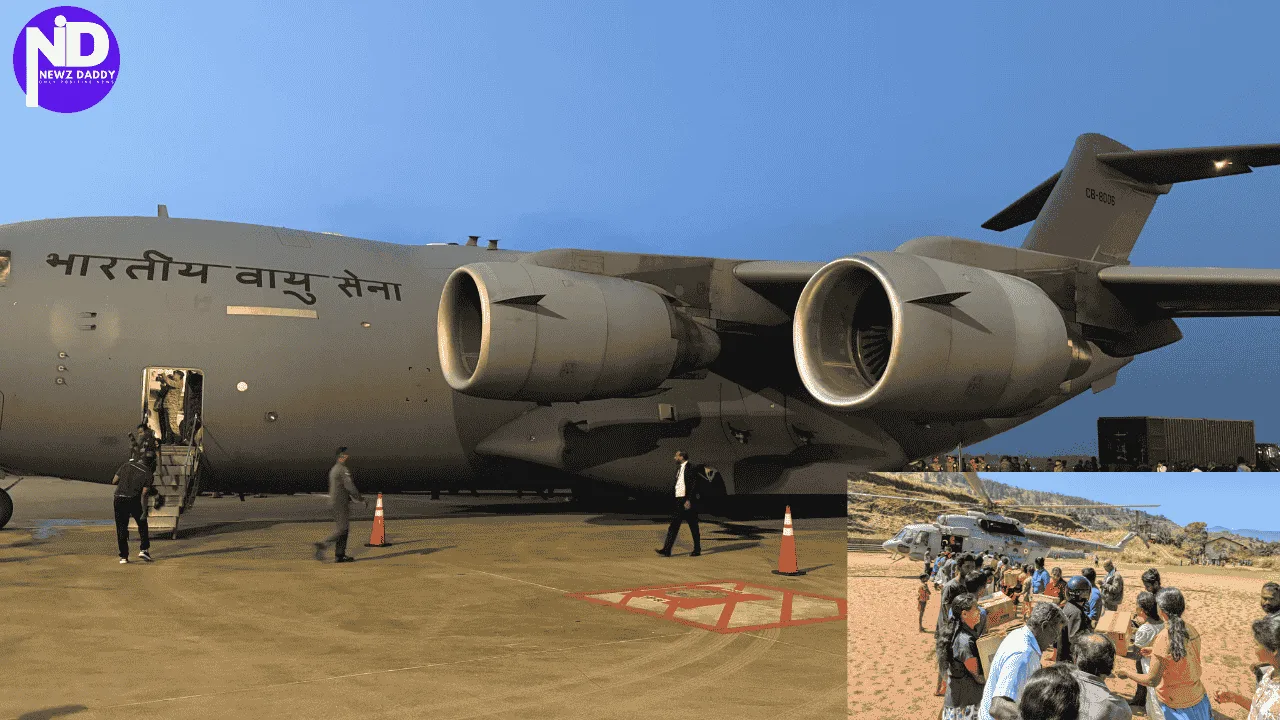
The Indian Air Force has continued its strong support in a major humanitarian relief effort by deploying its heavy-lift and medium-lift aircraft to help people in need. In one of the key missions, the IAF’s C-17 aircraft airlifted a Para Field Hospital with equipment and 73 medical personnel from Agra, landing in Colombo at 1745 IST. This hospital unit is known for its rapid response ability and is often sent to crisis-hit areas around the world. Para Field Hospitals carry mobile operation theatres, life-saving medical supplies and trained teams who can set up a working hospital within hours. They are designed to support people in disasters such as floods, earthquakes or major accidents.
The C-17 aircraft used for this mission is one of India’s most powerful transport planes. It can carry large equipment, vehicles and big teams, and is often used for military, disaster relief and evacuation tasks. The aircraft has been part of India’s rescue operations across many countries during natural disasters. Its ability to land on short runways and in tough conditions makes it ideal for emergencies. This mission again showed how valuable it is when lives are at risk.
While the C-17 handled the long-distance movement of medical teams and equipment, the IAF’s Mi-17 helicopters continued Humanitarian Assistance and Disaster Relief operations in the affected areas. These helicopters airlifted more than 8 tonnes of relief material, which included food, water, medicine, blankets and other essential supplies needed by people who had lost access to basic facilities. Mi-17 helicopters are known for their ability to fly in bad weather and reach remote places quickly. They have been used in many rescue operations in India and abroad, including mountain rescues, flood relief missions and medical evacuations.
During these operations, the IAF also evacuated 65 survivors. This group included foreign nationals, critically ill patients and a pregnant woman who needed urgent care. Evacuation missions are often the most delicate part of relief work, as crews must land in difficult terrain, sometimes with low visibility or damaged surroundings. Quick action by the helicopter teams ensured that people who were injured or in danger could reach safety in time. Evacuating foreign nationals also reflects India’s long-standing practice of helping not only its own citizens but also people from partner nations during emergencies.
Humanitarian missions like these are guided by the IAF’s commitment to saving lives without delay. India has developed strong disaster response systems over the years, and the Air Force plays one of the biggest roles in them. The country’s HADR efforts often include medical teams, engineers, communication specialists and rescue groups who work together to rebuild normal life after a crisis. India has carried out similar missions in Nepal, Maldives, Sri Lanka, Yemen and Mozambique, becoming a dependable partner in the region.
The relief effort in Colombo highlights the close cooperation between India and Sri Lanka during times of hardship. Both countries share strong ties in defence, disaster management and regional security. When natural disasters hit the region, the two nations often work together to provide quick help. The presence of Indian medical teams and helicopters offers reassurance to affected families and boosts the rescue capacity of local authorities.
This ongoing operation also shows the training and readiness of IAF crews. Operating large aircraft like the C-17 and versatile helicopters like the Mi-17 requires skill and precision. Crews must assess weather, plan routes, load supplies safely and coordinate with ground teams. These missions reflect the discipline and expertise of the teams involved.
As the relief work continues, more materials may be transported based on the needs of the people in affected zones. The Indian Air Force’s work is helping stabilise the situation by bringing medical support, food supplies and hope to survivors. Their quick response shows how timely action can reduce suffering and protect lives when disasters strike.