


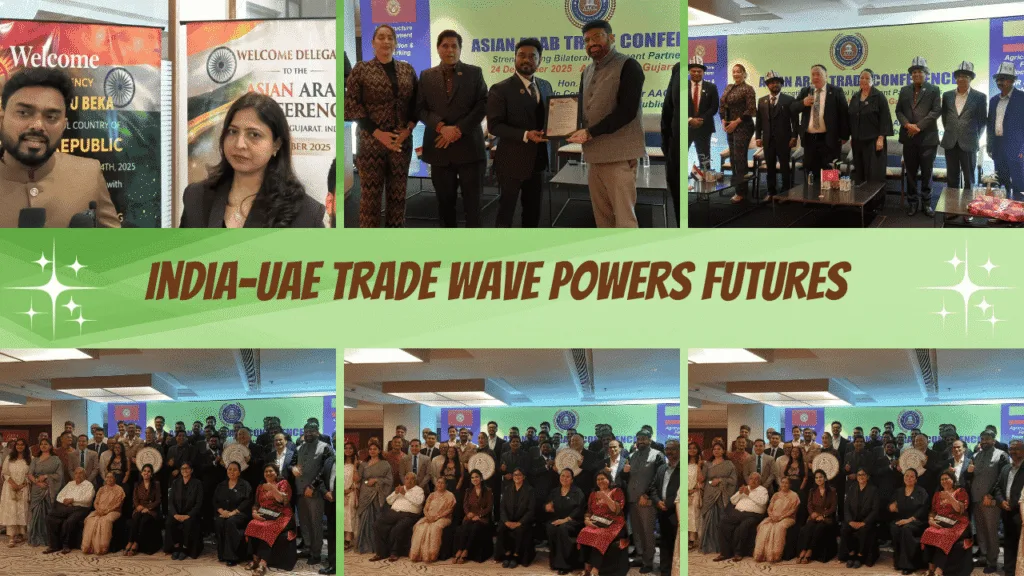
India-UAE Trade Wave Powers Futures
India-UAE Trade Unleashes MSME Dreams Across GCC with Growth
India, the UAE and the wider GCC are moving into a new phase of trade where traditional sectors like energy now sit alongside fast-growing digital, food, health and green industries. The CEPA agreement has given this shift a strong legal base, cutting tariffs and making it easier for Indian and Gulf businesses to plan for the long term.
India and the UAE already share a strong partnership in energy and traditional trade sectors. Now, technology and digital businesses are rapidly emerging as key growth drivers.


Over the past few years, the UAE has become one of India’s top trading partners, with both sides pushing to lift bilateral trade towards 100 billion US dollars and beyond. Energy still matters, but there is faster growth in non-oil trade, including electronics, digital services, and start-up collaborations in areas like fintech, health-tech and logistics-tech.
Sectors such as food, healthcare, and logistics continue to witness strong and consistent demand across GCC countries. Alongside this, renewable energy is becoming a shared strategic focus for the future.
Food security has become a central priority for the GCC, and Indian exporters in grains, fruits, vegetables and food processing are finding stable demand and long-term supply contracts. Health services, pharma supplies, telemedicine and medical tourism also link India and the Gulf, while investment in ports, warehouses and cold chains helps goods move faster between India, the UAE, Saudi Arabia and Africa. At the same time, both India and the UAE have pledged to invest in solar, green hydrogen and low-carbon projects, opening space for joint ventures in clean energy and climate technology.
The CEPA agreement has enabled businesses in both countries to expand with greater confidence, significantly strengthening bilateral trade relations.
Since CEPA came into force in 2022, around 90 per cent of Indian goods lines going into the UAE face lower or zero tariffs, giving Indian exporters a clear price edge in the Gulf market. Trade in several sectors, such as gems and jewellery, has already jumped sharply under CEPA, with some categories recording double-digit to triple-digit growth as Indian firms use UAE hubs to re-export to other GCC and African markets.
What Opportunities Exist for Indian MSMEs in the UAE and GCC
The UAE serves as a powerful gateway to global markets, particularly the Middle East and Africa. Indian MSMEs are well recognised for their quality, reliability, and consistency.
For smaller Indian firms, the UAE offers access not only to local buyers but also to a wider consumer base across the GCC, Africa and even Europe through its ports and aviation links. India-UAE trade missions and councils are increasingly focusing on MSMEs, helping them understand sector trends, packaging rules, certifications and e-commerce options so they can sell into supermarkets, online platforms and B2B supply chains.
Business-friendly free zones make it easier to establish and operate enterprises. There is a strong and growing demand for Indian products and services across the UAE and GCC markets.
UAE free zones now offer 100 per cent foreign ownership, simplified customs rules and often zero corporate tax, which helps Indian MSMEs keep full control while testing new markets with lower risk. Many free zones also bundle licences, office space and visa quotas in one package, which is useful for tech, consulting, trading and light manufacturing units from India. In parallel, demand continues to rise for Indian engineering goods, building materials, IT services, education services and wellness products across the Gulf, giving MSMEs multiple entry points.
The Arabian African Chamber of Commerce (AACC) plays a vital role in connecting the right businesses at the right time, helping MSMEs access new opportunities.

How Easy Is It Becoming for Indian Investors to Do Business in the UAE
Starting a business in the UAE has become faster and simpler than ever. Many sectors now allow *100% foreign ownership. Licensing and approval processes are largely digital, saving time and increasing efficiency. Investor-friendly long-term visa policies further support strategic, long-term business planning. Overall, the ecosystem strongly promotes growth, transparency, and stability.
In recent years, the UAE has overhauled its company laws, allowing full foreign ownership in many onshore sectors and cutting the need for local sponsors in several activities. Most key approvals, including trade licences, renewals and some visas, can now be handled through online portals, which reduces paperwork and lowers setup time for Indian investors.
Long-term investor visas and “golden visas” give qualified business owners, professionals and high net worth individuals residence for 5 to 10 years, allowing them to live with their families and plan serious long-term projects. This stability, along with strong banking systems and clear dispute-resolution mechanisms, has made the UAE a preferred base for Indian companies looking at GCC, African and European markets.
The Key Role of AACC in India–UAE–GCC Trade
The Arabian African Chamber of Commerce (AACC) acts as a strong bridge connecting people and businesses. It plays a crucial role in building trust between Indian and Arab partners. AACC facilitates India-UAE trade meetings, business delegations, and networking opportunities, while also offering practical guidance through local market insights.
By creating platforms where policymakers, chambers, banks and companies can talk openly, AACC helps reduce misunderstandings and speeds up decision-making on joint projects. It can guide firms on choosing the right jurisdiction, sector incentives and partner profiles, which is vital when entering diverse GCC markets with different rules and investment regimes.
Most importantly, AACC helps create long-term, value-driven partnerships that support sustainable trade growth.
As India and the GCC negotiate broader trade and investment frameworks, institutions like AACC ensure that MSMEs, start-ups and regional players are not left out of the story. By focusing on sectors such as food, health, logistics, technology and renewables, these partnerships can support job creation, skills transfer and more balanced development on both sides of the corridor.
Indian MSMEs can tap into UAE free zones as a smart launchpad for GCC markets. These zones offer easy setup rules and direct links to buyers across the Gulf.
Free zones give 100 per cent foreign ownership, so Indian owners keep full control without local partners. They also skip corporate tax on qualifying income and allow full profit send-back to India. Customs perks speed up imports from India and exports to Saudi Arabia, Qatar and others.
Dubai South Business Hub suits India-UAE traders and e-commerce firms with low-cost packages from AED 12,500 and same-day licences. It sits near ports and airports for quick GCC shipments. RAKEZ in Ras Al Khaimah works well for manufacturing and logistics, with flexi-desks, cheap visas and full ownership. Ajman Free Zone keeps costs low at AED 5,555 for startups in trading or services, close to Dubai markets.
Also Read:
India–Mauritius Summit 2025 Sets a New Direction for Global Trade and Africa-Focused Growth