


Indian Ceramics Asia 2026 Shows a New Era of Caution
Indian Ceramics Asia 2026 highlights smart technology over expansion
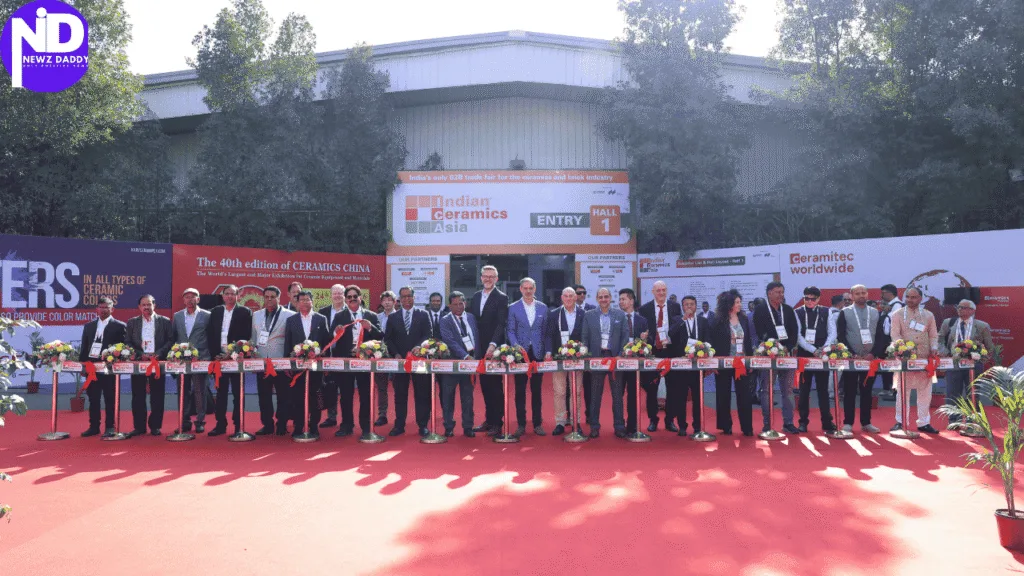
Indian Ceramics Asia 2026 opened at the Helipad Exhibition Centre in Gandhinagar with a tone that felt practical rather than flashy. Now in its 20th edition, the exhibition clearly mirrors the mood of the ceramics industry, which is moving carefully after years of fast growth. Instead of talking about big new plants or massive expansion plans, most conversations at the event are centred on saving energy, managing raw material costs, and using technology more wisely.
This shift is closely linked to wider changes in the Indian ceramics sector. Over the past few years, manufacturers have faced rising fuel prices, fluctuating raw material availability, and tighter environmental norms. These pressures have pushed companies to look inward and improve how existing factories run. Industry studies and trade reports have repeatedly shown that even small improvements in kiln efficiency or raw material blending can lead to meaningful savings over time. That is why efficiency has become a key theme at this year’s exhibition.
Organised by Messe Muenchen India along with Unifair Exhibition Service Co. Ltd., the three-day B2B event brings together more than 300 brands. The exhibitor mix itself tells a clear story. There is strong representation from suppliers of raw materials, machinery, and processing equipment. This reflects the fact that manufacturers are not stopping production, but are instead fine-tuning processes to improve quality and reduce waste. Many Indian ceramic units, especially in clusters like Morbi, now focus on lowering the cost per tile rather than increasing volumes.
International participation also remains steady, with exhibitors from eight countries, including Belgium, China, Germany, Italy, and Japan. European suppliers, in particular, continue to see India as a long-term market. Over the last decade, Indian tile and sanitaryware production has grown to a scale where global machinery makers see value in offering mid-range and modular solutions, not just high-end systems. The presence of German and Italian country pavilions underlines this ongoing interest, even at a time when investments are being made more cautiously.
Bhupinder Singh of Messe Muenchen India pointed out that the industry is now in a more disciplined phase. This reflects a broader trend seen across manufacturing sectors in India, where return on investment has become a stronger decision factor than speed of expansion. Energy-saving burners, digital process controls, and automated material handling systems are increasingly preferred because they offer clear and measurable benefits. Research from industry bodies has shown that automation, even at a basic level, can improve consistency and reduce rejection rates, which directly supports profitability.
The views shared by Hareshbhai Ramjibhai Bopaliya from the Morbi Ceramic Association highlight the ground reality for MSMEs. Morbi, which is one of the world’s largest tile clusters, is dominated by small and mid-sized units. Many of these companies operate on thin margins and are cautious about taking large loans. Technologies that can be adopted in stages, such as energy monitoring tools or improved glazing systems, fit well with this mindset. Gradual upgrades help firms stay competitive without risking financial stability.
A major attraction at the 2026 edition is the Innovation Exchange Forum, built around the theme “Ceramics for Tomorrow: Sustainable, Smart, and Advanced.” The topics discussed here reflect everyday operational challenges. Energy management and alternative fuels are especially important, as many ceramic plants rely on gas and other fuels that have seen price swings. Research across the sector shows that better fuel mixing, heat recovery, and kiln insulation can reduce energy use by a noticeable margin. Digitalisation and raw material optimisation are also gaining attention as tools to reduce errors and maintain steady quality.
The live demonstration area adds practical value to the exhibition. Seeing machines run under real conditions helps buyers understand performance beyond brochures and presentations. For many manufacturers, this hands-on assessment reduces uncertainty and supports better decision-making. Industry experience suggests that equipment tested in such settings is more likely to meet expectations once installed on the factory floor.
Robert Schoenberger of Messe München GmbH noted that India continues to attract global suppliers despite short-term challenges. This is largely because India remains one of the few markets with a strong domestic demand for tiles and ceramics. While exports can be uneven, local housing and infrastructure needs provide a stable base. Automation and digital process control help Indian manufacturers align with global quality standards, which is essential for long-term competitiveness.
Ken Wong from Unifair Exhibition Service Co. Ltd. also highlighted the growing focus on knowledge exchange. Indian buyers are now asking deeper questions about lifecycle costs and long-term returns. This reflects a more mature approach to investment, where decisions are based on the total cost of ownership rather than just the purchase price. Such thinking is becoming common across Indian manufacturing, as companies aim to balance growth with sustainability.
Overall, Indian Ceramics Asia 2026 paints a clear picture of an industry in transition. With demand steady but cautious, the focus has firmly shifted to efficiency, sustainability, and smart technology choices. The exhibition does not promise quick wins, but it offers practical solutions that can strengthen businesses over time. In doing so, it reflects an industry that is learning to grow smarter, not just bigger.
Must Read:
Manufacturing innovations for energy efficiency gains importance