


India’s Maritime Simulator Lab Marks Strong New Era
Newz Daddy Educational Updates
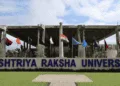
The School of Integrated Coastal and Maritime Security Studies (SICMSS) of Rashtriya Raksha University (RRU) is preparing for one of its most important security events of the year, SAMUNDRARAKSHAN 2.0. The event is set for December 4, 2025, which also marks Indian Navy Day, a day when India honours the valour, commitment and strength of the naval forces. The conclave is giving a shared space for officers, experts and maritime professionals to exchange ideas and improve coastal security systems. It is also guided by the broader national aim of moving from SAGAR to MAHASAGAR, which promotes peaceful growth, secure seas and cooperation among coastal regions. The event will take place at the Rashtriya Raksha University campus in Lavad-Dahegam, Gandhinagar, an institution known for its specialised security education.
This year’s SAMUNDRARAKSHAN 2.0 is drawing attention because it will introduce India’s new Maritime Simulator Lab. The lab is designed as a cutting-edge training space for maritime operations. Training through simulators has become essential in many navies around the world, as it allows officers to practise missions without real-world risks. The new simulator will support training in areas such as maritime interdiction, high-speed pursuits, law enforcement at sea, search and rescue operations, navigation systems, and coastal security responses. It will also help manage scenarios involving marine pollution, which is becoming a rising concern as shipping traffic increases across the Indian coastline. The facility will be used not only by Indian forces but also by maritime law enforcement and partner nations who work with India in the Indian Ocean Region.
More than 200 officers, including senior, mid-level and junior representatives, are expected at the event. They will come from the Indian Navy (IN), Indian Coast Guard (ICG), Central Industrial Security Force (CISF), Border Security Force (BSF), and Marine Police units across all 13 coastal states and union territories. India has one of the longest coastlines in the region, stretching over 7,500 kilometres, and protecting it is a major responsibility shared by both military and civilian maritime agencies. The event will also host port authorities, maritime boards, technology start-ups, private maritime companies and coastal law experts. This broad participation shows the growing need for joint cooperation between the defence industry, technology innovators and maritime enforcement units.
The second edition of SAMUNDRARAKSHAN, also called the National Coastal Security Conclave (NCSC), will bring forward key topics that affect India’s maritime stability. One of the central discussions will focus on the role of modern technology in coastal surveillance. India has been strengthening its coastal radar chains, communication networks and underwater sensors. With more ships, fishing boats and cargo vessels passing through Indian waters, digital monitoring tools are becoming vital for identifying threats quickly.
Climate change will also be discussed, especially rising sea levels and unusual weather patterns that affect coastal security. Global studies show that rising seas can damage ports, increase flooding and create tougher conditions for naval operations. The event will look at how India can prepare for these changes.
Another major topic is drug trafficking using Indian ports and coastlines. Criminal groups often use small boats or hidden cargo routes, making it important for security teams to stay updated on new smuggling methods. Speakers will talk about coordination systems that help maritime forces work faster and more effectively.
The conclave will also focus on sharing lessons learned from joint maritime exercises. India conducts many coordinated drills with partner countries, including search and rescue missions, anti-smuggling operations and emergency response training. These exercises help improve teamwork and decision-making among maritime forces.
Rashtriya Raksha University continues to play an important role in shaping the skills of maritime and security professionals. As an Institution of National Importance, RRU supports research and training in national security, policing and coastal protection. Its School of Integrated Coastal and Maritime Security Studies (SICMSS) works on strategies to strengthen India’s maritime borders, an area that is becoming more important as global maritime activity continues to grow.
Must Read:
India-Russia Strategic Partnership: United for Humanitarian Impact