


Indo-Swiss Blockchain Forum 2026 Sets Historic Path
Newz Daddy Educational Updates
The Indo-Swiss Blockchain Forum 2026 Concludes With Strategic Engagement at GIFT City IFSC
The Indo-Swiss Blockchain Forum 2026, hosted by Rashtriya Raksha University (RRU) along with NSE IX and the International Financial Services Centres Authority (IFSCA), concluded its final day with a high-level stakeholder interaction at GIFT City IFSC in Gandhinagar. The three-day forum brought together experts, regulators, academics and industry leaders from India and Switzerland to discuss the fast-changing world of blockchain and digital finance.

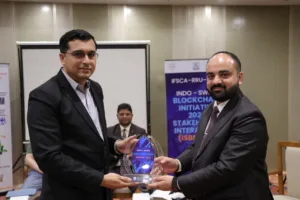
GIFT City, short for Gujarat International Finance Tec-City, is India’s first operational International Financial Services Centre. It was set up to compete with global hubs like Singapore and Dubai. The area offers tax benefits and a special regulatory system to attract global investors. Over the past few years, it has become a testing ground for new financial products, including digital assets and blockchain-based services. Hosting the forum at this location gave strong symbolic value, as the discussions were not only theoretical but also closely linked to real financial markets.
The event was supported by key institutions such as Rashtriya Raksha University, NSE International Exchange and International Financial Services Centres Authority. RRU, known for its focus on national security and policing studies, has in recent years expanded into cyber security and digital forensics. Blockchain and crypto forensics are now important areas for law enforcement. With cyber fraud and cross-border scams on the rise, training officials in blockchain analysis has become essential.
The forum covered blockchain fundamentals, decentralised finance or DeFi, crypto forensics, anti-money laundering compliance and cross-border financial risks. Blockchain is often described as a digital ledger that cannot be easily changed. Once data is recorded, it becomes very hard to tamper with. This makes it useful not only for cryptocurrencies but also for supply chains, identity systems and banking.
DeFi was another major topic. DeFi platforms allow users to lend, borrow and trade assets without traditional banks. While this creates more freedom, it also increases risk. Many global regulators are still trying to understand how to control fraud and protect investors. India has taken a cautious approach to cryptocurrencies, with strict tax rules and reporting requirements. Forums like this help regulators learn from other countries, especially Switzerland, which is seen as one of the most crypto-friendly nations.
Experts from institutions such as the Reserve Bank of India and the Securities and Exchange Board of India took part in discussions. The RBI has been studying central bank digital currency, and India has already launched pilot projects for its digital rupee. SEBI, on the other hand, monitors securities markets and keeps an eye on tokenised assets and digital trading platforms. Their presence showed that blockchain is no longer a fringe subject but part of mainstream financial policy.
Academics from the University of Zurich also played a key role. Switzerland’s “Crypto Valley” in Zug is home to many blockchain firms. Swiss universities have led research in distributed ledger systems and token economics. By bringing Swiss scholars together with Indian regulators, the forum aimed to build knowledge exchange and long-term collaboration.
The final day began with remarks from senior IFSCA officials who stressed that blockchain is not just a trend but a tool that can improve transparency and efficiency. Around the world, governments are exploring how blockchain can reduce paperwork, cut costs and prevent fraud. In financial centres like GIFT City, blockchain could help in faster settlement of trades and secure sharing of financial data.
A session on asset tokenisation explained how physical assets like real estate or bonds can be converted into digital tokens. Tokenisation allows fractional ownership, meaning small investors can buy a share in high-value assets. However, experts also warned that strong regulation is needed to protect buyers and prevent misuse.
The keynote address highlighted the future of blockchain, including quantum-resistant systems and AI-driven applications. Quantum computing, still in early stages, could one day break current encryption methods. Researchers are therefore working on quantum-safe blockchain designs. At the same time, artificial intelligence is being used to detect suspicious transactions and strengthen compliance systems.
The panel discussion focused on building a strong blockchain ecosystem for India. Speakers shared global best practices and spoke about the need for balanced regulation. Too much control can stop innovation, but too little can lead to scams. The aim, they said, is to create trust. Without trust, digital finance cannot grow.
The closing vote of thanks marked the end of three days of intense dialogue. Participants agreed that India and Switzerland can work together in research, regulation and industry growth. As digital finance continues to expand, such forums help shape policy and encourage safe innovation.
The Indo-Swiss Blockchain Forum 2026 ended with a clear message. Blockchain is no longer just about cryptocurrency. It is about the future of finance, security and global cooperation. And GIFT City is positioning itself at the centre of that future.
Must Read:
SSB Guidance Workshop at RRU Shapes India’s Future Officers
Indo-Swiss Blockchain Forum 2026 Boosts India’s Fintech Trust