


Internal Security Training Takes Centre Stage at CRPF Parade
Newz Daddy Educational Updates
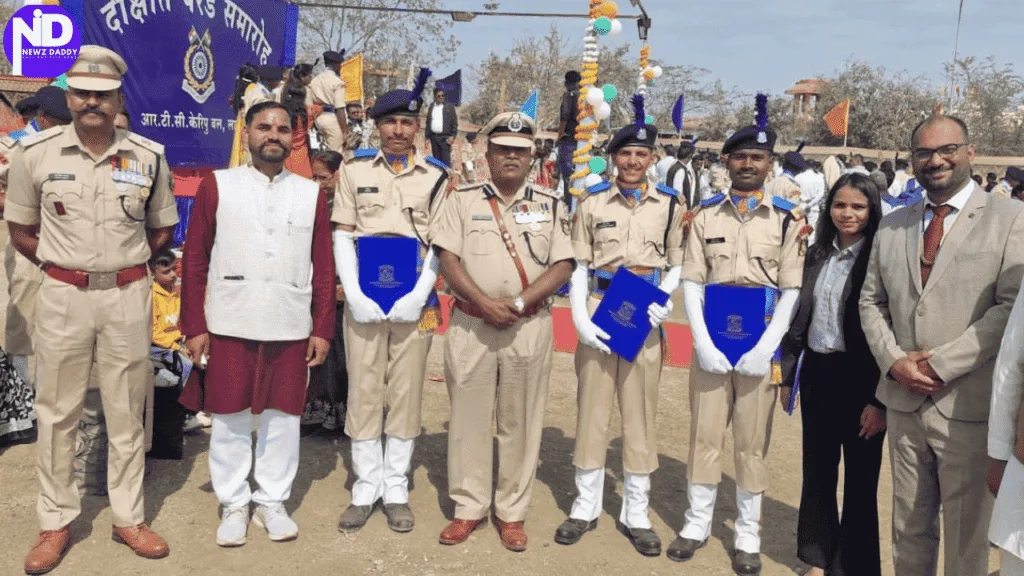
Rashtriya Raksha University (RRU) has awarded Diplomas in Internal Security to 1167 trainees, CRPF constables, during the passing out parade of the distinguished 32nd batch of Recruit Constables from the Central Reserve Police Force, RTC LATUR, Maharashtra. This significant event marks a key milestone in the ongoing collaboration between RRU and the CRPF, formalised through a Memorandum of Understanding (MoU) that includes affiliation and accreditation between the institutions.
This Batch comprises recruits from 27 states and 3 Union Territories across the country, strongly reflecting India’s spirit of ‘unity in diversity’.
The passing out ceremony was graced by the Chief Guest, Shri. Amit Kumar, IPS, Special DG. (Central Zone) and Dr Jugal Manoj Dave and Ms Sapna Parmar from Rashtriya Raksha University were also in attendance, underscoring the strong partnership at the Recruit Training Centre (RTC) in Latur, Maharashtra.
The awarding of Diplomas in Internal Security holds deep importance for the country’s internal safety framework. Internal security today goes far beyond basic law and order duties. It includes counter terrorism, crowd control, disaster response, cyber awareness, and protection of critical national assets. By linking academic learning with field training, Rashtriya Raksha University aims to create better prepared and more confident security personnel who understand both theory and ground reality.
Rashtriya Raksha University, located in Gandhinagar, was set up as India’s first national university focused only on police, security, and defence studies. The university works closely with central and state forces to improve training standards. Its programmes are designed in simple and practical ways so that constables and officers can apply what they learn during real operations. The diploma given to CRPF trainees adds formal education value to their professional training, which can also help them in future promotions and specialised roles.
The Central Reserve Police Force is the largest central armed police force in India. It plays a key role in maintaining internal peace, especially in sensitive areas affected by extremism, insurgency, and major law and order challenges. CRPF personnel are often the first responders during elections, natural disasters, and national emergencies. Due to this wide range of duties, structured learning on internal security is becoming increasingly important.
The Recruit Training Centre at Latur, Maharashtra, is one of the main training hubs of the CRPF. It is renowned for its strict discipline, rigorous physical training, and emphasis on mental strength. Recruits undergo months of physical drills, weapon training, law education, and team exercises. Adding a recognised diploma programme during this phase helps young constables understand why they train the way they do, not just how to do it.
The presence of recruits from 27 states and 3 Union Territories shows the truly national character of the force. Young men and women from different languages, cultures, and backgrounds train together, eat together, and learn to work as one team. This unity is essential for a force that operates across India. Such diversity also helps in community interaction, as personnel can connect better with local people during deployments.
Chief Guest Shri Amit Kumar, IPS, Special Director General of the Central Zone, brings vast field experience to such ceremonies. Senior officers like him often guide recruits about discipline, integrity, and service to the nation. Their presence motivates young constables and reminds them of the responsibility they carry once they wear the uniform.
Officials from Rashtriya Raksha University attending the event highlight the growing bond between academic institutions and security forces. This partnership ensures that training content stays updated with changing threats and new challenges. It also opens doors for future courses, research projects, and skill based learning for serving personnel.
Such initiatives reflect a larger shift in India’s security approach, where education, training, and technology go hand in hand. Modern policing and internal security demand clear thinking, legal knowledge, and respect for human rights, along with physical strength. By awarding diplomas during the passing out parade, the message is clear that learning does not stop once training ends.
For the trainees, this moment marks the start of their service journey. Along with marching proudly on the parade ground, they step forward with formal knowledge that supports their role as protectors of the nation. For the institutions involved, it sets a strong example of how collaboration can raise the quality of India’s internal security forces in a meaningful and lasting way.
Must Read:
RRU Ladakh Police MoU Powers SMART Policing Vision
RRU BCORE Olympism Initiatives Put Gujarat on the Global Map