



Investor Awareness Programme Boosts Safe Investing in Rajkot
Investor Awareness Programme educates investors on risks, rights and safe market practices
The National Stock Exchange of India (NSE) today conducted an Investor Awareness Programme (IAP) in Rajkot, Gujarat, to enhance financial literacy, promote responsible investing, and strengthen investor awareness across the region.
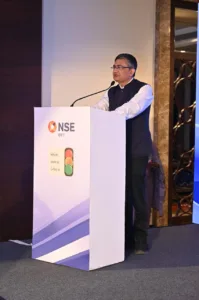
The programme witnessed enthusiastic participation from new and existing investors, professionals and students. The initiative forms part of NSE’s nationwide efforts to build a financially informed and resilient investor ecosystem for investors’ financial well-being. Programmes like this are becoming more important as more people enter the stock market through mobile apps and online platforms. Many first-time investors begin without proper guidance, and awareness sessions help them understand how markets work before putting their hard-earned money at risk.
Empowering investors through awareness remains a key focus for market regulators and exchanges across the world. The new year symbolises new beginnings and smarter financial choices. The session started with understanding financial and securities markets, highlighting the importance of choosing suitable financial products based on individual goals and risk appetite, rights and responsibilities of investors, grievance redressal mechanisms, fraud and scam prevention, etc. Such topics are vital because many investors often follow tips from social media or friends without knowing whether those tips are suitable for them. Learning about risk appetite helps investors understand how much loss they can afford, while knowledge of grievance systems gives them confidence that help is available if something goes wrong.
The session emphasised the importance of awareness, caution, and informed decision-making in today’s rapidly evolving financial markets. With faster trading systems and new products like derivatives, investors can gain or lose money quickly. Experts often point out that a lack of basic knowledge is one of the biggest reasons behind financial losses among retail investors. Programmes like this aim to reduce panic buying, emotional trading, and blind trust in unverified sources.
Recently, SEBI has introduced the ‘SEBI Check’ mechanism, where investors can either scan a QR code or manually enter the bank details of any SEBI-registered intermediary to check if the UPI ID or bank account is authentic. Investors are requested to check details before making a payment to any SEBI-registered intermediary. This step has come at a time when online scams have increased sharply, especially through fake WhatsApp groups and look-alike apps. By encouraging investors to verify details before paying, regulators hope to cut down fraud cases at the source.
Gujarat has a very strong participation in the markets, with around 1.1 crore registered investors, making it the third-largest state by investor base, an 8.7 per cent share of India’s total investors, with a 10-year CAGR of over 17 per cent in investor growth. About 11 lakh new investors have been added in 2025 alone. This growth reflects rising income levels, better access to digital platforms, and growing interest in equity as a long-term wealth tool. Rajkot is among the top five districts, contributing over 55 per cent of new investor registrations in the state. The city has seen rapid growth in small businesses and professionals, many of whom are now turning to financial markets for savings and investment.
Notably, 28 per cent of investors from Gujarat are women, higher than the national average of 25 per cent. This shows a positive shift towards financial independence and participation among women. Financial literacy programmes play a key role in building confidence among women investors, helping them understand products beyond traditional savings options.
Shri Ashishkumar Chauhan, MD and CEO, NSE, said that given Gujarat’s growing investor base, investor awareness is the strongest foundation. He highlighted that informed investors make better decisions, which support long-term wealth creation and economic growth. His remarks underline a widely accepted view that healthy markets depend not just on rules, but also on educated participants who understand both opportunities and risks.
NSE’s robust investor awareness and protection framework further supports this goal. The Investor Protection Fund Trust corpus stands at approximately ₹2,754 crore, making it one of the strongest such systems globally. This fund acts as a safety net in rare cases of default, giving investors added confidence. Strong protection systems are often seen as a sign of mature markets.
NSE has conducted over 16,000 Investor Awareness Programmes in FY25–26, reaching around 8.3 lakh participants across the country. These sessions cover students, women entrepreneurs, rural investors, armed forces personnel, and first-time investors. Such wide outreach ensures that financial knowledge is not limited to big cities or experienced traders.
The Exchange has also led nationwide campaigns such as #SEBIvsSCAM and partnered with popular programmes to spread financial awareness. Using familiar platforms helps messages reach people who may not attend formal sessions but still need guidance.
During the programme, key investor safety messages were shared. Participants were advised to stay away from fake trading apps and unregistered entities, avoid schemes promising guaranteed or unusually high returns, and exercise caution while trading in derivatives. They were also reminded to verify intermediaries and rely only on SEBI-registered entities and official sources. These simple messages, when followed, can protect investors from the most common financial traps and help them invest with greater confidence and safety.