


IRIS National Fair Powers India’s Young STEM Game Changers
Newz Daddy Education Updates
IRIS National Fair connects Indian school research with global science platforms
Adani International School hosting the IRIS National Fair 2025–26 comes at a time when school education in India is slowly shifting from rote learning to curiosity-based learning. Across the country, educators are increasingly focusing on helping children understand how science works in real life rather than only preparing them for exams. Events like this fair give students a chance to explore ideas, test solutions, and explain their thinking in simple ways, which is an important step in building confidence and independent thought at a young age.

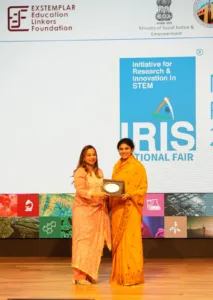
The presence of Smt Rivaba Ravindrasinh Jadeja at the valedictory ceremony added weight to the message that research should begin early. Globally, many education systems encourage students to take part in small research projects from primary school onwards. Studies show that when children are exposed to inquiry-based learning early, they develop stronger problem-solving skills and a better understanding of how knowledge is created. Her emphasis on scientific temperament reflects the broader goals of the National Education Policy 2020, which encourages hands-on learning, critical thinking and flexibility in the classroom.
Ms Namrata Adani’s role as Promoter of Adani International School reflects a growing trend where private institutions invest in holistic education rather than focusing only on academic scores. Around the world, schools that combine academics with innovation, arts and leadership training tend to produce well-rounded students who can adapt to changing careers. Her statement about nurturing curiosity highlights the belief that children learn best when they are allowed to ask questions freely and learn from mistakes, rather than fearing failure.
Bringing together 75 students from 12 states and 24 cities made the IRIS National Fair a truly national event. Such diversity allows students to learn from each other’s experiences and cultures. Research in education shows that collaborative learning across regions helps students develop empathy, communication skills and broader thinking. For many participants, travelling to Ahmedabad and presenting their work before experts may have been their first exposure to a national-level academic platform, which can be a life-changing experience.
The structure of the fair went beyond a simple exhibition. By including mentoring sessions and symposia, students were guided on how to improve their ideas and think more deeply about their research. Mentorship plays a key role in student innovation. Young learners often have creative ideas but need guidance to refine them, understand scientific methods and communicate results clearly. Exposure to educators and researchers helps bridge this gap and gives students a clearer picture of careers in science and technology.
The Principals’ and Educators’ Conference held at the start of the programme addressed an important but often overlooked aspect of education. Teachers and school leaders play a crucial role in shaping how students learn. Discussions on inquiry-based STEM teaching and experiential learning help schools rethink classroom practices. Around the world, education systems that support teacher training and collaboration tend to see better student outcomes, especially in science and mathematics.
The competitive assessment aspect of the fair added excitement and purpose for the students. Knowing that the event served as a qualifying platform for the International Science and Engineering Fair 2026 gave participants a clear goal. International competitions like ISEF expose students to global standards of research and presentation. Past participants from India who have competed internationally often go on to pursue higher studies in science, engineering and medicine, contributing to innovation and research in the long run.
Awarding Gold and Silver Medals also teaches students about healthy competition and recognition of effort. Even for those who did not win medals, the experience of presenting research, receiving feedback and observing other projects is valuable learning. Educational experts often point out that the process of learning matters more than winning, especially at the school level.
The attendance of senior leaders such as Mr Amit Singh from the Adani Group showed industry interest in early education and research. When industry leaders engage with school-level programmes, it helps students understand how science and innovation connect with real-world careers. Such interactions can inspire students to see themselves as future engineers, scientists or innovators who can solve practical problems.
Hosting the IRIS National Fair also strengthened Ahmedabad’s position as an emerging education and innovation hub. Cities that invest in quality schools, research exposure and student platforms often attract more academic and professional talent. Adani International School’s focus on academics along with sports, arts and leadership reflects the idea that education should prepare students for life, not just exams.
Finally, the role of EXSTEMPLAR Education Linkers Foundation highlights the importance of independent organisations in nurturing young talent. By providing national platforms and global pathways, such initiatives ensure that students from different backgrounds get equal opportunities to shine. Supporting students from Grades V to XII helps build a strong foundation for future scientific thinkers, reinforcing the idea that innovation begins not in universities, but in curious young minds at school.