


Janmashtami Celebrations Held in Ahmedabad and Gujarat
ISKCON Bhadaj Takes Janmashtami Celebrations to Six Gujarat Communities
Residents in six communities across Gujarat have taken part in spiritual and cultural programmes organised by ISKCON Hare Krishna Mandir, Bhadaj, as part of its “Swagatam Krishna 2026” initiative ahead of Sri Krishna Janmashtami.

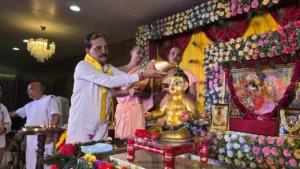
The programmes were held at Chandlodiya, Adani Shantigram, Nikol, Kalol, Sanand and Maninagar. The events included kirtan, devotional music, cultural presentations and talks on the significance of Lord Krishna’s appearance.
The initiative is designed to take Janmashtami celebrations outside the temple and into residential and local communities. ISKCON Bhadaj said the aim is to allow families, children and young people to take part in the festival and learn about Krishna and the teachings associated with him.
Shri Jaganmohan Krishna Dasa, President of Hare Krishna Mandir, Bhadaj, said, “The purpose of Swagatam Krishna is to bring people closer to the joyful and spiritual experience of Janmashtami. By taking these celebrations into communities, we hope that families, children and youth can connect with the timeless teachings of Lord Sri Krishna and experience the happiness of Krishna consciousness.”
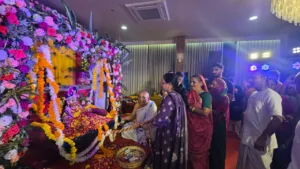
The timing comes as devotees prepare for Janmashtami, which will be observed on 4 September in 2026. The festival marks the birth of Lord Krishna and is traditionally centred on worship, fasting, devotional singing and midnight prayers. For Ahmedabad, the ISKCON Janmashtami schedule places the main midnight worship period shortly after midnight on 5 September.
At Chandlodiya, families and residents gathered for devotional singing, spiritual talks and cultural activities. The programme focused on the religious meaning of Krishna’s birth and gave residents a chance to observe the festival together.
The event at Adani Shantigram brought similar activities into the residential community. Kirtan, music and cultural programmes formed the main part of the gathering, with the organisers also speaking about the place of Krishna’s teachings in daily life.
Nikol saw participation from families and young people. Music and kirtan were used as part of the programme, alongside cultural presentations about Krishna and India’s Vaishnava traditions.
In Kalol, the programme followed the central idea behind the community initiative: taking Janmashtami celebrations to places where people live and meet. The event brought devotional activities and cultural performances together and explained the religious importance of the festival.
The Sanand programme brought residents together for devotional activities and cultural presentations. Organisers presented Janmashtami as a festival linked to both religious practice and the wider traditions of Vaishnavism.
At Maninagar, the series of community programmes included kirtan, devotional music and cultural performances. Participants were invited to observe the festival and learn more about Krishna’s teachings.
The six programmes form part of a wider “Swagatam Krishna 2026” schedule being held across Gujarat during the Janmashtami season. An earlier announcement from Hare Krishna Mandir, Bhadaj said the wider programme would cover locations including Ahmedabad, Gandhinagar, Rajkot, Surat, Vadodara, Sanand, Viramgam, Kadi and Kalol between 22 August and 13 September.
The Bhadaj temple itself is preparing for its main Sri Krishna Janmashtami Mahotsav on 4 September. The temple’s official Janmashtami programme includes special devotional services such as abhisheka, food offerings, Jhulan Seva and other religious activities. Hare Krishna Mandir is located near Science City in Bhadaj, Ahmedabad.
The community programme also reflects the wider way ISKCON has developed since its founding in New York in 1966 by A.C. Bhaktivedanta Swami Prabhupada. The organisation, formally known as the International Society for Krishna Consciousness, says its work is based on the teachings of the Bhagavad-gita and the Srimad Bhagavatam, with bhakti, or devotional practice, at its centre.
Prabhupada arrived in New York in 1965 and established ISKCON the following year. Over the next 11 years, he travelled widely to teach Krishna consciousness and established temples, farm communities, educational projects and other institutions. ISKCON now has centres, temples and community groups in many countries.
The Bhagavad-gita remains one of the main texts studied by ISKCON followers. It records a conversation between Krishna and Arjuna before the battle of Kurukshetra and deals with questions of duty, action, devotion and spiritual life. The Hare Krishna movement also places importance on the chanting of the Hare Krishna Mahamantra.
For Gujarat communities taking part in “Swagatam Krishna 2026”, the focus has been more local: bringing these religious and cultural activities closer to residents before the main festival.
The programme will continue through the Janmashtami season, with the celebrations at Hare Krishna Mandir, Bhadaj serving as the main event in the series. Devotees and members of the public are expected to take part in special darshan, kirtan, devotional music, cultural programmes and other Janmashtami activities.