


Jhulan Yatra Concludes at Hare Krishna Mandir in Bhadaj
Six-day Jhulan Yatra concludes at Hare Krishna Mandir, Bhadaj, on Balaram Jayanti
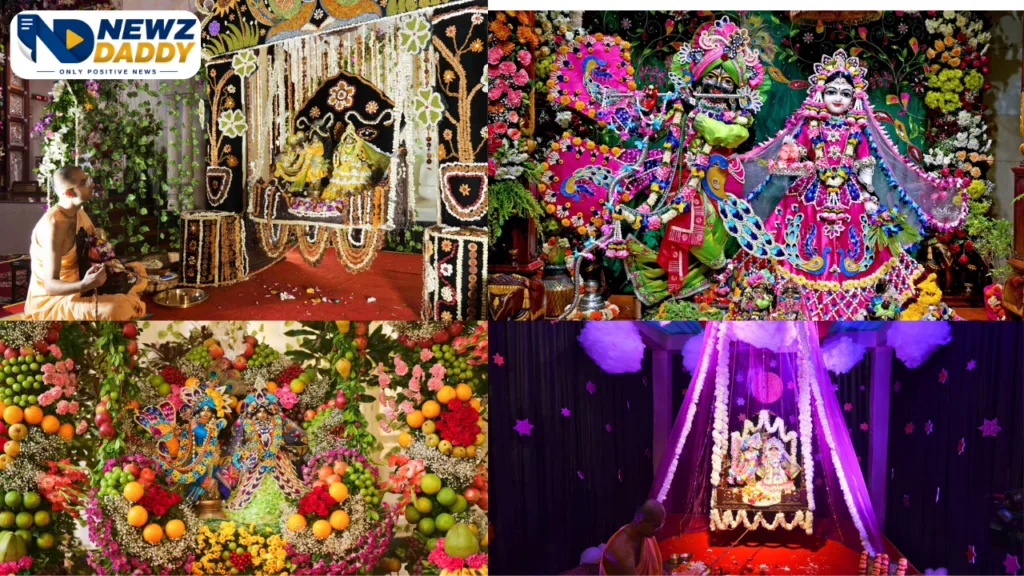
The six-day Jhulan Yatra at Hare Krishna Mandir in Bhadaj, near Science City in Ahmedabad, ended on August 28 with the observance of Sri Balaram Jayanti. The temple had scheduled the Jhulan Utsav from August 23 to August 28, with Sri Sri Radha Madhav placed on a decorated swing as part of the daily worship.
Jhulan Yatra is a Vaishnava festival linked with the month of Shravana. In the temple tradition followed at Bhadaj, it begins with Ekadashi, the 11th day of the bright half of the lunar month, and ends on Purnima, the full-moon day. The festival recalls the childhood pastimes of Sri Krishna with the cowherd boys and girls of Vrindavan, where swinging beneath trees during the monsoon forms part of the traditional imagery.
The festival is observed in several parts of India, although its length can differ by place and tradition. ISKCON temples commonly observe the swing festival for five days, while celebrations in Vrindavan can extend over a longer period. In 2026, the Bhadaj temple’s published programme ran from August 23 through August 28.
At Hare Krishna Mandir, the festival centres on Sri Sri Radha Madhav. The deities are placed on a swing decorated with flowers, garlands and other natural materials. The temple’s published description says devotees take part in the swinging service after arati and devotional singing.
The decorations at Bhadaj included flowers such as carinson, sevanti, gerbera, marigold, rajnigandha, orchid and kamini. Colourful beads, fruits and dry fruits were also used around the swing. An arati was performed after Sri Sri Radha Madhav were seated on it, accompanied by the special song “Jay Radha Krishna Giti”. Devotees also offered different varieties of bhoga.
Kirtans and bhajans continued through the celebrations, allowing visitors to take part in the religious activities. The temple’s programme also included a special session on the life and glories of Lord Balarama on the occasion of Balaram Jayanti.
Balaram Jayanti marks the appearance day of Lord Balarama, who is regarded in the Vaishnava tradition as the elder brother of Sri Krishna. The Bhadaj temple describes Balarama as “acyutagrajaḥ”, meaning the elder brother of Krishna. He is also known as Baladeva and Sankarshana. The temple’s Balaram Jayanti programme on August 28 included evening worship and a scheduled Jhulan seva for Sri Sri Radha Madhava.
Balarama has an important place in Krishna traditions. In the Bhagavata Purana tradition, he is associated with Vasudeva and Rohini, and his story is closely connected with Krishna’s early life. Vaishnava traditions also identify him with Ananta Shesha, the divine serpent associated with Vishnu. He is commonly shown carrying a plough and is linked with strength and protection.
The connection between Jhulan Yatra and Balaram Jayanti is also found in wider Vaishnava practice. The final day of the swing festival falls on the full moon, which is also observed as the appearance day of Balarama in these traditions. ISKCON’s own festival material describes the swing celebrations as a service in which devotees decorate the swing, offer worship, sing kirtan and gently swing the deities.
The swing itself has a practical place in the festival tradition. The monsoon months can remain warm and humid, even when rain brings some relief. Devotees therefore traditionally use the movement of the swing to create a breeze for Radha and Krishna. Flowers, forest creepers and jasmine are commonly used for decoration, while some temple traditions also use rose-water sprays.
The practice also reflects the idea of seva, or personal service to the deity. At Bhadaj, visitors were allowed to participate in the swinging service after the religious ceremonies. ISKCON centres elsewhere describe this form of participation as well, where devotees offer flowers, prayers, and gentle movement of the swing during the festival.
The tradition is also mentioned in Vaishnava religious literature. The supplied account cites Sri Hari-bhakti-vilasa:
“To please Sri Hari, devotees hold numerous festivals on every occasion and continuously perform sankirtana. According to their ability, the devotees serve the Lord during the summer by placing Him on the boat, taking Him out on a procession, applying sandalwood on His body, fanning Him with chamara, decorating Him with jewelled necklaces, offering Him palatable foodstuffs, and bringing Him out to swing Him in the pleasant moonlight.”
At Hare Krishna Mandir, the Jhulan Yatra therefore formed part of the temple’s annual cycle of religious observances, bringing together daily worship, flower decoration, bhajans, kirtans, food offerings and participation by devotees. The six-day programme ended with the celebration of Balaram Jayanti, linking the closing day of the swing festival with one of the major observances in the Vaishnava calendar.
Must Read:
ISKCON Bhadaj To Host Janmashtami on September 4