


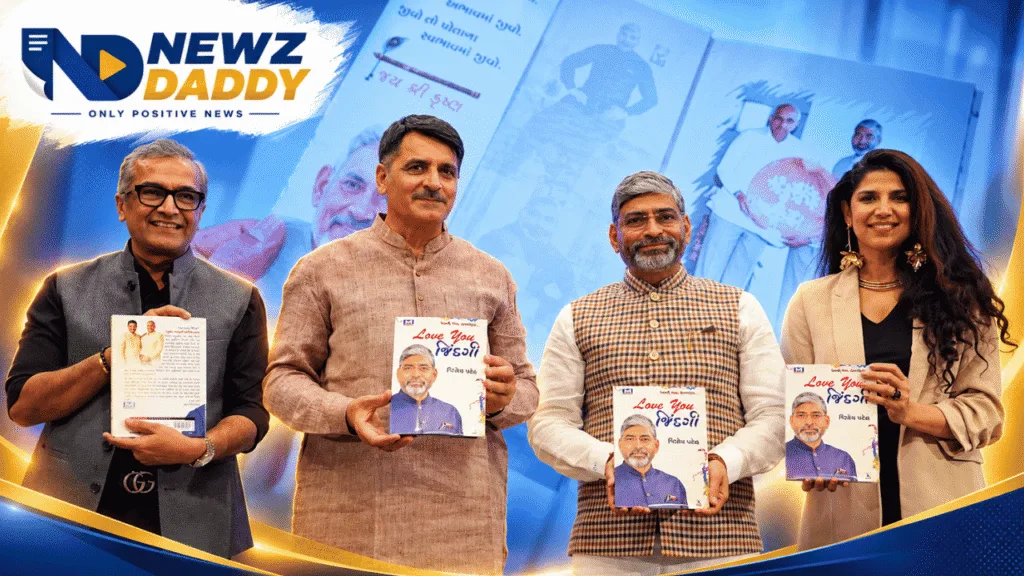
Jignesh Patel Book Launch Draws Guests to Ahmedabad AMA
Jignesh Patel Launches Three Books on Positive Thinking, Personal Growth and Financial Discipline in Ahmedabad
Ahmedabad, October 26, 2026: Three books authored or adapted by Jignesh Patel, Chairman and Managing Director (CMD) of Mantavya News 24×7, were launched at the Ahmedabad Management Association (AMA) on Monday. The event brought together political leaders, a motivational speaker and a radio personality to discuss books covering positive thinking, personal development and money management.
The ceremony, held under the title “Mann Ki Baat, Mantavya Roope – A Conversation of Thoughts, Stories, and Perspectives”, was organised jointly by Mantavya News 24×7, Adarsh Prakashan, Karma Foundation and the Gujarati Book Club. Shri Shankar Chaudhary, Speaker of the Gujarat Legislative Assembly, motivational speaker Shri Sanjay Raval and RJ Devaki attended the event and took part in the launch.
The three titles were ‘Love You Zindagi’, ‘Think Outside the Box’ and ‘The Richest Man in Babylon’. Each deals with a different part of everyday life, from a person’s attitude towards challenges to the way people think about success and handle their finances.
‘Love You Zindagi’ focuses on enjoying life and maintaining a positive outlook. The book encourages readers to value everyday experiences and approach difficult periods with hope. Its central theme is relevant to readers of different ages, particularly those looking for practical ways to maintain a positive attitude during personal or professional difficulties.
Positive thinking is a familiar subject in self-help literature. Books in this category often encourage readers to examine their habits, responses and daily choices. Their usefulness depends on how well readers can apply the advice to real situations. A positive outlook may help people deal with setbacks, although it cannot replace practical action when they face financial, family, work or health problems.
The second title, ‘Think Outside the Box (Delete Old Beliefs and Install True Freedom)’, deals with the effect of established beliefs on decision-making. It encourages readers to question assumptions and consider different ways of approaching problems. Jignesh Patel’s book presents a case for reviewing old patterns of thought when they limit a person’s choices or ability to respond to change.
This subject has applications in education, business and personal life. People often rely on familiar methods because they have worked in the past. Yet a change in circumstances may require a different response. Learning to question an assumption, consider evidence and compare possible solutions can help people make better decisions. The book’s stated focus is on giving readers a wider view of their choices and encouraging them to move beyond restrictive thinking.
The third book, ‘The Richest Man in Babylon’, takes a different route by focusing on financial habits. Written originally by George S. Clason, the work has been adapted into Gujarati by Jignesh Patel. The book is based on lessons about saving, controlling spending and building financial security.
Clason’s work is known for explaining money management through stories set in ancient Babylon. Its lessons centre on keeping part of one’s earnings, managing expenses and using savings carefully. These ideas remain relevant to households that need to balance daily costs with longer-term needs.
For readers who are new to managing money, regular saving and careful spending can provide a starting point. Financial security also depends on income, debt, unexpected expenses and access to suitable financial services. Readers therefore need to judge general money advice against their own circumstances and seek reliable information before making major financial decisions.
The Gujarati adaptation gives local-language readers access to a work that has circulated internationally for many years. Translation and adaptation can make older books easier to read for audiences who prefer their mother tongue. The original author’s name remains central to the book’s identity, while Patel’s role is to present the work in Gujarati.
The involvement of Adarsh Prakashan, established in 1943, also connects the launch with a publishing house that has a long history in the field. Karma Foundation and the Gujarati Book Club joined Mantavya News 24×7 in organising the programme. The event’s title placed conversation and the exchange of ideas at the centre of the gathering.
The three books address subjects that affect readers at different stages of life. A young adult may be thinking about confidence and career choices, while a working professional may be reviewing old habits or planning household finances. Older readers may also find value in examining how they spend their time and manage their resources. The books offer different points of entry into these concerns, although readers will decide their value through the ideas they find useful and put into practice.
The launch ended with attendees expressing their appreciation for the three titles. No sales figures, print-run details or information about wider distribution were provided in the event announcement. Their reach will depend in part on reader interest, availability and how effectively the books connect with their intended audiences.
With the Ahmedabad event, Jignesh Patel has added three titles to the Gujarati reading market, covering life, thought and money through separate works. The books’ common subject is the role of everyday choices in shaping how people live, think and plan for the future.