


Mahudi Trust gives a strong emotional reply to gold charges
Newzdaddy Spiritual Updates
Mahudi Trust Takes a Strong Step After Serious Gold Allegations
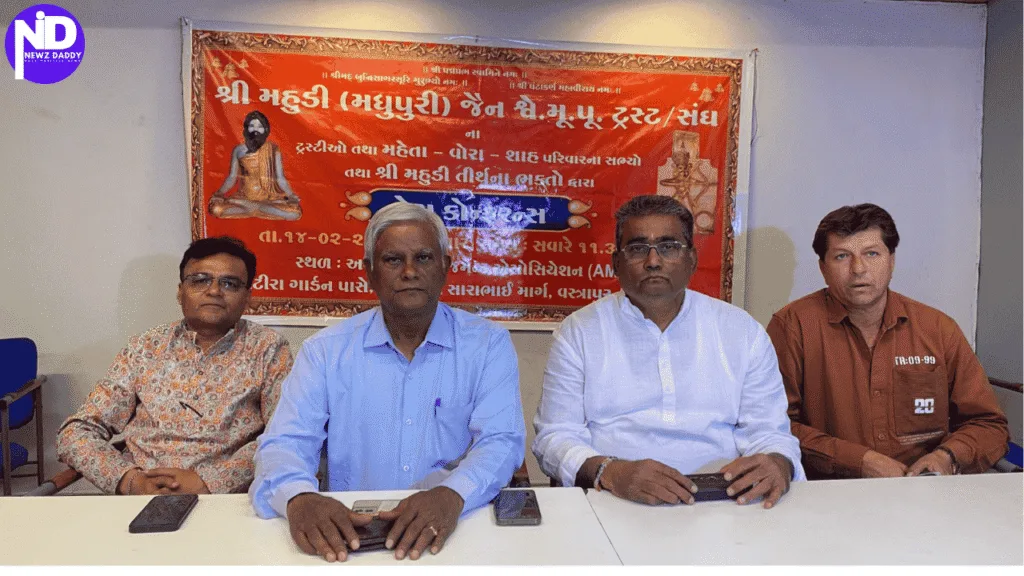
Eight trustees of Shri Mahudi (Madhupuri) Jain Shwetambar Murtipujak Trust Sangh, along with representatives of the Mehta, Vora and Shah families connected to the Trust, held a press conference in Ahmedabad today. They presented a fact-based reply to the various allegations made against them.
Shri Mahudi Tirth, located near Mansa in Gujarat, is one of the most respected Jain pilgrimage places in India. It is especially known for the temple of Ghantakarna Mahavir. Every year, thousands of devotees visit this temple. Religious trusts like this usually manage temple property, donations and daily operations. In India, temple trusts are expected to follow strict rules under charity and trust laws. Trustees have a duty to protect temple wealth and maintain public faith. When allegations are made, it often creates concern among devotees because religious places depend heavily on trust and belief.
At the press conference, the trustees clarified that Ankit Shrenikbhai Mehta, who has already served 19 months in jail under PASA, and Jayeshbhai Mehta were removed last year from the general membership of Mahudi Sangh. This decision was taken by keeping their criminal history in mind and to protect the honour of the Sangh. Even after this, they are falsely claiming to be trustees or members and are trying to mislead devotees and harm the Trust’s reputation.
The PASA law, which stands for the Prevention of Anti-Social Activities Act, is used in Gujarat to detain people involved in serious crimes that may disturb public order. When a person has been jailed under PASA, it often raises questions about their conduct. Many religious and charity organisations in India have internal rules which allow them to remove members if their actions may harm the image of the institution. This is done to protect the reputation of the trust and to keep the confidence of devotees. In many past cases across India, temple trusts have taken similar steps when members were linked to criminal matters.
The trustees also said that in 2012, former trustee Rashmibhai Mehta was caught taking commission from a contractor and had to resign. After this, his family member, Sunilbhai Mehta, made an application at the Mansa Police Station and accused the Trust and trustees of stealing 65 kilos of gold. However, after police investigation, no facts were found, and the application was rejected.
In India, police investigations play an important role in checking such serious claims. When a complaint is filed, the police collect evidence, question people and review records. If no proof is found, the complaint can be closed. There have been many cases in the country where complaints related to temple gold or donations were investigated, but no wrongdoing was proven. Temple gold is very sensitive because devotees donate gold as a sign of faith. Even rumours about missing gold can create fear and anger among followers.
In 2023, Nilesh Mehta and Sunil Mehta were caught on CCTV stealing from the temple store at Mahudi Tirth. They are said to be family members of Ankit Mehta and Jayesh Mehta. Both persons were removed immediately by the Trust. The trustees claimed that the current baseless allegations are made only to take revenge for this action.
CCTV cameras are now widely used in temples across India to improve safety. After several theft cases in temples in states like Tamil Nadu, Gujarat and Maharashtra, many trusts installed cameras to watch over donation boxes, gold ornaments and storage areas. CCTV footage is often used as strong proof in theft cases. Quick action by trusts in such situations is seen as important to protect temple property and to show transparency to devotees.
Regarding the allegation of misusing 65 kilos of gold, the trustees said that the gold was bought for the gold plating of the temple.
Gold plating of temples is a common religious practice in India. Many famous temples, such as Tirupati Balaji and Somnath Temple, have used donated gold for plating parts of the temple. This is done to honour the deity and to beautify the temple. Usually, trusts keep records of gold purchase, storage and use. These records can be checked during audits. Temple audits are important because they help make sure that donations are used properly.
Religious trusts in India are not just places of worship but also centres of social faith. Any dispute linked to money, gold or leadership can affect lakhs of devotees. Because of this, trustees often use press conferences to share their side and protect their image. Devotees also expect clear answers, as their faith is deeply connected to the temple.
The press conference by Shri Mahudi (Madhupuri) Jain Shwetambar Murtipujak Trust Sangh is one such effort where the trustees have shared their reply and placed their facts before the public. The matter remains important for devotees, as Mahudi Tirth continues to be a major religious place visited by people from Gujarat and across India.