


Military Civil Fusion Abhiyan Boosts Security in Pune
Military Civil Fusion Abhiyan Delivers Powerful and Trusted Coordination
The Military Civil Fusion Abhiyan, led by the Indian Army under Southern Command, comes at a time when modern security challenges are becoming more complex and less predictable. Across the world, experts in defence studies and internal security have stressed that no single force can handle threats alone. Reports from institutions like the Institute for Defence Studies and Analyses highlight that threats today often cut across military, civil and technological spaces. This makes coordination between different agencies not just useful, but necessary.
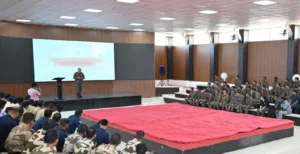

The participation of multiple stakeholders, such as the Central Armed Police Forces, state police and civil administration, reflects a shift in how security is viewed today. Research published in internal security reviews suggests that internal threats, including organised crime, illegal mining and forest-related conflicts, require local knowledge as much as military strength. When agencies like forest departments and mining authorities join hands with security forces, they bring valuable ground-level information that helps in better planning and execution.
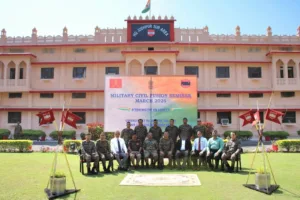

The Table Top exercise conducted at Pune is also in line with global best practices. Defence experts often point out that simulation-based exercises help leaders prepare for real-life situations without actual risk. According to studies by the United Nations Office for Disaster Risk Reduction, such exercises improve decision-making under pressure and allow agencies to test their response systems. By involving railway officials, civil authorities and security agencies, the exercise ensured that critical sectors like transport and logistics are not left out during crisis planning.
The focus on counter-drone or Counter-UAS discussions at Bhopal is especially relevant in today’s context. Drones have been increasingly used in conflicts across the world, including in regions like Ukraine and the Middle East. Security journals have warned that even small drones can be used for surveillance or attacks. In India, agencies like the Airports Authority of India have already started working on systems to detect and manage such threats. Bringing together military experts and civil aviation stakeholders helps build a common understanding of how to tackle this new risk.
Ground-level coordination activities in places like Babina also reflect lessons learned from past operations. Experts often say that local coordination between police, army and civil bodies is key to maintaining stability in sensitive areas. Joint patrolling and village outreach programmes are known to build trust among local communities. Reports from rural security studies suggest that when people feel involved and informed, they are more likely to support security efforts and share useful information.
The engagement at Chennai, held at a historic place like the Victory War Memorial, shows how dialogue and discussion remain central to security planning. Conferences like these allow senior officials to share experiences and learn from each other. Experts writing in defence magazines often note that communication gaps between agencies can lead to delays during crises. Regular meetings help close these gaps and build stronger relationships.
The involvement of training centres in Belagavi and Hyderabad also highlights the importance of continuous learning. Modern threats evolve quickly, and so must the skills of those who deal with them. Research in military education shows that joint training improves teamwork and reduces confusion during real operations. When personnel from different agencies train together, they understand each other’s roles better, which leads to smoother coordination in the field.
Activities in border and strategic areas like Jodhpur and Jaisalmer underline the importance of civil-military synergy in sensitive regions. Studies on border management often point out that local administration plays a key role in maintaining stability. Information sharing between civil authorities and the military helps in early detection of unusual activities and faster response to any threat.
What stands out in all these efforts is the growing trust between agencies. Experts agree that trust is one of the most important factors in successful collaboration. When agencies share information openly and work towards a common goal, decision-making becomes faster and more effective. This is especially important in situations where every minute counts.
The Military Civil Fusion Abhiyan shows that India is moving towards a more integrated and modern approach to security. By combining the strengths of the military, civil administration, technology experts and local agencies, the Southern Command has demonstrated a model that is both practical and forward-looking. In a world where challenges are constantly changing, such unity and coordination will play a key role in keeping the nation prepared and resilient.
Must Read:
Defence Forces Vision 2047 Sets Bold Future for India’s Military