


Mumbai Clean Energy Power Link Brings Big Relief Now
Adani Energy Commissions 1,000 MW Power Link to Bring More Clean Energy into Mumbai
Adani Energy Solutions has commissioned a 1,000 megawatt (MW) high-voltage direct current (HVDC) link, enabling a greater flow of renewable power into Mumbai
The project improves grid reliability and energy security across the Mumbai Metropolitan Region (MMR), reducing dependence on in-city generation and lowering outage risks
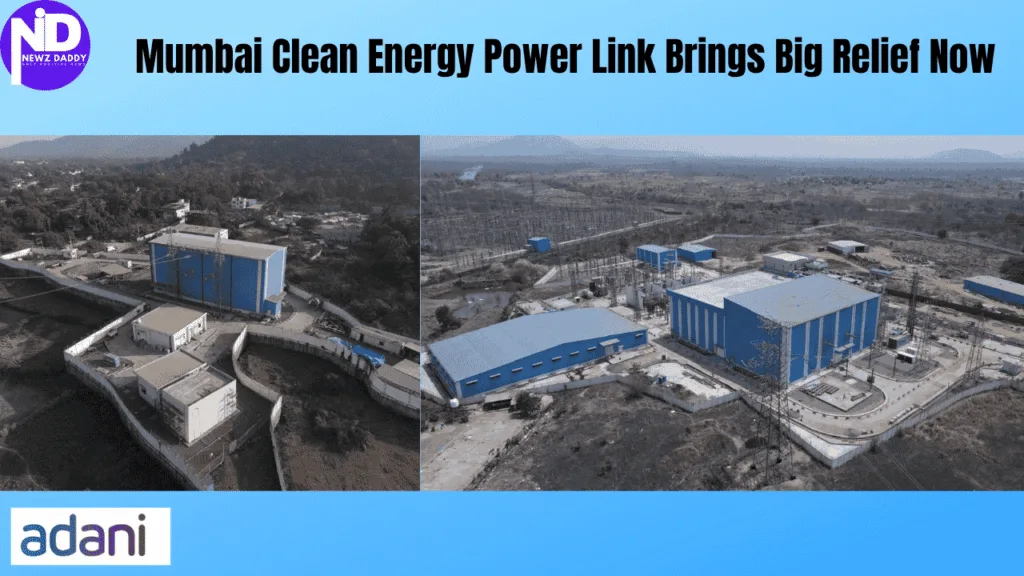
It also features the world’s first compact HVDC substation, suited to dense urban environments
In a significant step towards strengthening power infrastructure in Mumbai and the wider Mumbai Metropolitan Region (MMR), Adani Electricity Mumbai Infrastructure Limited, a subsidiary of Adani Energy Solutions Limited, has commissioned a 1,000 megawatt (MW) high-voltage direct current (HVDC) transmission link between Kudus and Aarey.
The project, comprising a 30-kilometre (km) overhead line and a 50-km underground corridor, has been designed to operate within the constraints of a densely built urban environment. Experts in urban planning have often pointed out that cities like Mumbai face serious land shortages. Underground transmission systems are now seen as a safer and more practical choice in such areas. Reports from global energy agencies show that compact infrastructure helps reduce visual impact and land use, which is critical in crowded cities.
It also features the world’s first compact HVDC substation. Energy experts note that this type of substation can fit into tight spaces without reducing performance. Similar compact designs are already being tested in cities like Tokyo and London, where space is limited. This step places Mumbai among a small group of global cities using advanced grid systems.
Conceived in the aftermath of the October 2020 Mumbai blackout, which exposed vulnerabilities in the city’s power supply, the project reflects a broader push to strengthen grid resilience and reliability. That blackout left millions without power for hours, affecting trains, hospitals, and businesses. Studies after the incident showed that a lack of strong transmission links and poor grid coordination were key reasons behind the failure. Since then, policymakers and power companies have focused on building stronger backup systems.
At its core, the link enables Mumbai and the MMR to draw more electricity from outside the city, including renewable energy generated in other regions. India has been rapidly expanding its renewable energy capacity, especially in solar and wind power. According to government data, states like Gujarat and Rajasthan are producing large amounts of clean energy, but cities need strong transmission lines to use it. This HVDC link helps bridge that gap by allowing power to travel long distances with fewer losses.
While Mumbai is already connected to the national grid, the HVDC link enhances this connectivity by enabling more controlled, efficient, and higher-capacity power flows, particularly for renewable energy integration. Energy analysts say HVDC systems are more stable than traditional alternating current systems for long-distance transmission. They also allow operators to quickly adjust power flow, which helps prevent sudden failures.
For the MMR, one of India’s most energy-intensive urban clusters, this marks a shift in how electricity is delivered. The additional 1,000 MW of capacity helps reduce reliance on in-city generation, improves grid resilience, and lowers the risk of large-scale outages. Cities that depend heavily on local power plants often face higher pollution levels. By importing cleaner energy, Mumbai can cut emissions and improve air quality over time.
The development reflects AESL’s broader focus on building modern transmission infrastructure to support India’s growing renewable energy capacity. The country has set strong targets for clean energy, aiming to increase its share in the overall power mix. Industry reports suggest that transmission upgrades like this are just as important as building new solar or wind farms.
The project deployed Voltage Source Converter (VSC)-based HVDC technology. This enables faster and more precise control of power flows, improves voltage stability, and enhances grid reliability, particularly in space-constrained urban environments. Engineers highlight that VSC technology is especially useful in cities because it can handle sudden changes in demand without causing instability.
It also offers key operational benefits, including dynamic voltage support, reduced transmission losses over long distances, and black-start capability. This means the system can restart the power supply even after a total shutdown without depending on external support. Global case studies show that black-start systems play a crucial role in restoring power quickly after major outages, reducing downtime for essential services.
The Kudus–Aarey link is among the largest urban HVDC infeeds globally and is expected to significantly increase the share of power sourced from outside Mumbai, easing pressure on in-city generation and strengthening grid resilience as demand continues to grow across the MMR. With electricity demand in cities rising each year due to population growth and increased use of appliances, such projects are becoming necessary rather than optional.
Kandarp Patel, CEO, Adani Energy Solutions Ltd., said, “With the commissioning of the Aarey–Kudus transmission line, Mumbai now has a modern power corridor capable of integrating large-scale renewable energy with high reliability. It is one of the fastest HVDC projects ever commissioned, which is powered by advanced VSC-based HVDC technology. The project enhances grid stability, decongests existing networks and strengthens the city’s energy security. This marks a significant step towards a cleaner, more resilient energy future for Mumbai.”