


NCC Mauritius Visit Vadodara Builds Strong Youth Future
NCC Mauritius Visit to Rajpipla Reveals Strong Training and Leadership Skills
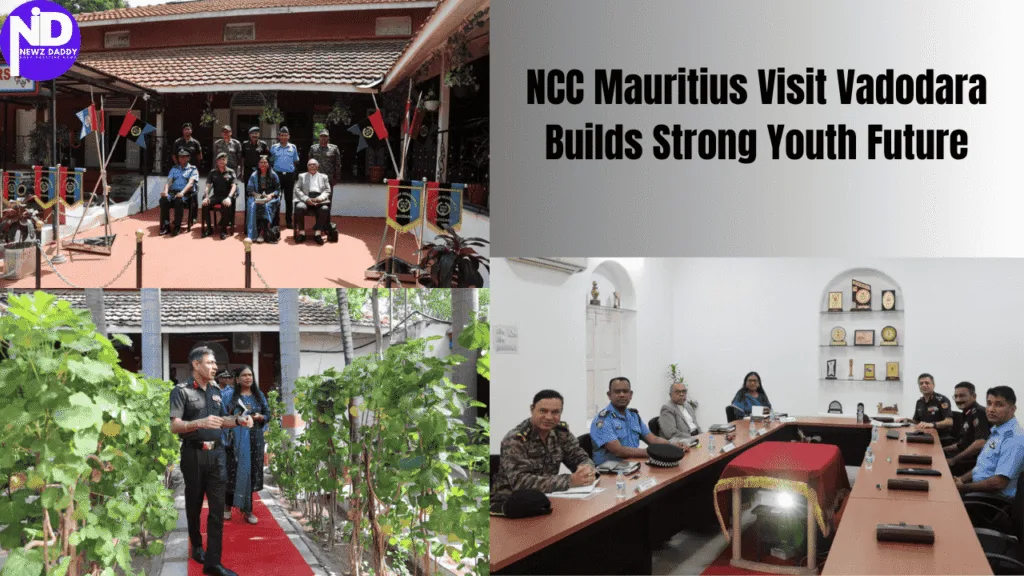
A High-level delegation of Mauritius visited NCC Group Headquarters, Vadodara, led by Mrs Dhanita Ramdharee, Deputy Permanent Secretary, accompanied by her advisor, Mr Darmalingum Mootien and Deputy Commissioner of Police Mr Rajcoomar Seebah on 22 April 2026 to learn the nuances of NCC and to facilitate a similar setup in Mauritius.
Such visits have become more common in recent years as small island nations look at India’s youth models. The National Cadet Corps (NCC) is known for shaping over 1.5 million cadets across the country every year. Many global reports on youth development highlight NCC as one of the largest uniformed youth organisations in the world. Mauritius, with its strong Indian cultural roots, has often explored Indian systems in education, policing, and youth engagement. Experts believe that structured programmes like NCC can help reduce youth crime and build civic sense at an early age.
The visit reflects enduring bilateral relations between India and Mauritius. Group Commander Vadodara received and briefed the Delegation on NCC and its functioning. The focus was on leadership, discipline and nation building.
India and Mauritius share deep ties that go beyond diplomacy. Nearly 70 percent of Mauritius’ population has Indian origin. Over the years, both countries have signed agreements in defence training, maritime security, and education. Indian defence institutions often host Mauritian officers for training programmes. Leadership training models like NCC are seen as low-cost but high-impact systems. Studies from Indian defence journals show that cadets who go through NCC training often display better teamwork, time management, and social responsibility. Schools and colleges across India treat NCC as a strong platform to build confidence among students.
The delegation thereafter proceeded to the Gujarat NCC Leadership Academy at Rajpipla to witness the training aspects of NCC.
The Gujarat NCC Leadership Academy is one of the key training centres in the region. It focuses on physical fitness, drill practice, adventure activities, and leadership exercises. Cadets here take part in camps that include trekking, firing practice, map reading, and disaster response drills. Similar training models are used in countries like the United Kingdom and Singapore, where youth cadet programmes support national preparedness. Observers note that hands-on training helps young people stay calm under pressure and make quick decisions during emergencies.
In recent years, disaster management has become a major part of NCC training. Cadets are trained to assist during floods, earthquakes, and other natural crises. Gujarat itself has seen how trained volunteers can support rescue teams during emergencies. This practical exposure often makes NCC cadets more aware of real-world challenges compared to regular classroom learning.
The visit reaffirms the shared commitment of both nations towards empowering the youth as partners in progress and enabling them to be responsible and contributing citizens of their respective nations.
Youth empowerment remains a key focus for both India and Mauritius. Reports from international bodies like the United Nations stress that countries investing in youth training see better long-term social stability. Programmes like NCC give young people a sense of duty and belonging. They also open doors for careers in defence, civil services, and public leadership. In India, many officers in the armed forces and police have had NCC backgrounds, which helps them adapt quickly to disciplined environments.
Mauritius has been working to strengthen its youth policies, especially in areas like community service and leadership training. Experts believe that adapting the NCC model could help Mauritius create a structured system in which students learn discipline alongside academics. It can also help bridge gaps between youth and law enforcement agencies, building trust and cooperation.
The visit will strengthen people-to-people friendship and cooperation, fostering a brighter future for both nations.
People-to-people contact has always been the backbone of India-Mauritius relations. Cultural exchanges, student programmes, and training visits have kept this bond strong. When officials and young cadets interact, they build connections that go beyond formal agreements. These exchanges often lead to long-term partnerships in education, defence, and social development.
As both nations look ahead, such visits show a clear intent to work together in shaping the next generation. By sharing ideas and systems, India and Mauritius continue to build a partnership that focuses on growth, stability, and mutual respect.