


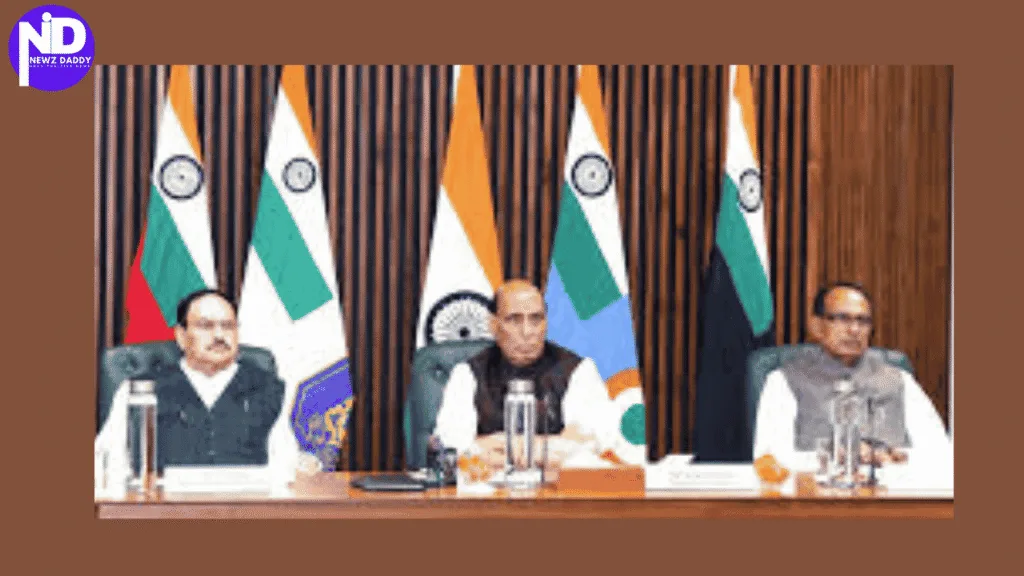
Rajnath Singh Leads India at SCO Meeting in Bishkek
SCO Defence Ministers Meeting Sees a Strong Indian Stand on Terrorism
Raksha Mantri Shri Rajnath Singh will lead a high-level Indian delegation to the Shanghai Cooperation Organisation (SCO) Defence Ministers’ Meeting, which will be held in Bishkek, Kyrgyzstan, on April 28, 2026. During the meeting, the Defence Ministers of various member countries will deliberate upon many issues concerning the defence & security of the region. Issues related to international peace, counter-terrorism and defence cooperation among SCO member states will also be discussed.
This meeting comes at a time when global security is facing many tests. Over the past few years, SCO defence meetings have become an important platform where countries share views on threats like terrorism, cyber attacks, and border tensions. Experts often note that such meetings help build trust between countries that may not always agree on every issue. For India, these discussions give a chance to push for stronger regional cooperation, especially in intelligence sharing and joint training exercises. Many SCO nations have already taken part in joint military drills, which help improve coordination during real crises.
This year’s SCO meeting is taking place against the backdrop of geopolitical turmoil being witnessed due to the situation in West Asia. The SCO, one of the largest political & economic organisations of the region, may discuss measures to reduce the impact of the ongoing conflict.
The situation in West Asia has raised concerns about oil supply, trade routes, and the safety of citizens living in the region. Analysts have pointed out that any long conflict in this area can affect global markets, including fuel prices in countries like India. SCO countries often look at such crises from both security and economic angles. There have been past efforts within the group to support peaceful dialogue and avoid further escalation. Countries like Russia and China, which are key SCO members, have also pushed for diplomatic solutions in global conflicts, which may shape discussions in this meeting.
Rajnath Singh, Raksha Mantri, will highlight India’s commitment towards global peace, amidst the prevailing global security challenges, and underline India’s consistent stance on zero tolerance for terrorism & extremism. On the sidelines of the meeting, Shri Rajnath Singh is likely to hold bilateral talks with his counterparts of some participating countries.
India has long maintained a clear position against terrorism, especially cross-border terrorism. Over the years, India has used platforms like the SCO to call for stronger action against terror groups and their support networks. Security experts often say that India’s voice carries weight because of its experience in dealing with such threats. Bilateral meetings during such events are equally important. In earlier SCO gatherings, India has used these side meetings to strengthen defence ties, sign agreements, and discuss issues like border security and defence technology cooperation. These one-to-one talks often lead to real outcomes, such as joint exercises or defence deals.
The SCO is an intergovernmental organisation established on June 15, 2001, in Shanghai, China. Its membership includes India, Russia, China, Kazakhstan, Kyrgyzstan, Pakistan, Tajikistan, Uzbekistan, Iran and Belarus. India became a full member in 2017 and assumed the rotating chairmanship in 2023.
Since its formation, the SCO has grown into a major regional group covering a large part of the world’s population and land area. It started mainly to address border security and regional stability, but over time, it expanded its focus to trade, energy, and cultural ties. India’s entry in 2017 marked a key moment, as it brought a major South Asian voice into the group. During its chairmanship in 2023, India hosted several meetings and pushed for better connectivity, digital cooperation, and stronger people-to-people links. Observers say that India’s active role has helped balance discussions within the group, especially when there are differing views among member countries.
The SCO also runs structures like the Regional Anti-Terrorist Structure (RATS), which focuses on sharing intelligence and tracking terror groups. This has become more important as threats are no longer limited to one country or one region. Cyber threats, online radicalisation, and organised crime are now common concerns across SCO nations. Meetings like the one in Bishkek allow member states to review progress and plan next steps.
As the world faces growing uncertainty, such gatherings hold added importance. They offer a space where countries can speak openly, reduce misunderstandings, and work towards common goals. India’s participation at a high level shows its intent to stay engaged and play a steady role in shaping regional peace and security.
Must Read:
Rashtriya Raksha University Defence Attachés Roundtable Opens New Defence Opportunities