


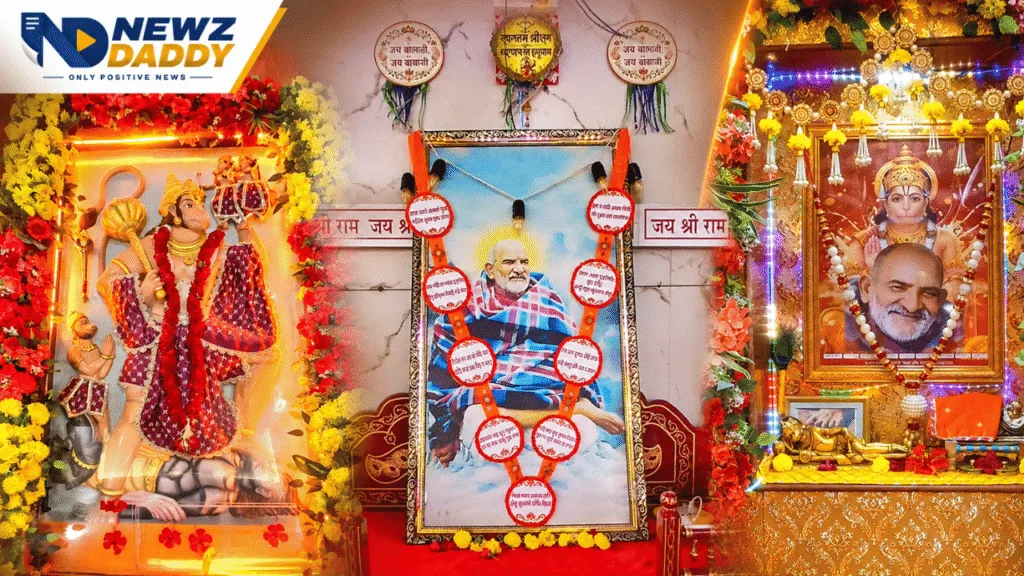
Rancharda Temple Announces Kali Chaudas Prayer Schedule
Rancharda Hanuman Temple to Hold Special Kali Chaudas Prayers on November 7
Havan, Maha Aarti and Prasad Distribution Scheduled at Shri Sankatmochan Hanuman Neem Karoli Baba Temple
Devotees will gather at Shri Sankatmochan Hanuman Neem Karoli Baba Temple in Rancharda, near Ahmedabad, on Saturday, November 7, 2026, for a special religious programme marking Kali Chaudas. The evening will feature a series of traditional Hindu rituals, including a Havan, the final offering of the sacred fire ceremony, Maha Aarti and Prasad distribution.
According to temple founder Dr Pravin Garg, the programme will begin with a Havan at 4:00 PM. Havan Purnahuti is scheduled for 6:15 PM, followed by Maha Aarti at 6:45 PM. Prasad will be distributed among devotees from 7:00 PM.
The temple has invited devotees and their families to attend the celebrations, take part in the prayers and seek blessings from Lord Hanuman and Shri Neem Karoli Baba.
The programme comes during one of the important religious observances in Gujarat’s Diwali calendar. Kali Chaudas is observed on the fourteenth day of the dark lunar fortnight before Diwali. The festival has a special place in Gujarati religious traditions, where devotees offer prayers to Goddess Kali and Lord Hanuman.
Worship of Lord Hanuman on Kali Chaudas is an established practice in several parts of Gujarat. Devotees traditionally seek his blessings for protection from fear and difficulties. The day’s religious customs vary between families and communities, with prayers and temple visits forming part of the observance.
For the Rancharda temple, the occasion also brings attention to its distinctive main idol. Lord Hanuman is seated in a resting or reclining posture, an uncommon form of representation in Hindu temples. Most Hanuman temples across India feature the deity standing, sitting or displaying his familiar image of devotion to Lord Rama.
The Rancharda shrine is described by its founder as the fourth temple in India where Lord Hanuman is worshipped in a resting posture. Such images are found at a small number of temples in the country, including the well-known Bhadra Maruti Temple at Khuldabad in Maharashtra and Bade Hanuman Ji Temple in Prayagraj, Uttar Pradesh.
The Bhadra Maruti Temple is particularly known for its reclining image of Hanuman, which is linked to local religious traditions about the deity resting while listening to prayers dedicated to Lord Rama. The Bade Hanuman Ji Temple in Prayagraj also attracts devotees because of its large reclining idol. These examples help explain why the Rancharda temple’s idol has attracted attention among followers of Lord Hanuman.
The temple’s association with Neem Karoli Baba gives it another religious connection. Neem Karoli Baba, also known as Maharaj Ji, was an Indian spiritual figure who devoted much of his life to Lord Hanuman. His followers remember him for his teachings on devotion, love, compassion and service to others.
Kainchi Dham in Uttarakhand, near Nainital, remains one of the principal places associated with the saint. The ashram’s first temple was inaugurated in June 1964. Over the years, it has become a destination for devotees from different parts of India and abroad.
The Rancharda temple carries forward this connection through its dedication to both Lord Hanuman and Neem Karoli Baba. Its grand Pran Pratishtha ceremony was performed on August 23, 2024, with the blessings of Shri Neem Karoli Baba. The ceremony marked the formal consecration of the temple and the beginning of its regular religious activities.
The shrine has also held annual celebrations since its establishment. Its second Patotsav, marking the second anniversary of the consecration, was celebrated on August 23, 2026. Religious activities during such occasions have included prayers, recitation of the Hanuman Chalisa, devotional singing, Maha Aarti and community meals.
The Havan planned for November 7 will form the main part of the Kali Chaudas programme. During a Havan, priests offer materials such as ghee, grains and other traditional items into a sacred fire while reciting Vedic mantras. The ceremony is an established part of Hindu religious practice, with devotees taking part in prayers for peace, well-being and divine blessings.
Havan Purnahuti marks the closing stage of the fire ceremony. It involves the final offerings and the completion of the ritual. The Maha Aarti that follows allows devotees to participate in collective worship, with lamps offered before the deity while religious prayers are recited.
Prasad distribution will take place after the Aarti. In Hindu temple traditions, Prasad is food offered to the deity and later shared with worshippers. It is customary for devotees to receive it as part of their visit.
For temples, festivals such as Kali Chaudas also provide an opportunity for people from nearby areas to come together for worship. Families often visit religious places during the Diwali period, making it a busy time for temples across Gujarat. The observances also help younger members of families become familiar with traditional prayers and customs.
Shri Sankatmochan Hanuman Neem Karoli Baba Temple is gradually attracting devotees from Rancharda and surrounding areas. Its unusual Hanuman idol and association with Neem Karoli Baba form the main features of its religious identity.
The November 7 programme will be open to devotees wishing to attend the ceremonies. With the Havan beginning at 4:00 PM and Prasad distribution scheduled for 7:00 PM, the temple expects worshippers to join the evening prayers and religious celebrations on Kali Chaudas.
The programme will allow devotees to observe the festival through traditional worship at a temple dedicated to Lord Hanuman and Neem Karoli Baba.