


Rashtriya Raksha University University of Ladakh MoU Powers Security Skills
The signing of the Memorandum of Understanding between Rashtriya Raksha University and the University of Ladakh marks a strong step towards building Ladakh as a centre of specialised education linked to national security and public safety. Ladakh’s location near sensitive international borders makes education in security, defence studies, and disaster response especially important. In recent years, India has increased its focus on strengthening border regions not only through infrastructure but also through education and skill development. This partnership fits well into that greater national effort.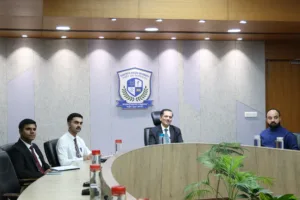

Rashtriya Raksha University has been playing a key role in training professionals for policing, internal security, cyber security, and behavioural sciences. As an Institution of National Importance under the Ministry of Home Affairs, RRU supports capacity-building for police forces, armed forces, and civil services across India. Its involvement in Ladakh reflects a growing understanding that remote and high-altitude regions need locally available expertise rather than dependence on mainland institutions.
The University of Ladakh, still a young institution, has been steadily building academic programmes that suit the region’s culture, geography, and social needs. This collaboration gives UOL access to national-level academic frameworks and specialised knowledge, while ensuring that Ladakh’s youth do not need to leave the region for advanced education in security and governance-related fields. Such partnerships have been seen in other border regions as well, where local universities work with national institutions to create region-specific learning models.
The Hon’ble Lieutenant Governor’s suggestion to consider an RRU campus in Ladakh highlights a long-term vision. Establishing such a campus would help address issues of access to education for students from high-altitude and far-flung areas, where travel is difficult for much of the year. It would also allow research to be carried out in real-world conditions, especially in areas such as disaster management, psychological resilience, and environmental security.
The discussion on mental fitness and emotional well-being for troops is particularly important. Studies have shown that prolonged deployment in extreme climates can affect mental health, focus, and decision-making. Programmes that support psychological resilience can improve both operational effectiveness and long-term well-being of personnel. The involvement of the University of Ladakh ensures that these programmes are sensitive to local conditions and realities.
The plan to extend similar initiatives to the Ladakh Police shows an integrated approach to security. Police personnel in Ladakh often work in harsh weather, difficult terrain, and isolated postings. Training in stress management, crisis response, and behavioural skills can improve public service delivery and personal well-being.
Academic collaboration under the MoU goes beyond defence. Joint degree programmes in forensic psychology, cyber studies, and governance respond to the rising demand for skilled professionals in both government and private sectors. Cybercrime, tourism security, hospital safety, and disaster response are growing areas of concern across India, and Ladakh is no exception. Skill-based courses help students move directly into employment while meeting regional needs.
The decision to nominate girl students for the Fire Safety and Emergency Response Programme stands out as a strong step towards gender inclusion. Women’s participation in safety and emergency services remains limited in many regions. By offering structured training, this initiative can open new career paths while strengthening community safety. Such programmes also encourage confidence and leadership among young women.
High-altitude research is another major opportunity created by this partnership. Ladakh offers a natural setting for studying human endurance, environmental risks, and disaster preparedness. Research findings from this region can benefit not just Ladakh but other mountainous and border regions as well.
Overall, the MoU reflects a shift from short-term engagements to long-term institution-building. By combining RRU’s national experience with UOL’s regional understanding, the partnership aims to create education that is practical, relevant, and rooted in local needs. This collaboration supports Ladakh’s development while contributing to India’s broader national security and skill development goals.
Must Read:
Law Students Shine In International Law Moot Court At RRU
Constitution Day Inspires RRU Students to Stand for Equality