


Rheumatology Awareness Walkathon Sparks Hope in Ahmedabad
Emotional Rheumatology Awareness Walkathon Boosts Awareness Across Ahmedabad
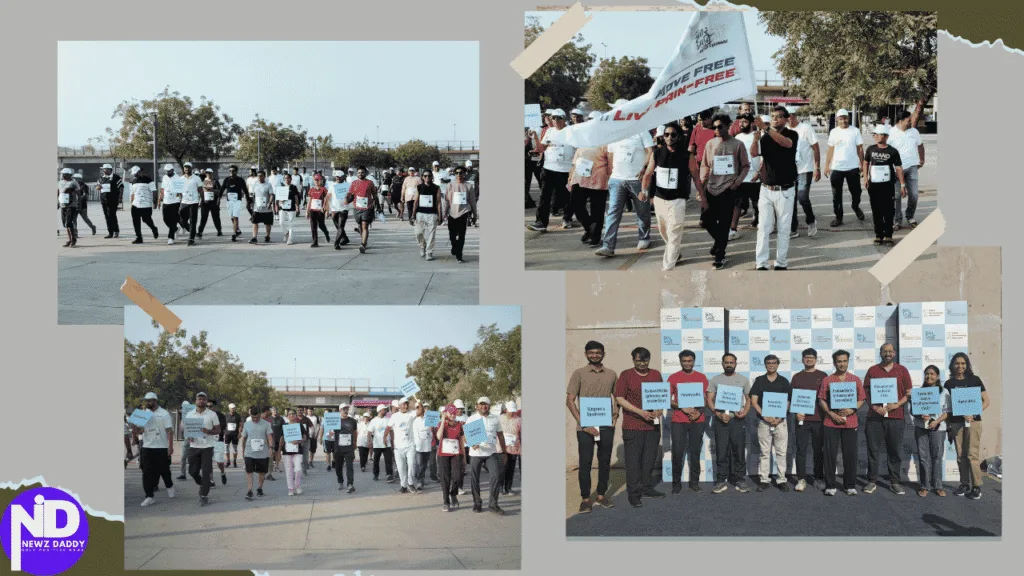
“Move Free. Live Pain-Free” echoed on Sabarmati Riverfront this morning as the Rheumatology Awareness Walkathon 2026 united around 150 patients, caregivers, rheumatologists, and supporters in a bold act towards joint health and hope.

The walkathon was organised by the Rheumatology Association of Gujarat(RAG), in partnership with the Indian Rheumatology Association (IRA), and supported by the patient support group Antardhwani. It aimed to raise awareness of joint health, arthritis, and autoimmune diseases, while encouraging the public to support patients living with rheumatic conditions. Rheumatic diseases affect millions of people in India, yet many cases go undiagnosed for years. Studies show that early diagnosis can reduce long-term damage by up to 50 per cent. Events like this help people understand early signs such as joint pain, swelling, and stiffness, which are often ignored.
The participants walked a lively 3km near Sardar Bridge. With the message ‘Move Free. Live Pain-Free, the walkathon highlighted the importance of healthy mobility, timely diagnosis, and community support in improving lives. Doctors often say that simple daily movement, such as walking for 30 minutes, can improve joint flexibility and reduce pain. Regular activity also helps control weight, which lowers stress on joints like knees and hips. Public health campaigns across the world now promote walking as one of the safest and most effective ways to manage arthritis.
Consultant rheumatologist Dr Reena Sharma, who is RAG president, said: “By walking together, we have broken the silence on arthritis and autoimmune challenges. Let us commit to timely diagnosis and lifelong mobility for all.” Medical research supports her point. Autoimmune diseases like rheumatoid arthritis happen when the body attacks its own joints. If treatment starts early, patients can avoid severe damage and lead near-normal lives. In India, awareness is still growing, and many patients reach specialists only after years of pain.
RAG vice-president Dr Vishnu Sharma and secretary Dr Anuj Shukla were also present. Their presence reflects the growing effort by specialists to take healthcare beyond clinics and into public spaces. In recent years, more doctors have started community outreach programmes, free camps, and online sessions to educate people about chronic diseases.
Dr Vishnu Sharma said, “Events like this remind us that rheumatic diseases are manageable with early intervention and community support. Today’s steps forward symbolise hope for pain-free tomorrows.” Global studies show that patients who receive early treatment and strong family support report a better quality of life. Medicines today, including biologics, can control inflammation effectively, though access and cost remain challenges in many parts of India.
Dr Shukla said, “Movement is medicine for joints. This walkathon proves that collective action can empower patients to live fully, free from the shadows of chronic pain.” Health experts agree that physical activity plays a key role in managing arthritis. Even gentle exercises like stretching, yoga, and swimming can reduce stiffness and improve strength. In cities like Ahmedabad, public spaces such as the riverfront offer safe areas for such activities.
IRA president Dr Aman Sharma, who flagged off a similar walkathon in Chandigarh, wished the patients a healthy life. “This is a nationwide movement, and we organised walkathons in multiple cities of India at the same time today to spread awareness about rheumatology.” This reflects a larger trend in India where health awareness drives are now being held across cities to reach more people. Nationwide campaigns help reduce stigma and encourage patients to seek timely care.
Heart-warming moments abounded at the riverfront. A young arthritis patient shared her renewed zest for dance post-treatment, while caregivers praised Antardhwani’s peer networks. Patient support groups have become an important part of care. Many studies show that people who join such groups feel less isolated and more confident in managing their condition. Sharing stories, tips, and emotional support often leads to better outcomes.
The walkathon concluded with pledges for follow-up webinars and screenings. Such follow-up actions are crucial. Awareness alone is not enough. Experts stress the need for regular check-ups, especially for people with a family history of arthritis or autoimmune disease. Screening camps and online sessions can help detect issues early and guide patients towards the right treatment.
Events like this walkathon show a clear shift in how healthcare is being approached. It is no longer limited to hospitals. It is moving into open spaces, communities, and daily life. For many participants, the 3km walk was not just an exercise. It was a step towards awareness, acceptance, and a better quality of life.